


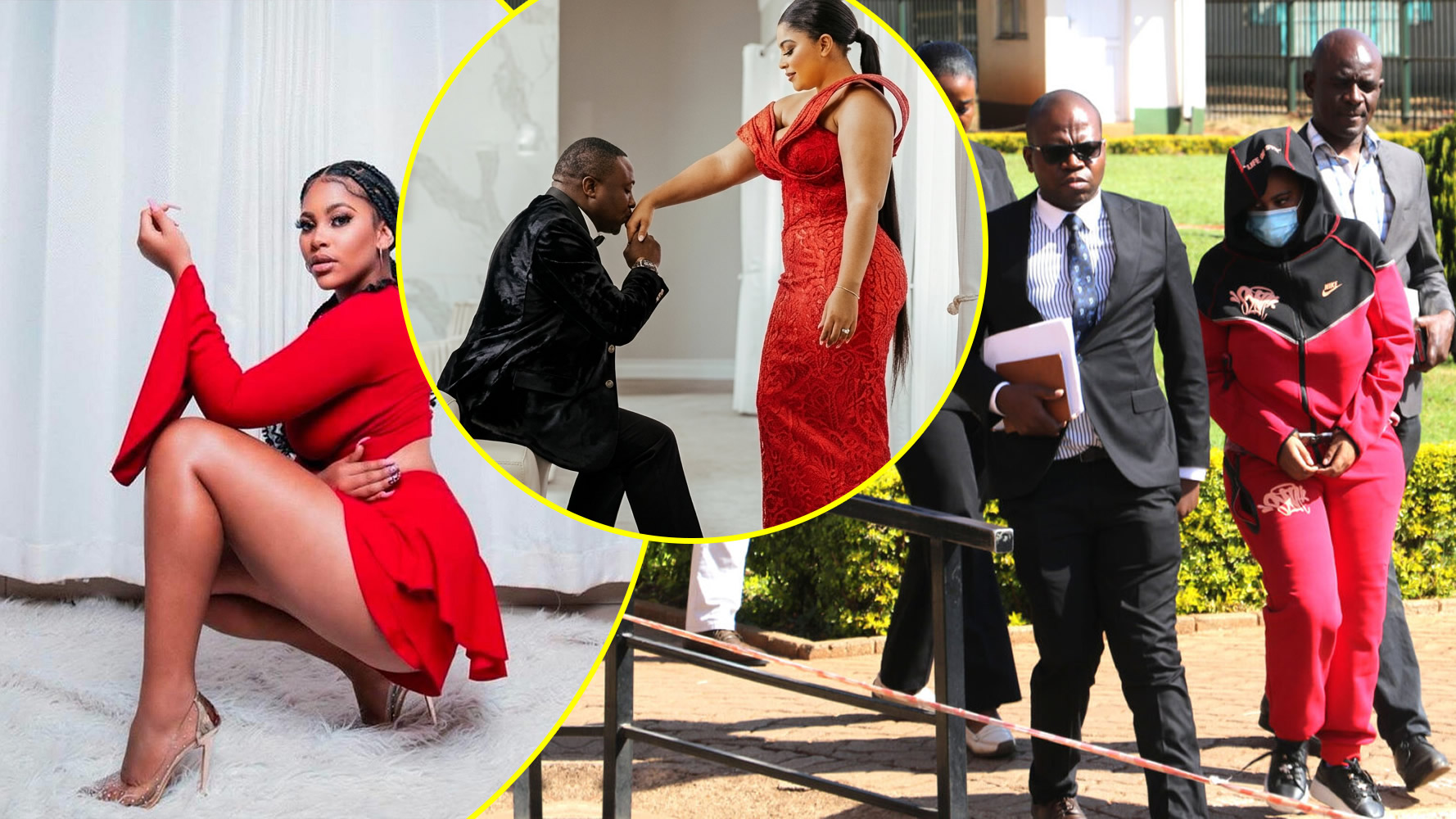
BULAWAYO — Three women from the family of President Emmerson Mnangagwa’s daughter-in-law have been granted bail after spending more than a month in custody over drug charges, bringing a temporary release to the latest chapter in a case that has involved alleged cocaine and crystal methamphetamine seizures, a grounded private jet and a separate money-laundering investigation worth nearly US$10 million.
Amina Jassinta Jessub Arab, 47, her daughter Dyonne Tanaka Tafirenyika, 28, and their relative Noreen Jessub, 51, were each ordered to pay US$1,000 bail by the Bulawayo High Court on Thursday. They must surrender their passports and report twice a week at Hatfield police station in Harare. They are due back before the Bulawayo magistrates’ court on 30 September.
The decision came after the women’s fourth attempt to secure their release. Justice Munamato Mutevedzi granted bail despite opposition from the National Prosecuting Authority, which had argued that the evidence against them was strong and that they could flee because they do not ordinarily live in Bulawayo.
The women were arrested on 19 August at a lodge in Bulawayo’s Ilanda suburb. Prosecutors say police found two sachets of cocaine, valued at ZiG9,000, hidden inside a shoe in Jessub’s room. Two further sachets of cocaine were reportedly found in Arab’s room, concealed in a small bag. In Dyonne Tafirenyika’s room, investigators say they recovered a sachet of cocaine, a sachet of crystal methamphetamine and US$53,055 in cash.
The arrests followed a dramatic night at Joshua Mqabuko Nkomo International Airport, where a Bombardier Global Express XRS, registered as A6-AFC, had been due to take Arab and Dyonne to Dubai. The aircraft, carrying a crew of four, remained on the ground overnight after authorities said the airport control tower was unmanned. It left the following morning without the two passengers, who had been detained shortly before they were due to board.
The journey to Bulawayo came as investigators widened their inquiry into drugs, property and money linked to Kelsea Tadiwa Tafirenyika, the second wife of Collins Takunda Mnangagwa, the president’s twin son. Police had already arrested Kelsea in Harare on 4 August after a raid on her home in Greystone Park.
In that earlier case, detectives from the CID Drugs and Narcotics Unit said they recovered more than 200 ampoules of pethidine and morphine from her bedroom. Five rolls of cannabis were reportedly found inside a Lamborghini parked at the property. The exhibits listed in court papers included 72 ampoules of Verpat Pethidine, 64 Fresenius Pethidine ampoules and 43 ampoules of Morphine Sulphate. Their stated value was US$204.
Kelsea and her uncle Isaac Arab Jessub were charged with unlawful possession of pethidine for the purpose of dealing and unlawful possession of unregistered medicines. Justice Pisirayi Kwenda later granted them US$1,000 bail each. They were ordered to surrender their passports, remain at their stated addresses, report to police once every fortnight and avoid contact with State witnesses, exhibits and investigations. The court order stated that they “shall not interfere with State witnesses, exhibits or police investigations.”
Kelsea’s release was short-lived. She was rearrested as she left prison and returned to the Harare magistrates’ court, where prosecutors added a money-laundering case and a charge involving a forged identity document. The document allegedly carries her photograph but the name Getrude Badza.
Investigators have discussed at least 54 properties and vehicles which they say were bought with funds connected to Collins Mnangagwa, who owns several mines. About 13 assets, including houses and vehicles, have reportedly been recovered. Some were registered in the names of Kelsea’s relatives, including Arab and Dyonne.
Kelsea has told the court that most of the properties were gifts from her husband. Her lawyers have argued that investigators relied on assumptions and did not properly test that explanation with Collins. They also challenged the State’s evidence linking a US$204 drug recovery to millions of dollars in property and vehicles.
The money-laundering case has also turned on Kelsea’s overseas links. A Harare magistrate previously described her as financially “liquid” and ruled that her reported properties in South Africa and the United Arab Emirates created a risk that she could leave Zimbabwe. “The accused’s mobility and access to crossing borders is strength for the prosecution argument,” the magistrate said.
Kelsea was denied bail at that stage, but Justice Vivian Ndlovu overturned the decision on 9 September. She was granted US$5,000 bail, ordered to surrender her passport and required to report to police every Monday and Friday until the case is finalised. Her next appearance in the money-laundering case is set for 30 October in Harare.
The State’s case against Arab, Dyonne and Jessub has faced a separate dispute over the pace of the investigation and the forensic examination of the substances. Their lawyer, Admire Rubaya, said prosecutors had indicated that investigations would be completed by 2 September, but the women had not been served with the State’s papers or given a trial date.
“The accused persons are languishing in prison while the state and police are dilly-dallying,” Rubaya said.
He also questioned whether laboratory results confirming the alleged cocaine were available. “There is no evidence to show that the expert analysis is in their possession. We can’t take their word for it,” he said.
Prosecutor Vhumani Moyo told the court that forensic work had been under way and that 2 September was an estimated completion date. He said the results had reached prosecutors shortly before the hearing and that the State’s papers would be served on the accused.
The defence has further argued that lodge staff had access to the rooms where the substances were found. It offered fixed addresses, passport surrender, weekly reporting, movement restrictions and house arrest as safeguards against flight.
Arab’s detention also became part of the wider dispute after police seized a Toyota Land Cruiser from her in Harare on 13 August during the money-laundering inquiry. She later said she was assaulted while in custody, and photographs circulated showing bruising across her back and body. Accounts of the detention said she was taken to One Commando Barracks and later questioned at State House about US$4 million that investigators claimed belonged to Collins.
Those accounts also included claims that water was poured over Arab’s covered face and that she was beaten with sticks and batons. Auxillia Mnangagwa, the First Lady, was accused of demanding money and title deeds connected to properties registered in Kelsea’s name. She was further accused of saying that Kelsea had bewitched Collins.
“Waisa mwana wangu muhari, mubudise,” Auxillia is alleged to have said. The words were loosely translated as: “You bewitched my son, remove the curse.”
Auxillia and Collins have not publicly addressed those claims. At that time, Collins was reported to be in Dubai undergoing rehabilitation for drug addiction. He is also said to have continued supporting Kelsea, including paying legal fees and helping arrange the flight that was stopped in Bulawayo.
With the three women now out on bail and Kelsea due back in Harare on 30 October, the related cases will continue on separate tracks. The Bulawayo prosecution will return to court on 30 September, while investigators continue tracing properties, vehicles and financial transfers at the centre of the money-laundering case.
The bail ruling has brought the family’s month-long detention to an end, but it has not closed the investigation. The next hearings will determine how the drug charges, the alleged forged identity document and the disputed property empire develop in court.