


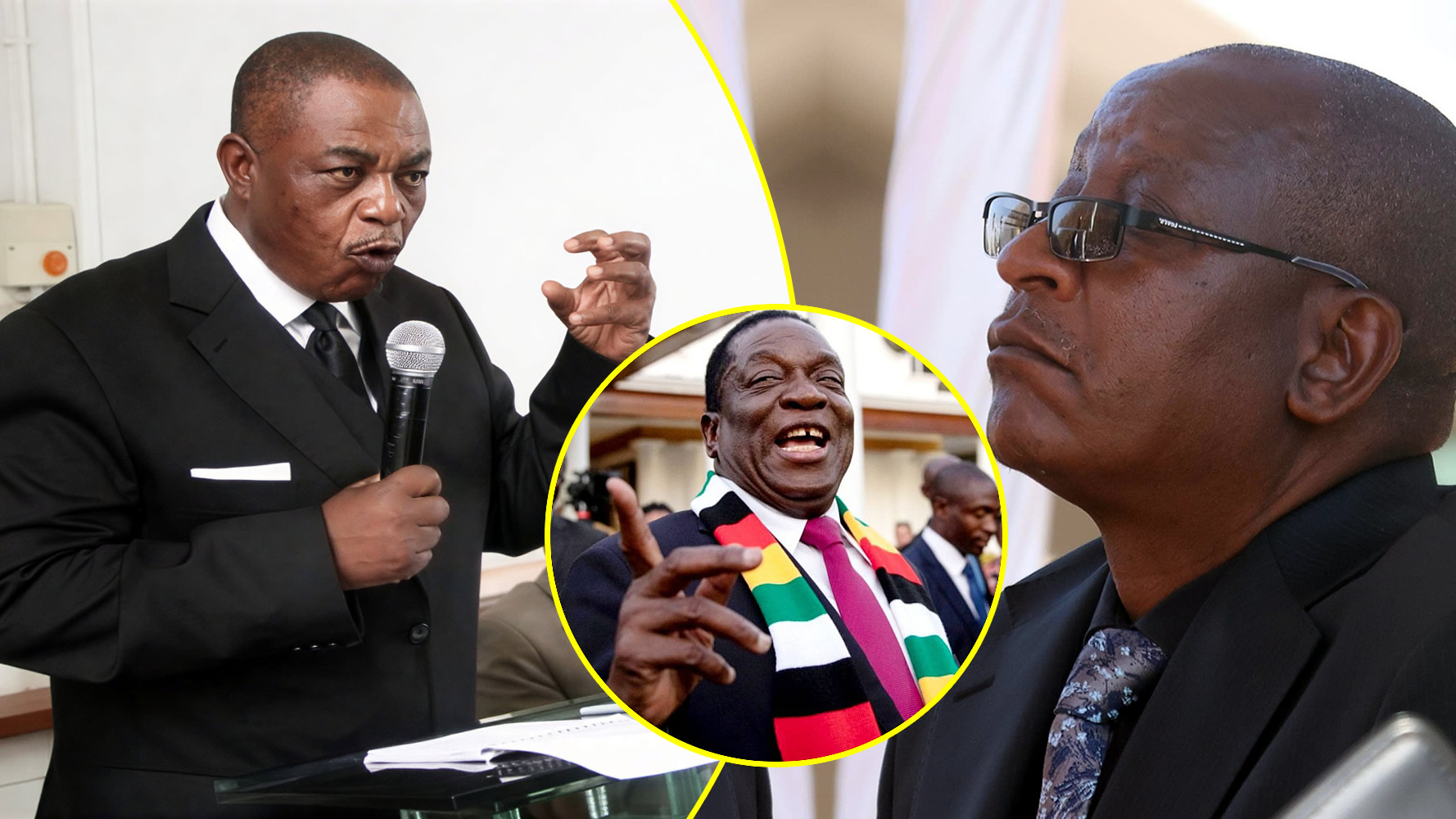
HARARE — President Emmerson Mnangagwa called off an extraordinary Zanu PF politburo meeting on Friday, October 9, after senior party figures had gathered at the party’s headquarters to consider proposed changes to the ruling party’s constitution. The proposed changes, being steered by legal secretary Ziyambi Ziyambi, had opened a dispute involving Vice-President Constantino Chiwenga and party secretary-general Jacob Mudenda.
The reported account of the meeting says Mudenda’s objections over provisions affecting his responsibilities became a decisive moment in the standoff.
The official explanation was that Mnangagwa’s schedule had forced the postponement. Zanu PF spokesperson Christopher Mutsvangwa said: “There was a clash or an overflow of programmes, and the meeting was postponed.” The party’s information director, Farai Marapira, also described a “clash of programmes” and said it was “nothing serious”.
But party leaders had already assembled, and the meeting was expected to consider only one item: Ziyambi’s proposed amendments. Their timing added to the pressure. Zanu PF was preparing for its 23rd National People’s Conference, scheduled to run from October 12 to 17 at Chinhoyi University of Technology. The ordinary politburo and central committee agendas had already been set, making the separate sitting a route to put the constitutional proposals before senior party bodies.
Ziyambi’s stated case was that the party constitution should be brought into line with Zimbabwe’s amended national Constitution. He said the proposals followed resolutions passed by provincial structures. Chiwenga’s camp opposed the way the changes were being advanced, arguing that revisions to the party constitution should first go through at least three months of consultations before being brought to the central committee. It also objected to what it described as a package of broader changes that had not been requested.
Mudenda had been in Tanzania on parliamentary business and returned for the meeting. He was given the proposals about an hour before it was due to begin, according to a person briefed on the discussions. The source described his reaction: “If he was angry at having to return from Tanzania so abruptly, he went completely bananas when he read the proposals.”
The point that most angered Mudenda was a proposed role for the party’s director-general. The position already exists, but the party constitution does not formally define it. Under the draft, the director-general would be responsible for the “day-to-day administration of the party” and would provide “secretariat and administrative services to the principal organs of the party”. Mudenda viewed the change as a transfer of some duties from his office.
He then phoned Mnangagwa, who had just presided over a Zimbabwe Open University graduation ceremony, to complain about the proposals. The person briefed on the discussions said Mudenda was “fuming, asking Mnangagwa if he had read the proposals, highlighting that his powers (Mudenda’s) were being whittled down”.
The draft also proposes changes to the party’s leadership election cycle, corrects drafting errors and repetitive clauses, and sets out responsibilities for Zanu PF’s administrative machinery. Its most consequential political provision would separate the offices of party president and presidential candidate. One person could still hold both positions, but the draft would allow them to be held separately.
That proposal has been described within the party as the “Nyerere Way”, after Tanzania’s Julius Nyerere. He stepped down as the country’s president in 1985 but remained president of the Chama Cha Mapinduzi party until 1990. Ziyambi is said to have presented the arrangement as a way for Mnangagwa to remain party president in 2029, while provincial structures choose the party’s candidate for the 2030 national election.
Other wording in the draft would make the party “the principal political authority”. It says the president and other officials “must ensure to the fullest extent permitted by law that government policies, programmes and legislative initiatives are consistent with and give practical effect to the ideology, resolutions and policy decisions of the party”. It also states that an office-bearer who acts contrary to party policies or resolutions would be subject to party disciplinary procedures.
Those provisions have brought the party’s internal dispute into sharper focus. The Constitution of Zimbabwe Amendment (No. 3) Act, signed by Mnangagwa on July 7, 2026, extended presidential and parliamentary terms from five years to seven. It moved the expected end of Mnangagwa’s current term from 2028 to 2030 and changed the method of choosing the president from a direct public vote to a vote by Parliament. Zanu PF’s own rules now need to address how the party selects its leader and presidential candidate under the revised national timetable.
Accounts of the exchange involving Chiwenga differ. Political activist Jealousy Mawarire said Chiwenga objected to using the amended national Constitution as the basis for changing the party rules. Mawarire attributed this statement to the vice-president: “not going to allow ED and his cronies to illegally change the party constitution in the way they did the national constitution.” Mawarire also said Chiwenga challenged Ziyambi to produce 21 resolutions said to support the national changes.
Former Norton MP Temba Mliswa rejected Mawarire’s account, calling it “absolute lies” and saying the cancellation had nothing to do with Chiwenga. The competing accounts have added to the attention around an event that the party publicly described as a scheduling problem.
Mudenda’s opposition appears to have surprised Mnangagwa, who was said to have expected resistance from Chiwenga’s allies. One source said: “He was expecting a pushback from Chiwenga’s allies, but fierce opposition by the party’s secretary general stunned him.” Ziyambi was also reported to have warned Mnangagwa that some people were intent on “causing havoc” at the meeting and to have named Mudenda.
Obert Mpofu’s presence was another source of tension. It was the first politburo meeting he had attended in several months, after he had reported himself ill following his demotion from secretary-general to secretary for information technology the previous year.
Opposition to the proposed amendments had also surfaced among war veterans. A document circulated to journalists in the days before the meeting argued that changes to the party constitution should begin in lower structures and advance only after extensive consultation. Retired Air Marshal Henry Muchena said he had seen the document and supported its position: “It’s not my duty to oppose war veterans. They are stockholders in the governance of this country. I’m aligned with what they are saying.”
With the conference due to begin on October 12, the cancelled sitting left the proposed changes facing an immediate procedural hurdle. Ziyambi’s plan had been to put them before the party’s senior leadership before the conference, where delegates were expected to consider the party’s direction and internal rules. Mnangagwa’s decision to postpone the meeting halted that process at a moment when objections were coming not only from Chiwenga’s camp, but also from Mudenda, whose responsibilities were directly touched by the draft.