


The Zimbabwean Government has reserved 17 sectors of the economy for citizens and warned that businesses which fail to comply could have their operating licences suspended or revoked. Thirteen sectors are listed as exclusively for Zimbabweans, while foreign participation in four others depends on meeting strict investment and employment thresholds.
The rules are set out in Statutory Instrument 215 of 2025, gazetted in December under the Indigenisation and Economic Empowerment Act. Cabinet received an update on how the regulations are being implemented, including the results of nationwide inspections and applications from companies seeking to comply or establish that they qualify for an exemption.
In a Post-Cabinet briefing on Tuesday, Acting Information Minister Paul Mavhima said the update had been presented by Industry and Commerce Minister Mangaliso Ndlovu.
“The nation is informed that Government gazetted Statutory Instrument number 215 of 2025 in December 2025, reserving 17 sectors of the economy for Zimbabwean citizens. Foreign participation may be permissible in sectors such as retail and wholesale, haulage and logistics, grain milling and shipping and forwarding by exemption,” said Minister Mavhima.
The 13 exclusively reserved activities include passenger bus, taxi and car-hire services; barber shops, hairdressing and beauty salons; employment agencies; estate agencies; valet services; bakeries; tobacco grading and packaging; advertising agencies; and the marketing and distribution of local arts and crafts. The list also covers artisanal mining, borehole drilling, clearing and customs, and pharmaceutical retailing.
The instrument provides limited exceptions for international brands in passenger transport, estate agencies, and clearing and customs. These exceptions do not remove the wider requirement for foreign operators to qualify under the regulations and obtain the necessary approval.
The remaining four sectors are retail and wholesale trade, grain milling, haulage and logistics, and shipping and forwarding. The regulations set high minimum thresholds for foreign participation. Retail and wholesale businesses must have at least 200 full-time paid employees and invest a minimum of US$20 million. Grain milling requires at least 50 employees and US$25 million in investment; haulage and logistics requires 100 employees and US$10 million; and shipping and forwarding requires 20 employees and US$1 million.
Foreign nationals seeking to participate must apply for a permit. The regulations require applicants to operate through a business registered or incorporated in Zimbabwe, register for tax, maintain a local bank account and submit a business plan. That plan must set out how the business will create jobs, transfer skills and technology and build sustainable local value chains.
Businesses already operating in a reserved sector when the rules were gazetted were given 30 days to submit regularisation plans. They must transfer at least 75 per cent of their equity to Zimbabwean citizens within three years, in annual tranches of at least 25 per cent. At the end of that period, foreign ownership may not exceed 25 per cent.
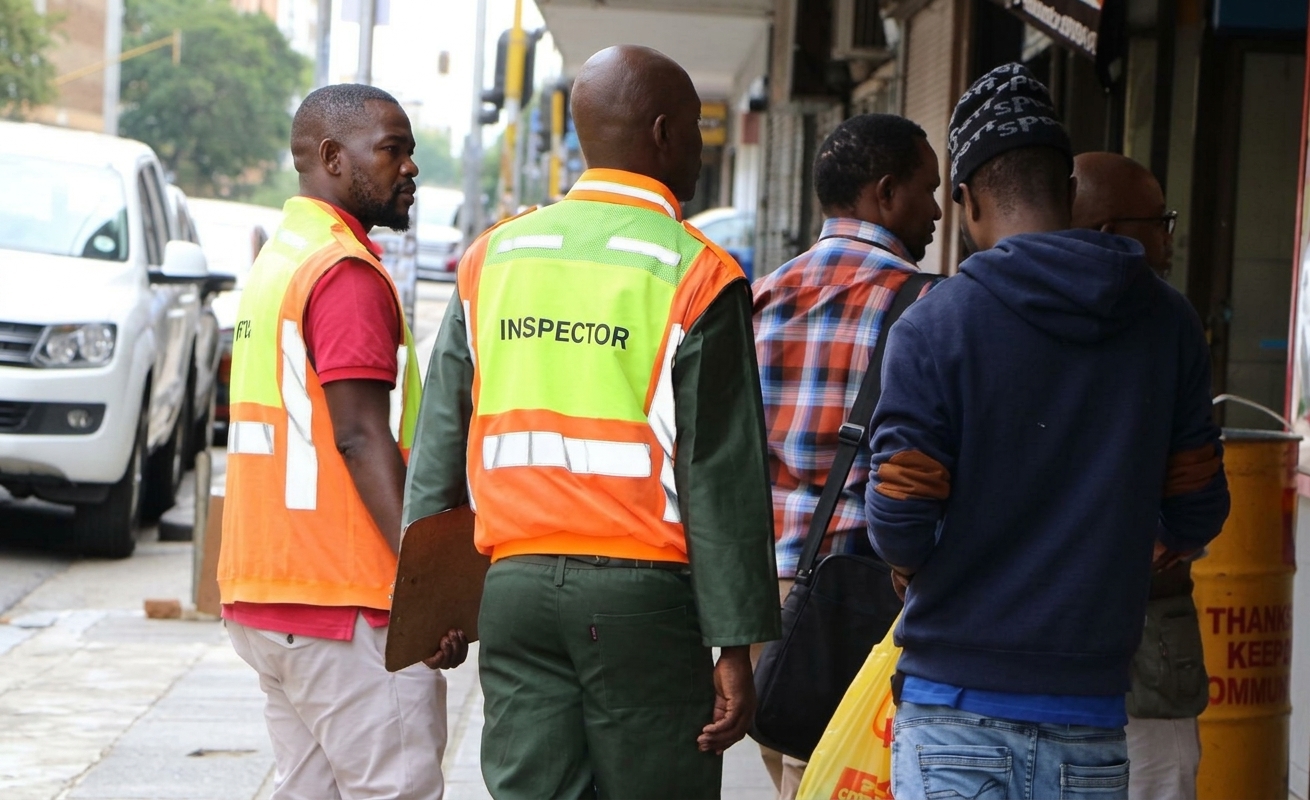
The Cabinet update said inspections had been completed at more than 3,000 companies across all 10 provinces. Authorities had received 693 formal applications for compliance in reserved sectors. A further 269 foreign operators had applied to regularise their businesses under the equity-transfer plan.
Another 144 entities applied to have their Zimbabwean status confirmed through exemptions or a verification process. Of these, 63 entities qualified for statutory exemptions, representing 13.2 per cent of foreign companies, the briefing said. The exemptions were based on prescribed investment thresholds or recognition as international brands.
Mavhima said many foreign-owned businesses had not yet regularised, despite national information campaigns and non-compliance notices. He said foreign operators continued to have a significant presence in reserved areas, including retail and brick moulding.
“Cabinet noted that despite extensive national campaigns and issuance of non-compliance notices, the majority of foreign-owned entities have not yet regularised as required and that foreign players continue to maintain a significant footprint in reserved sectors including retail and brick moulding, hence stiffer penalties will be implemented,” said Minister Mavhima.
The Ministry of Industry and Commerce is to suspend or revoke the operating licences of businesses that fail to comply. The regulations also set out penalties for operating in a reserved sector without a permit, including fines and possible imprisonment. Businesses that continue to breach the rules after being fined may be barred from the sector and prevented from doing business with government entities for five years.
There is a difference between the 17-sector schedule in the statutory instrument and the ministry’s current online presentation of the rules. The ministry webpage lists 21 reserved sectors: the 13 exclusive activities and four sectors subject to thresholds, as well as brick moulding, granite mining, quarrying and travel agencies. The Cabinet briefing also referred to brick moulding when describing areas where foreign businesses remain active. The distinction means the ministry’s published list includes four additional activities beyond the 17 entries in the instrument’s schedule.
Zimbabwe is not alone in setting aside particular businesses for citizens. In Botswana, the Trade Act of 2019 reserves a list of trade licences for citizens. Examples include car washes, cleaning services, curio shops, general dealers, hair or beauty parlours, internet cafés and pre-owned motor dealerships. Separate rules reserve four liquor licences for citizens: bar liquor, nightclub liquor, liquor depots and bottle stores. Botswana has also reserved manufacturing licences under its Industrial Development Act, including activities such as bread and confectionery production, ice-making, meat processing, water purification and bottling, and brick production.
Zambia has used a narrower reservation scheme. Regulations made under its Citizens Economic Empowerment Act reserve the sale of live birds in markets and other designated places for targeted citizens and businesses with specified levels of citizen influence, empowerment or ownership. They also reserve domestic haulage for public procurement works to those groups. Other companies may continue to provide haulage for private transactions.
The laws in the three countries cover different activities and use different conditions. Zimbabwe’s latest instrument combines sectors reserved exclusively for citizens with sectors in which foreign businesses may qualify if they meet set thresholds or other requirements. The Cabinet update signals that the next stage will focus on companies that have not submitted regularisation plans or otherwise established that they qualify to operate.