


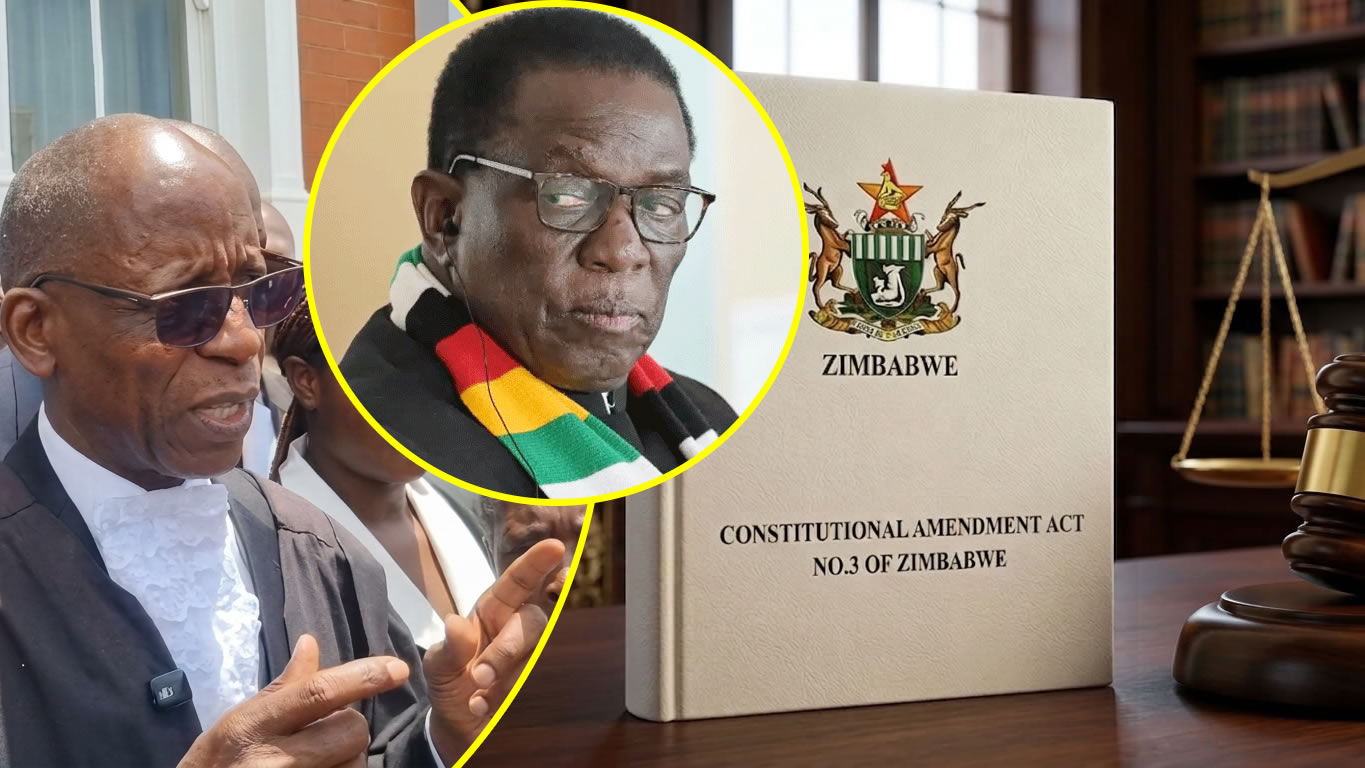
The Constitutional Court has postponed two challenges to Zimbabwe’s Constitution of Zimbabwe Amendment (No. 3) Act to November 18 after a dispute over whether judges appointed under the contested changes should hear cases that question the amendment process itself.
The applications, brought by former legislator Prince Dubeko Sibanda and National Constitutional Assembly member Vhurande Mahlupeko, were due to be heard on November 11. The court adjourned the matters for a week so it could reconstitute the bench before considering the applicants’ requests to bring their cases directly before the country’s highest court.
The objection centres on the appointment of additional Constitutional Court judges under the amendment. Mahlupeko’s case challenges, among other issues, provisions said to have been added during the legislative process without first being published in the Government Gazette. One of the disputed provisions concerns the expansion of the court itself. The applicants argued that judges appointed under the changes should not decide a challenge to those changes.
Advocate Sylvester Hashiti, representing President Emmerson Mnangagwa, said the President was prepared to defend the amendment before any bench. “The court postponed the matters to next week because in one of the cases there is an issue about the appointment of additional judges to the Constitutional Court. So the court had to reconstitute itself to allow judges who are not affected by that amendment to sit,” Hashiti said.
He said Mnangagwa’s legal team had accepted the court’s position on the bench but remained ready to proceed. “And we made it clear that as far as the president is concerned, if we have a bench, judge from wherever, we are always ready to act,” he said.
Professor Lovemore Madhuku, who represents the applicants, said the court had proposed that Mahlupeko’s application be heard first because it directly challenges the validity of provisions used to expand the Constitutional Court. The court sought the parties’ views on whether judges appointed under the contested amendments should sit.
“We clearly said that we would prefer a situation where that matter is determined without the additional judges that were appointed pursuant to the amendment,” Madhuku said.
The applicants did not object to Justice Antonetta Guvava sitting on the bench, Madhuku said, because her appointment followed the retirement of the former Chief Justice and was not part of the disputed expansion. “We had no problems with Justice Guvava, who is the seventh member of the court,” he said.
The lawyers agreed to the postponement after the court indicated that Mahlupeko’s application should be dealt with first. Reconstituting the bench was necessary before the proceedings could begin. The cases have been moved to November 18, when the court is expected to consider the applications.
Two applications, different challenges
Sibanda’s case, registered as CCZ 271/26, challenges the extension of presidential and parliamentary terms and seeks to prevent the changes from benefiting current office-holders. He relies on Section 328(7) of the Constitution, which his application says bars an amendment from extending the term of an incumbent President or members of Parliament who supported the change.
The constitutional amendment increased the terms of the President and Parliament from 5 years to 7 years. Its effect is to extend Mnangagwa’s current term, which was due to end in 2028, to 2030. Members of Parliament who voted for the legislation would also serve under the longer parliamentary term.
Mahlupeko’s application, registered as CCZ 277/26, raises a separate procedural challenge. It argues that provisions in the amendment were not published in the Government Gazette for the required public consultation period before being passed. The challenge says 10 provisions were not gazetted for the 90-day period. Among the contested matters is an increase in the number of Constitutional Court judges.
The timing of the bench dispute is central to the immediate proceedings. The court has not yet heard the substantive arguments in either case. The first question before it is whether the applicants may bring their challenges directly to the Constitutional Court, rather than starting in the High Court. The parties’ arguments over the composition of the bench arose as the court prepared to consider that request.
Direct access is the procedure through which litigants ask the Constitutional Court to hear a case without first taking it to a lower court. The State has opposed the applications, arguing that the applicants have not justified bypassing the High Court. Its position is that the cases should begin there. The applicants argue that the disputes raise questions of national constitutional importance that warrant consideration by the apex court.
Wider dispute over the amendment
The two cases form part of a broader legal challenge to the amendment, which was signed into law on July 7, 2026. Among its major changes, the Act replaces direct presidential elections with a system in which the President is elected by members of the Senate and National Assembly sitting together. It also extends terms of office and expands the Senate by adding 10 presidentially appointed members.
Opponents of the changes have argued that removing the public’s direct vote for President affects political rights protected by Section 67 of the Constitution and should have required a referendum. Their arguments also invoke Section 328, which sets out safeguards for constitutional amendments, including provisions concerning changes that affect the terms of sitting office-holders.
Other objections raised in related filings concern President Mnangagwa’s role in the amendment process. Applicants have argued that his participation in Cabinet discussions and approval of the proposed changes created a conflict because the amendments could extend his time in office. Those claims are part of the wider litigation, rather than the specific bench issue that caused the November 11 adjournment.
The State’s position in the direct-access applications has been that the Constitutional Court should not be approached as a court of first instance where the High Court is available. It has also argued that the legislative process has been completed. The applicants, represented by Madhuku and other lawyers in related cases, are seeking a route to have the constitutional objections considered by the apex court.
The current applications are not the first attempt to bring CAA3 disputes directly to the Constitutional Court. In June, the court struck a separate application by six liberation war veterans off the roll after finding that it did not meet the requirements for the court to exercise its original jurisdiction. The ruling did not decide the merits of their constitutional objections. The veterans’ legal team said it would pursue the case through the High Court.
A separate application by the veterans seeking direct access was heard in September, with the State again arguing that the High Court should hear the matter first. The Constitutional Court reserved judgment on that procedural question. That case concerns, among other issues, replacing direct presidential elections with a parliamentary vote. It is separate from the Sibanda and Mahlupeko applications now set for November 18.
Public access to the hearings
The court proceedings have also drawn attention from online publishers seeking to make the hearings available to a wider audience. The Zimbabwe Online Content Creators association applied to livestream proceedings relating to the amendment, including hearings initially scheduled for November 11 and November 25.
The association said its application was intended to widen public access to proceedings of national constitutional importance. It said it represents 169 members, including 40 online broadcasters. The request for livestreaming was a separate matter from the applications brought by Sibanda and Mahlupeko. No decision on the request was included in the information available at the time of the postponement.
The November 18 hearing will therefore return to the immediate question that halted proceedings: which judges should sit when the court considers Mahlupeko’s challenge to provisions connected to the court’s own composition. The applicants’ request for direct access will also need to be addressed before the underlying constitutional claims can proceed before the apex court.
Madhuku said the applicants believed the dispute should now be determined. “We really think that it’s now time for this matter to be determined,” he said.
The next sitting is expected to establish how the two applications will proceed and whether they will be heard directly by the Constitutional Court. Until then, the legal challenges to the term extension and other provisions of the amendment remain before the court, with the bench composition issue still unresolved.