


Is the age of the physical passport finally coming to an end in South Africa? Or is this the beginning of a digital dragnet that no one can escape? In this documentary, we delve into a massive shift in how South Africa handles its borders and the people within them. For years, the debate over illegal immigration has simmered, but now, the government is turning up the heat with a high-tech solution.
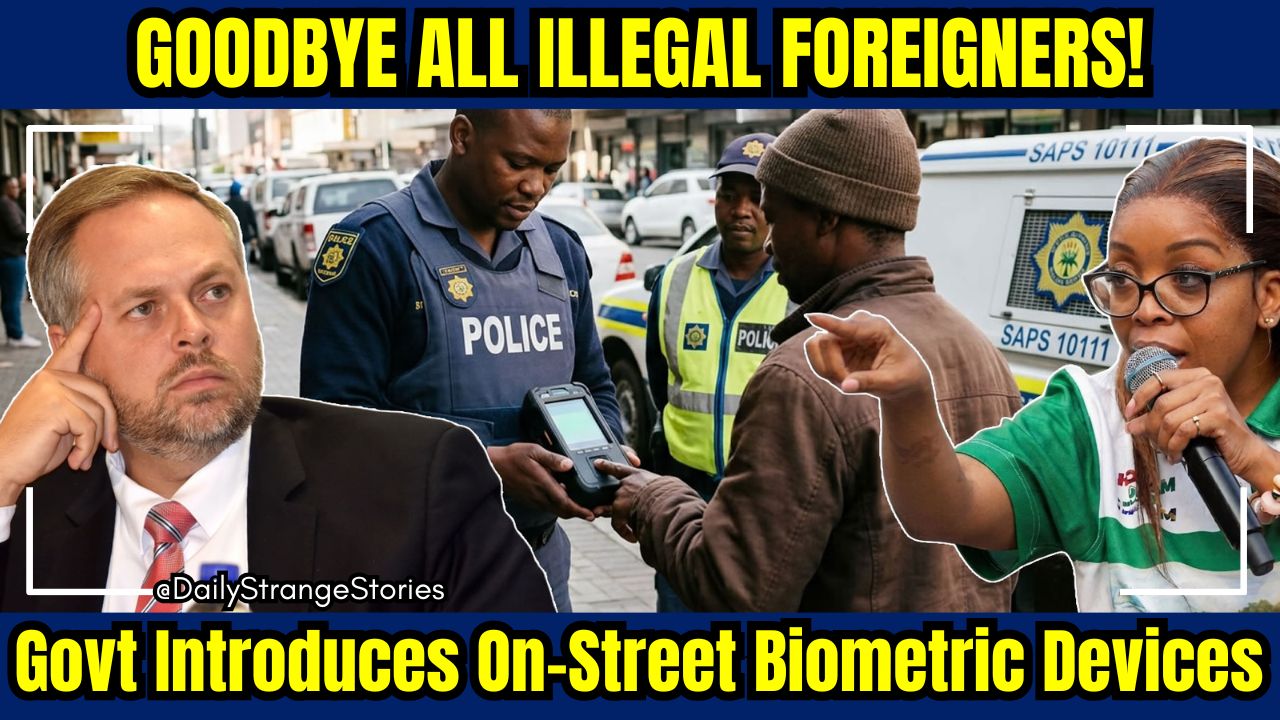
The Department of Home Affairs has issued a tender for a brand-new system: the Biometric Case Management System, or BCMS. This system aims to give officials the power to check anyone’s legal status in real-time, right on the street, using handheld mobile devices. Imagine an officer scanning fingerprints or a face and knowing within seconds if that person has the right to be in South Africa. This isn’t a future plan; the tender process is underway, and rollout is expected later this year.
This new biometric technology is the brainchild of Minister of Home Affairs, Leon Schreiber. Since taking office, Minister Schreiber has been on a mission to restore the ‘rule of law’ through an initiative known as ‘Operation New Broom’. He believes biometric technology can eliminate the risk of fake documents, as fingerprints or facial features cannot be forged.
We’ve already seen this technology in action. In 2025, a raid in Cape Town’s District 6 area led to the arrest of 25 individuals. Officials used biometric scanners on the spot, immediately flagging them as being in the country without proper documentation. Now, the government plans to scale this up nationally, ordering 600 rugged, waterproof devices with all-day battery life and the ability to scan all ten fingerprints at once.
Why this intense focus on technology-driven deportations now? South Africa has been under immense pressure from various groups to take a harder line on immigration. Movements like March and March, led by Jacinta Ngobese-Zuma, have been vocal about their demands. Jacinta Ngobese-Zuma recently spoke to hundreds in Mthwalume, KwaZulu-Natal, arguing that current efforts are insufficient and that many foreign nationals remain in South Africa after their travel documents expire. She claims the country’s borders are only working at a quarter of their capacity, making it easy for people to cross illegally. In Alexandra township, Johannesburg, groups have reportedly gone into homes, taking individuals to police vans, highlighting the rising tensions. Jacinta Ngobese-Zuma has stated these protests will continue every Thursday until their demands for tighter border controls and mass removal of people without papers are met.
The numbers tell a startling story: deportations increased by a massive 46% in the 2024-2025 financial year, with over 51,000 people sent back. This is the highest number in a long time, and with these new handheld devices, that figure is expected to climb even higher. Minister Schreiber has promised an ‘immediate response’ and more arrests, as officials can now verify status on the spot.
A specific trend shows over 80% of those deported are from Malawi, leading to questions about why this particular nationality is disproportionately affected. Economists warn that mass departures could hit South Africa’s GDP, with estimates as high as 43 billion dollars. Many industries rely on migrant labor, and their absence could lead to labor shortages and increased food prices. Former President Thabo Mbeki has warned that anti-immigration sentiment could be a ‘counter-revolutionary project’ or a distraction from leadership failures.
The Department of Home Affairs explains that these devices will transform and enhance the inspectorate that enforces the Immigration Act, making processes more efficient and providing instant, accurate responses. The devices are equipped with live biometric capture capabilities for real-time verification and storage of new suspect biometrics. Specifications include capturing all ten fingerprints, high-quality cameras, SIM and SD card slots, document and QR code scanning, eight-hour battery life, Android 10+, 128GB storage, 8GB RAM, and rugged, waterproof design. The tender closes in late July 2026, with a contract expected to last 36 months, signaling a long-term commitment.
This is South Africa Latest News that affects everyone. What do you think about the government’s plan to use these handheld biometric devices to track and deport foreign nationals? Is this the right way to handle the immigration crisis, or could this technology target innocent people and hurt our economy? Share your thoughts in the comments below.
#SouthAfricaLatestNews, #BreakingNews, #Documentary, #BiometricDevices, #IllegalImmigration, #HomeAffairs, #LeonSchreiber, #JacintaNgobeseZuma, #OperationNewBroom, #DeportationCrisis