


StanPay enters Zimbabwe’s mobile-wallet race as Stanbic targets EcoCash dominance
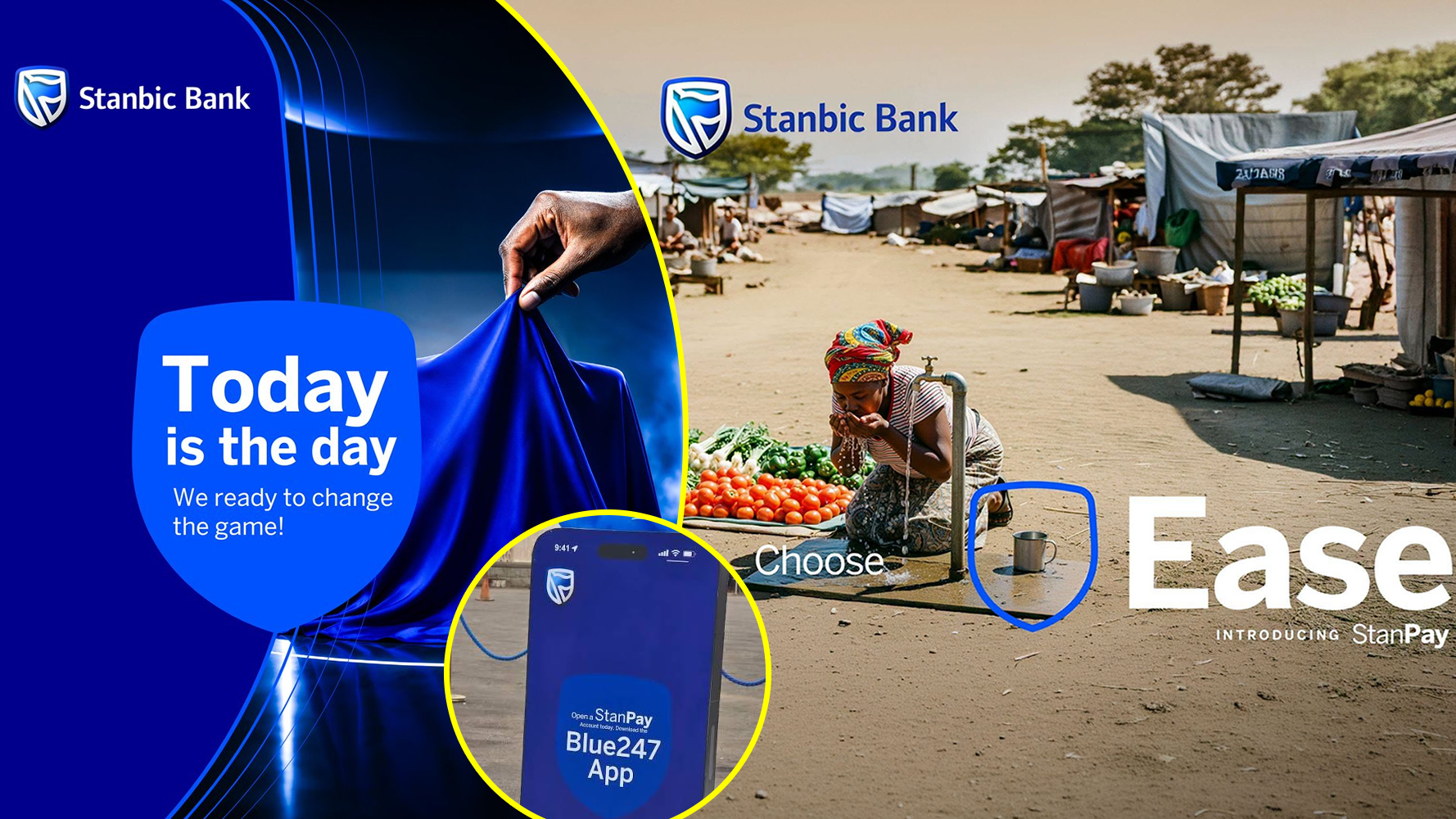
Stanbic Bank Zimbabwe has entered Zimbabwe’s crowded mobile-money market with StanPay, a new wallet that gives users a way to send money, pay bills and withdraw cash without a bank card.
The bank says the service is designed for all Zimbabweans with a national identity number, including people in the informal economy and those who have traditionally found formal financial services difficult to access. Customers can register through the USSD code *247# or by downloading the Blue247 mobile application from the Google Play Store or Apple App Store.
The launch places one of Zimbabwe’s best-known banks directly against established mobile-money services such as EcoCash, OneMoney, Mukuru Wallet and InnBucks. It also gives Stanbic a product that combines a mobile wallet with access to its existing banking infrastructure, including 55 automated teller machines across the country.
For customers, the most important feature may be the ability to withdraw cash from a Stanbic ATM by generating a voucher on a mobile phone. The user does not need a debit card. Where a Stanbic ATM is available, the bank says the service can be used around the clock, seven days a week.
Stanbic Bank Head of Digital and E-Commerce Banking, Ngoni Phillip Sandengu, said anyone can use StanPay to make payments, cash in and cash out, and transfer funds by dialling *247# or downloading the Blue247 App and signing up.
“StanPay is by no means the first in the market. However, we believe that we have built StanPay to become the best-in-market solution. Beyond the easily accessible and user-friendly digital capabilities that allow cashless transactions, purchases, and bill payments, StanPay is linked to 55 Stanbic Bank ATMs across Zimbabwe. The ATM cash withdrawals are so simple that they do not need a bank card – just a cash voucher which the user generates instantly on their mobile phone,” said Sandengu.
The design reflects how Zimbabweans already use financial services. Mobile phones are central to sending money, buying airtime, paying utility bills and settling transactions with shops and service providers. At the same time, cash remains important for household spending, informal trading, transport and small businesses. StanPay is being introduced as a bridge between those two worlds: a digital wallet for everyday payments, with an ATM network available when users need physical cash.
Sandengu said the platform had been developed for both the formal and informal markets. He said it was intended to deal with common, daily needs rather than serve only customers with conventional bank accounts.
“Just by dialling *247# or downloading the Blue247 App from the Google Play Store or Apple App Store, anyone in Zimbabwe with a Zimbabwean national ID number can open a StanPay wallet account within minutes, free of charge. Once opened, they can transfer funds into their wallet, generate a cash voucher, eliminating the need for a debit card, and withdraw cash from Stanbic ATMs or transact on the digital platform,” said Sandengu.
Stanbic says the wallet offers payments to more than 20 billers and service providers. The list includes the Zimbabwe Electricity Transmission and Distribution Company, TelOne, ZOL, DSTV, Econet and NetOne. Existing Stanbic Bank customers have been able to pay these service providers or billers for some years now through the *247# USSD code or the bank’s Blue247 App. In addition to paying over 20 billers, customers can also make purchases and move money through the *247# platform and the Blue247 App.
The bank says simplicity is at the centre of the service. A customer with a mobile phone can use the USSD channel without needing a smartphone or mobile data connection. Smartphone users have the additional option of using the application. The account is protected by a personal identification number, while Stanbic says the underlying platform has been built to provide a secure and dependable way of holding and moving funds.
That combination could give StanPay an immediate point of difference in a market where convenience is often decided by what a customer has in hand at the moment a transaction is needed. Many people, particularly those who do not have a driving licence, do not routinely carry their national identity document. EcoCash, however, instructs customers seeking to cash in or cash out at an Econet shop or EcoCash partner to bring an original national ID, the handset and the active line linked to the account. You certainly have seen a notice at an Ecocash agent that reads “NO ID NO TRANSACTION!“.
The identification requirement is part of the practical reality of using mobile money. It can be manageable when a person is close to home, but it may become an inconvenience when the customer is travelling, working or trying to withdraw cash in an emergency. StanPay’s proposed ATM process shifts the emphasis from presenting an identity document at an agent outlet to having the mobile phone and the correct PIN needed to generate a cash voucher.
That does not remove the importance of registration requirements. StanPay is open to people with a Zimbabwean national ID number, and customers will still need to protect their PIN and mobile phone. But once the wallet has been opened, the cardless withdrawal process could be attractive to people who want to access money without visiting an agent or carrying additional documents.
For EcoCash, the development comes as the company faces a competitor with an established national banking network and a substantial base of existing customers. Stanbic Bank has for years been recognised in Zimbabwe as the country’s best bank and, and the biggest Bank in Zimbabwe by asset base. It also serves major exporters and mining giants, including Zimplats, giving it relationships with large employers and commercially active customers.
Many Stanbic personal-account holders already use the bank’s mobile-banking platform through *247#. That same code will be used for StanPay. The bank therefore does not have to build an entirely new digital habit from the ground up. Existing customers already familiar with the code and the Blue247 platform can be introduced to the wallet through channels they know, while new users can join without opening a traditional bank account.
EcoCash, a subsidiary of Econet Wireless – Zimbabwe’s biggest mobile network operator – however, remains one of the country’s most recognised mobile-money brands, with a wide agent and shop network and services covering payments, remittances and bills. OneMoney, operated by state-owned NetOne, is another established option, while Mukuru Wallet has become important for recipients of cross-border remittances. InnBucks – a Chicken Inn ‘sister company’ – also competes for users who want to receive, send and spend money through a mobile-based service, including in the remittance market.
Each rival has a different advantage. EcoCash has brand recognition and a long-established network. OneMoney benefits from its government links. Mukuru’s strength is closely linked to international money transfers and the ability to deliver funds to wallet users and recipients. InnBucks benefits from operating next to its sister-businesses – Chicken Inn, Bakers Inn and Pizza Inn – the fastfood giants owned by Innscor.
StanPay enters that market with the credibility of Africa’s biggest commercial bank with thousands of customers already trusting the financial institution. Its challenge will be to turn the promise of cardless ATM access into a reliable daily service. Customers will judge it not only by registration, but also by the availability of cash, the number of merchants accepting it, transaction costs, network performance and the ease of resolving failed or disputed transactions. Having said that, judging by the experience this reporter has had with Stanbic since 2012 when I opened my Stanbic Bank account, such issues like the bank’s network being offline or cash being unavailable at an ATM are very rare.
The 55 ATMs announced at launch are a significant part of Stanbic’s pitch, but the value of that network will depend on where the machines are located. In major towns and business centres, an ATM-based withdrawal may be highly convenient. In rural areas and places without a Stanbic machine, agents and merchants will remain important. The service’s reach will therefore be shaped by both its digital platform and the growth of its cash-in and cash-out points.
Stanbic Bank has branches in Harare, Bulawayo, Chitungwiza, Chegutu, Chiredzi, Gweru, Hwange, Karoi, Kwekwe, Marondera, Masvingo, Mhondoro-Ngezi, Mutare, Mvurwi, Triangle, Victoria Falls, and Zvishavane. The bank also has ATMs in Beitbridge, Bikita, Kadoma, Kariba, Marondera, Makoni, Mvurwi, and Gwanda (Blanket Mine).
The bank’s move also follows a wider African shift towards digital payments. Mobile money began to change the region’s financial landscape after the launch of M-Pesa in Kenya in 2007 and spread into Zimbabwe several years later. Since then, wallets have moved beyond person-to-person transfers into bill payments, retail purchases, salary payments, remittances and other financial services.
Stanbic has already launched StanPay in Zambia, where the service was introduced in July 2025 as a digital payment solution focused on cardless transactions. The Zambian rollout was linked to merchant payments and was made available through a network of participating retail points. The Zimbabwean launch gives the bank an opportunity to apply that regional experience to a market where mobile wallets are already part of everyday economic life.
The bank operates in several African countries, including South Africa, where its parent company is based, as well as Botswana, Zambia, Kenya, Tanzania, Nigera and many other countries. If similar wallet services are introduced across more of those markets, cross-border transfers between StanPay users could eventually become an additional advantage. That would be especially significant for Zimbabweans who send or receive money across the region, although the practical benefits would depend on how the services are connected and priced.
For now, StanPay’s immediate contest is at home. Its arrival offers Zimbabwean consumers another choice in a sector where users often maintain several wallets and select a service depending on the recipient, the merchant, the availability of cash or the cost of a transaction.
Sandengu said StanPay had been created to support the transactional needs of every Zimbabwean.
“StanPay was built with both the formal and informal Zimbabwean markets in mind and is designed to support the transactional needs of every Zimbabwean. There are more than 20 billers and service providers on StanPay, including ZESA, TelOne, ZOL, Econet, NetOne, and many more,” said Sandengu.
The mobile-wallet race has therefore gained a new entrant with the resources of a major bank behind it. StanPay’s first test will be whether its cardless withdrawals, bill-payment options and simple registration can move it from a newly launched product to a daily financial tool for Zimbabweans across the formal and informal economies.