


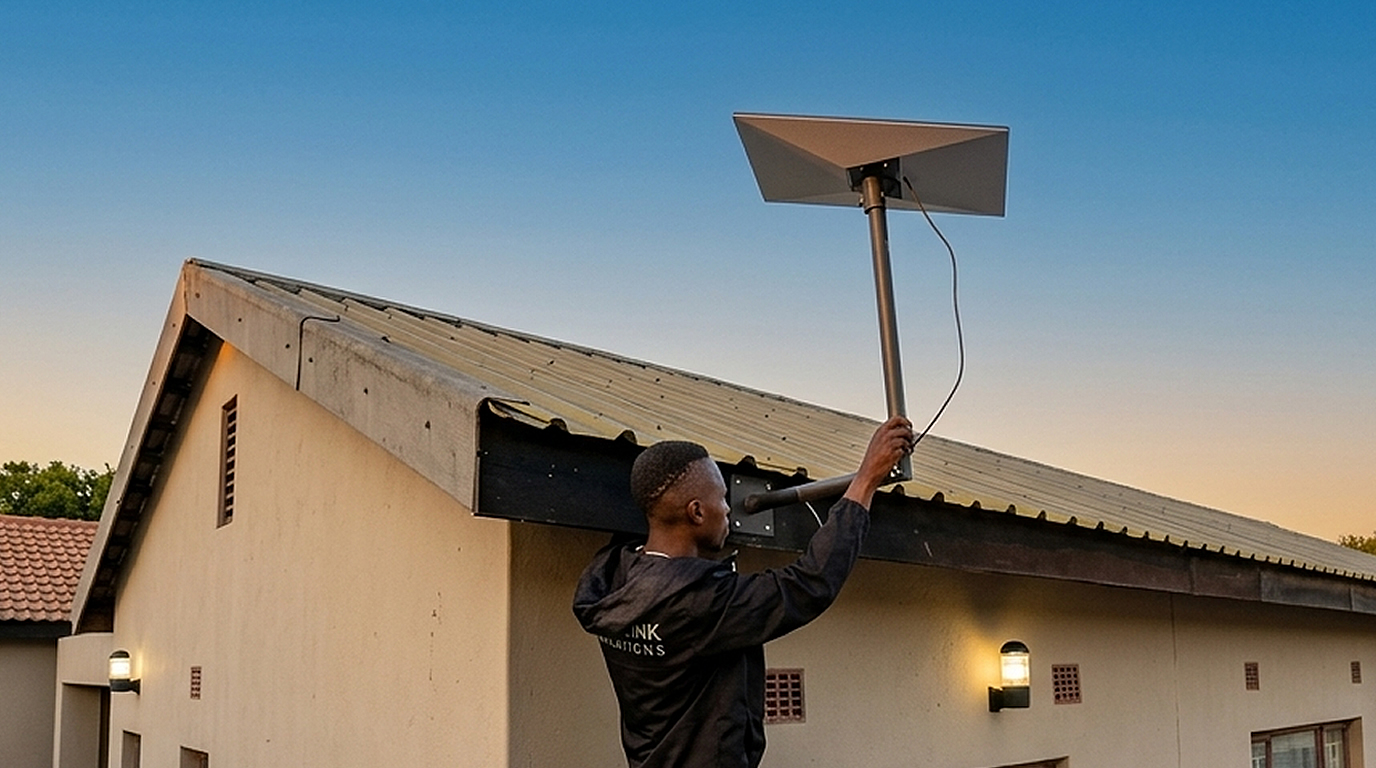
Foreign-registered roaming accounts face a 30-day limit, while the government says an agreement has been reached for a local ground station in the first quarter of 2027.
Some Starlink users in Zimbabwe could lose service because their equipment is operating on accounts registered in other countries, just as a planned local ground station promises a potential boost to the country’s fast-growing satellite internet market.
The risks are not the same for every customer. Starlink’s new international roaming rules affect users whose accounts are registered abroad and whose dishes are being used in Zimbabwe. Customers on locally registered Zimbabwean accounts are not automatically caught by the 30-day travel limit. But the rules could disrupt households that turned to overseas accounts when local residential service was unavailable or capacity-constrained.
The other development is a proposed Starlink ground station, which ICT Minister Tatenda Mavetera says is expected in early 2027. It would be a major addition to the country’s satellite infrastructure, although the announcement does not mean the facility is already built or that it will immediately remove limits on residential sign-ups in busy cities.
Starlink’s updated international travel policy says Roam Unlimited customers may use their service outside the country where their account is registered for up to 30 days at a time. The company says new customers signing up from July 14, 2026, are subject to the updated policy, while existing customers moved to the new terms on August 17, 2026.
When the 30 days are up, Starlink lists 3 options: upgrade to a Global Business plan, transfer the account to the country where the customer has relocated, or return the equipment to its registered home country. The company says returning to the home country resets the travel allowance. Its other Roam plans are now intended for use in the registered country or an eligible regional grouping, rather than as a way to maintain a permanent connection abroad.
The company’s business service has a separate transition period. Until December 1, 2026, Local Priority customers can use the service outside their registered country for up to 60 days. From that date, the international allowance is set to fall to 30 days as well.
International users may also be asked to complete Travel Registration and provide a passport or other government-issued photo identification. Starlink says use in countries where service is not authorised may result in immediate restrictions. The registration process does not extend the 30-day period for Roam Unlimited users.
A customer using a kit registered in Chile described how the change affected their connection after the policy took effect. The user wrote:
“My Roam Unlimited kit is registered in Chile and had been outside Chile since June 23. The new policy took effect on August 17, and my service was restricted yesterday. Starlink Support confirmed that the time already spent abroad was counted—they did not start a new 30-day window on August 17. Completing Travel Registration does not extend that allowance.”
The case illustrates why users relying on a foreign-registered account may not receive a fresh month of service simply because the updated rules began in August. The restriction can take account of time already spent outside the registration country, according to the customer’s account. The person also said Support described returning the kit to Chile or cancelling and reactivating it under a local account as possible routes forward.
Zimbabwe has a particular exposure because overseas accounts became a workaround for customers who could not obtain local residential service in some areas. Starlink launched in the country in September 2024, and demand quickly outstripped available capacity in parts of Harare and Bulawayo. In the first weeks, people trying to order in some urban areas were told that Starlink was at capacity. Some customers subsequently relied on kits registered in countries such as Zambia, Mozambique, France and the United Kingdom to get online in Zimbabwe.
That arrangement helped some households connect, but it left them dependent on a service plan intended for travel rather than permanent use in another country. The new rules draw a harder line between temporary international use and a dish being used abroad for months. Customers who do not control the overseas account details or identity documents may find it difficult to complete registration or move the service into their own name.
Some users have also tried to share a single connection to reduce costs. In one reported example from Harare, 5 households split a monthly US$50 subscription, bringing the contribution to about US$10 per home. The shared connection served people who might otherwise struggle to pay for a separate plan. But if the account supplying that neighbourhood connection is registered overseas and is restricted, the impact can reach beyond the person who bought the dish.
There have been reports of users switching a roaming terminal off for as long as 2 days in the hope of avoiding or resetting the travel limit. That is a reported user tactic, not an option listed in Starlink’s policy, and accounts have not all experienced it as a reliable solution. Starlink’s published routes are to return home, localise the account or move to a plan designed for extended international use.
The rules arrive as satellite internet has become one of Zimbabwe’s fastest-growing forms of fixed connectivity. In its first-quarter 2026 sector report, the Postal and Telecommunications Regulatory Authority of Zimbabwe recorded 86,488 active VSAT subscriptions, up from 67,057 in the previous quarter, a rise of 28.98%. The regulator said Starlink continued to drive the increase. VSAT is a category of satellite connection, so the figure should not be read as a count of Starlink accounts alone.
The same table recorded 86,505 active fibre subscriptions in the first quarter, only 17 more than the VSAT total. Fibre subscriptions increased by 0.32% over the quarter, while VSAT subscriptions climbed sharply. The numbers show how close satellite connectivity had come to matching fibre in the regulator’s fixed-internet subscription categories. They also underline why even a limited service restriction could affect a substantial and growing pool of users.
The planned ground station is the positive side of the announcement. Mavetera said SpaceX had concluded an agreement with a local Starlink dealer to set one up in the first quarter of 2027. In her statement on X, she wrote: “There is no policy nor directive preventing Starlink from setting up a ground station in Zimbabwe. Space X has concluded with one of the Starlink dealers in country for first Q1 2027.”
She added that the government would monitor progress and play a facilitating role. The announcement points to an agreement and a target period, not a completed installation. The government’s role, as described by the minister, is to support and monitor implementation.
A ground station is the point where a satellite can pass internet traffic down to equipment connected to terrestrial networks. At present, Zimbabwean Starlink traffic is routed through ground stations outside the country. A local facility could give satellites passing over Zimbabwe a closer place to send traffic and could improve the network’s ability to serve local users. The exact benefits will depend on the final infrastructure and how it is connected to the wider internet.
A ground station is not the same thing as a local internet exchange or Point of Presence, which could keep some local traffic inside Zimbabwe and connect Starlink directly with local networks and cached content. Nor is a ground station by itself a guarantee that every neighbourhood will be able to sign up for an ordinary residential plan. Capacity depends on more than the gateway location, including the number of satellites and how many users are competing for service in a particular area.
That distinction matters most in Harare and Bulawayo, where residential demand has repeatedly run ahead of available capacity. A ground station could improve how satellite traffic reaches the internet and help make more of the satellites overhead useful to local customers. But the change would not, on its own, guarantee an immediate end to waiting lists or capacity limits in the most densely populated districts. Newer, higher-capacity satellites and additional network investment are also part of the capacity picture.
For now, the two developments leave users facing different timelines. Customers on locally registered accounts can continue to use their service without being automatically affected by the international roaming rule. Those relying on foreign registrations should check their account’s home country, plan and travel status, because the 30-day allowance may determine whether their connection remains active. The ground station, meanwhile, is a government-announced project targeted for the first quarter of 2027, with the potential to strengthen Zimbabwe’s satellite infrastructure if it is delivered as planned.
The contrast is sharp: the satellite service’s rapid growth has opened a new route to connectivity, but customers who entered through overseas accounts are now being pushed towards a local registration or a more costly international plan. Zimbabwe is also preparing for a local gateway that could improve the way Starlink traffic enters the country. For the households caught between the two changes, the immediate question is whether their account is registered at home—or somewhere else.