

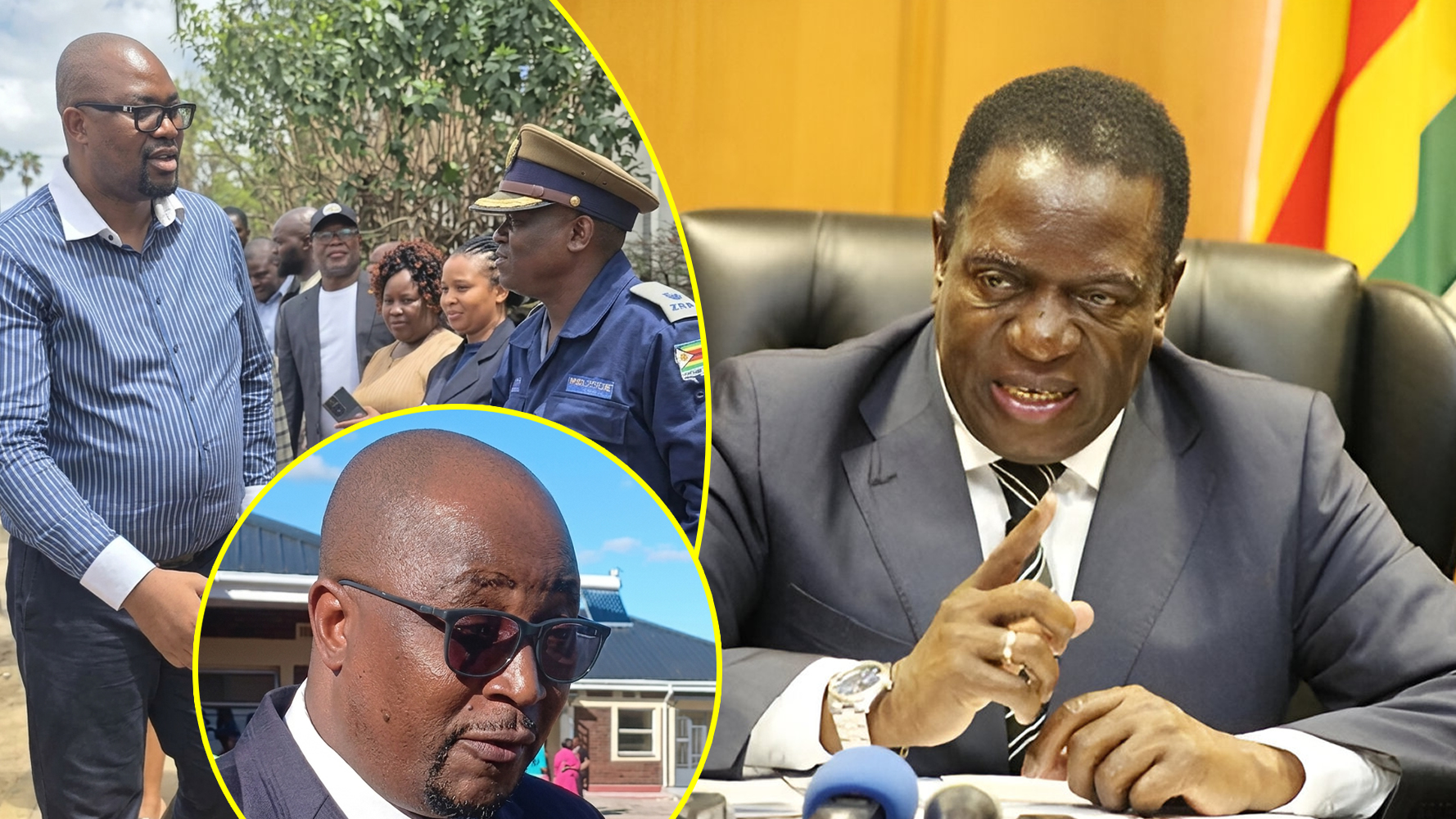
Presidential spokesperson George Charamba has publicly rebuked former Local Government and Public Works permanent secretary Tafadzwa Muguti, saying he was “out of order” after attempting to restrict media coverage of proceedings in traditional courts.
Charamba’s intervention came a day after Muguti was removed from the influential government post, less than two months after taking it up. The formal announcement of his replacement did not state a reason for the change, but Charamba’s comments identified the chiefs’ court directive as an issue on which he believed Muguti had exceeded his authority.
“The former PS was out of order!!!!” Charamba wrote in a post on X.
He said traditional courts form part of the country’s Judiciary and cannot be regulated by an official acting for the Executive. “Chiefs’ courts are part of the court system of the country. They are part of the Judiciary and no member of the Executive Branch can set rules for those courts without breaching the doctrine of separation of powers,” he said.
Charamba also argued that the media could report on court proceedings unless the judicial officer in charge imposed a restriction. “No government official can bar the media from covering court proceedings; only judicial officers in charge of those proceedings can,” he said.
The dispute followed Muguti’s criticism of filming and posting cases heard by chiefs on social media. Speaking at a meeting with provincial assemblies of chiefs, local-government directors and district development coordinators, Muguti said recordings could expose private disputes and undermine the dignity and confidentiality of traditional justice.
“We should not be allowing cellphones in the chief’s court, where a case is being heard in confidentiality,” he said in remarks reported earlier. He also said people appearing before chiefs should not fear that their personal matters would be shared online, and indicated that the ministry was working on amendments to the Traditional Leaders Act.
Muguti’s position placed him in the middle of a dispute over who could set rules for traditional courts. Charamba said any concern about what happened in a particular proceeding should be dealt with by the court hearing it, or taken to a higher court. He said it was for the judicial officer presiding over a case to decide whether a hearing should be public or held in camera.
The dismissal was announced on Wednesday, 11 November. Chief Secretary to the President and Cabinet Martin Rushwaya said President Emmerson Mnangagwa had appointed Dr Addmore Pazvakavambwa as permanent secretary in the ministry with immediate effect. Pazvakavambwa had previously served as permanent secretary for provincial affairs and devolution in Masvingo.
The announcement invoked Section 205(1) of Zimbabwe’s Constitution and named the new appointee, but did not explain Muguti’s departure. Muguti had taken up the local-government post in September after serving in Harare’s provincial administration. His brief time in the ministry was marked by a series of forceful directives and public interventions that touched on the courts, street trading, homes, disaster relief and access to land.
Directives that brought public criticism
One of the earliest controversies of his short tenure involved a proposed ban on tinted windows in private and public vehicles. Muguti announced that the restriction would take effect immediately, with exemptions for certain official vehicles. The announcement brought confusion over whether the ban was in force and drew questions about the legal basis for such a sweeping measure.
He also promoted Operation Chenesa, a campaign to clear illegal structures and regulate trading in central business districts. Under the announced rules, informal traders in central business districts were permitted to operate between 6am and 6pm. The limits affected people who rely on street vending for daily income and prompted complaints from traders facing tighter controls over where and when they could sell.
A confrontation involving an airtime seller with a disability became a prominent image of the campaign. Muguti was filmed directing municipal police to arrest the vendor in Harare’s central business district. The incident fuelled criticism of the operation and raised questions about how its rules were being enforced against people with limited choices for earning a living.
Muguti also attracted criticism over remarks that citizens should remain in their ancestral areas rather than buy land elsewhere. The comments struck at a sensitive issue in a country where people move between provinces for work, trade and family life. They prompted concern that government officials should not discourage citizens from settling outside the areas associated with their origins.
Another major dispute followed a hailstorm in Masvingo in early October. The storm damaged more than 17,000 homes, leaving some families without roofs and in need of food, shelter materials and other assistance. Muguti directed that support be coordinated through district or provincial government structures rather than delivered independently to affected communities.
“Whoever is going to do anything during this disaster will be coordinated at a district or provincial level. We don’t want people who are going to do things by themselves,” he said.
He also warned organisations not to “go on the ground without the directive of the government leadership.” The instruction placed the ministry at the centre of a dispute over how quickly aid groups and private donors could reach families. Residents needed urgent help after the storm, while Muguti insisted that assistance should be channelled through official structures.
The chiefs’ court row added to those disputes. Muguti argued that publishing recordings of proceedings could expose sensitive family and community matters. Charamba’s response was that protecting a person’s privacy in an individual case was a matter for the presiding judicial officer, not a blanket rule imposed by a ministry official. His intervention offered a direct public rebuke from within the Presidency soon after Muguti’s removal.
Earlier clashes over local authority
The controversies followed Muguti from his earlier role in Harare’s provincial administration. In 2021, he directed non-governmental organisations, civil society groups and trusts operating in the province to submit work plans and information about their funding and activities to his office. Organisations challenged the directive, and the High Court barred him from interfering with, suspending or stopping their work while the case was before it. The court held that the law then in force did not give his office authority to police those organisations.
His approach to informal trading also brought him into conflict with residents and traders in Harare and Chitungwiza. A High Court order in 2021 halted certain demolitions of traders’ structures. The following year, Chitungwiza residents’ representatives filed a contempt application, arguing that demolitions had continued despite the order. They sought action against Muguti and a municipal official.
In September 2022, Muguti ordered the closure of the Park Street Weekend Market in central Harare. Armed anti-riot police were deployed to seal the site, where widows and young people sold goods at weekends. Market organisers said the market had permission to operate and accused Muguti of disregarding a court order protecting it. The closure drew opposition from vendors and people connected to the governing party who relied on the market for business.
The latest period of demolitions brought similar tensions back into view. Muguti had been among the officials publicly backing enforcement against structures built without approval. Residents whose homes were targeted said some had paid for stands and built over many years, while authorities pointed to unauthorised construction, disputed land sales and building on land reserved for public use.
Just before Muguti’s departure was announced, Local Government Minister Daniel Garwe said the government had not ordered the demolition of houses in Ridgeview and Belvedere and called on local authorities to stop the work. The public disagreement came as residents faced the loss of homes and possessions, and as local authorities pressed ahead with enforcement action.
Across these episodes, Muguti’s decisions reached beyond routine administration. They affected where people could trade, how communities received emergency aid, whether organisations could operate without submitting detailed information to provincial offices, and who could decide how proceedings in chiefs’ courts were covered.
Charamba’s comments brought the traditional-court dispute into sharp focus. He said the media’s ability to report on court proceedings could not be removed by an executive directive and that decisions about privacy belonged to judicial officers. His phrase, “The former PS was out of order!!!!”, was an unusually blunt assessment of Muguti’s attempt to restrict reporting.
Muguti’s time as permanent secretary ended after barely two months, with Pazvakavambwa appointed to take over immediately. While the appointment notice announced the change without giving a reason, Charamba’s public remarks made clear that, in his view, Muguti had crossed a line when he sought to dictate how the media could cover traditional courts.