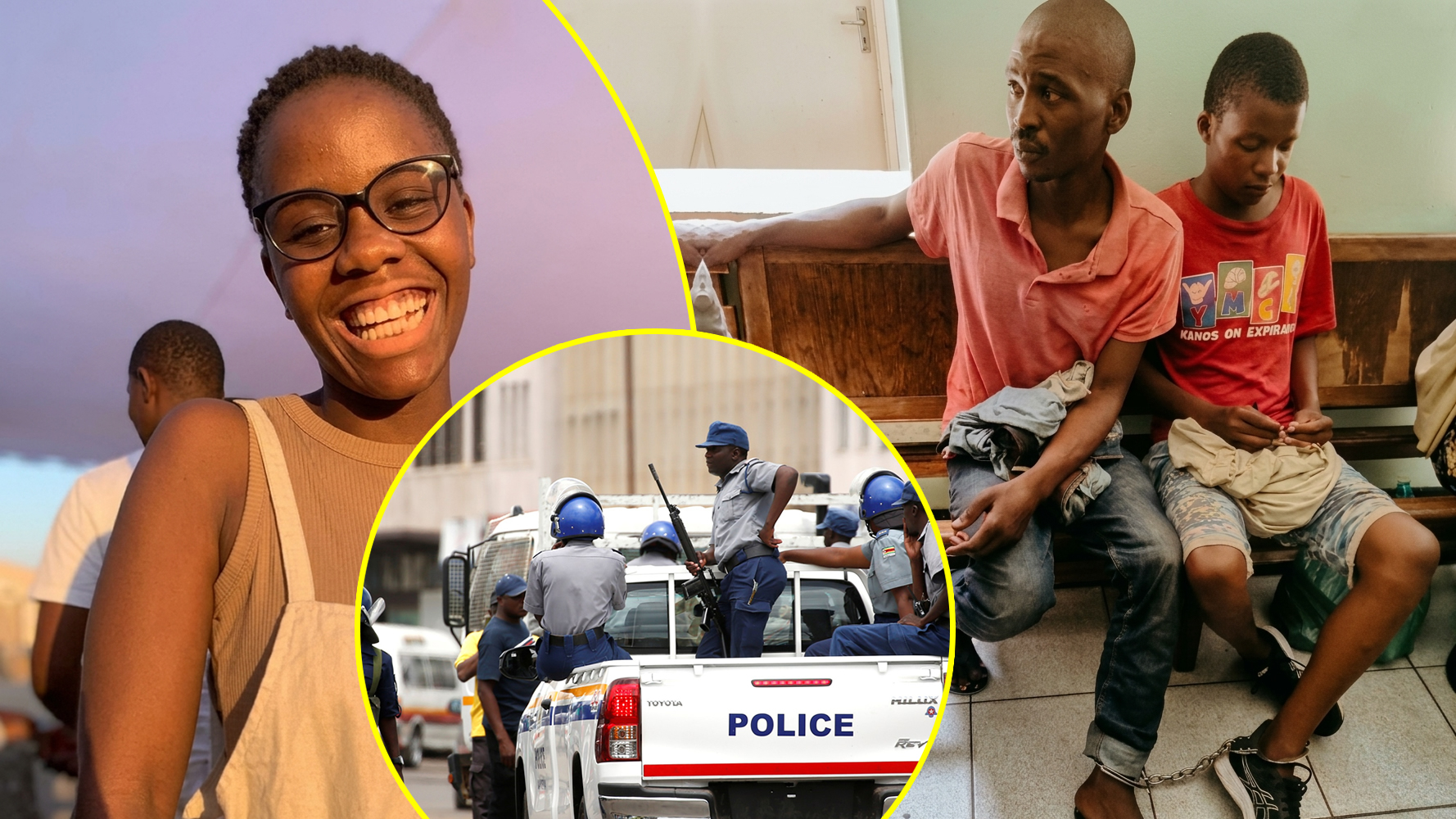
A chance stop by a passing motorist brought help to Inobubele Mhlanga after she was found bleeding beside a road in Cowdray Park. But the 23-year-old Bulawayo Polytechnic student was already struggling to breathe, and she died after being taken to Mpilo Central Hospital.
More than 2 years later, the woman who carried her to hospital has described those final moments in the High Court. The account has also brought renewed attention to the investigation that led police from a sweep of known robbery suspects to the arrest of 2 men now on trial for her death.
Mhlanga was on her way home from college on the evening of November 4, 2024. She had disembarked from a commuter omnibus near the TM turn-off in Cowdray Park and was walking towards her home when, according to the State’s case, the 2 men confronted her on a road leading into the neighbourhood.
The accused are Thamsanqa Ndebele, 28, and Elton Sebata, 40. They deny the murder charges. The trial before Bulawayo High Court Judge Justice Naison Chivayo is continuing, with the men remanded in custody until November 26.
The court has heard that one man allegedly grabbed Mhlanga from behind while the other took her handbag. When she screamed, Sebata allegedly stabbed her several times in the chest. The men then ran off with the bag and US$30, leaving her badly wounded.
The State says Mhlanga had left Bulawayo Polytechnic, where she was studying for a Diploma in Fashion and Design, and was making the short journey from the bus stop to her home. The attack happened close to the Assemblies of God Church, along Corridor Road, in the Cowdray Park suburb.
Nomvula Dube, a 33-year-old general hand at Mpilo Central Hospital, told the court that she was driving with her boyfriend, Nqabutho Moyo, at about 8PM when they noticed people gathered beside the road. They stopped to find out what had happened.
“On 4 November 2024, at around 8PM, I was in the company of my boyfriend, Nqabutho Moyo when I saw a crowd of people along Corridor Road in Cowdray Park suburb. We got suspicious and stopped to see what was happening,” she said.
Dube said she found Mhlanga lying in a pool of blood and gasping for breath. She lifted the student into her car and drove her to Mpilo, where she died upon admission.
“I observed the deceased lying in a pool of blood, struggling to breathe. Upon noticing the deceased’s distressing situation, I gently lifted the deceased into my car and rushed her to Mpilo Central Hospital, where she died upon admission,” she said.
Afterwards, Dube obtained Mhlanga’s details, contacted her relatives and urged them to get to the hospital. The court also heard from the student’s mother, Bongani Mhlanga, 55, who spoke about the trauma of losing her daughter. She told the court that she did not know either of the accused.
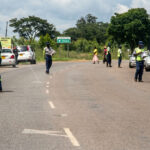
The police operation that led to the arrests began the day after the killing. On November 5, officers in Cowdray Park rounded up people known to them as robbery suspects as part of their inquiries. Among those detained was Playmore Mpofu, 27, who was already being held in connection with another robbery case.
Police said Mpofu implicated Ndebele and Sebata during questioning, telling investigators that they had committed robberies with him in the suburb. A follow-up, assisted by members of the public, led officers to the 2 men in Cowdray Park. They were arrested after a tip-off on November 6, according to evidence given in court by a police officer stationed at Cowdray Park Police Station.
The officer told the court that the 2 suspects provided written explanations after they were interviewed. The officer then passed them and their statements to detectives from the Criminal Investigation Department’s Homicide section for further investigation.
In an earlier account of the arrests, police spokesperson Inspector Abednico Ncube said Ndebele admitted to attacking Mhlanga and taking her handbag with Sebata’s help. Police said the bag contained US$30. Ncube also said investigators recovered the knife believed to have been used in the attack and kept it as an exhibit.
The accounts heard at trial and given by police in the days after the killing describe how the robbery turned into a fatal stabbing. The prosecution’s outline says the attack began as Mhlanga turned from the main road towards her residence. When she cried for help, the man accused of stabbing her allegedly used the knife to silence her. The pair then fled into the darkness.
The first response came from ordinary residents and passers-by. Dube and Moyo stopped when they saw the crowd; Dube took Mhlanga to hospital, while other people at the scene helped alert her family. Her mother’s testimony has placed the loss inside the courtroom, while Dube’s account has recalled the brief, desperate interval between discovery and the journey to Mpilo.
The killing also intensified calls in Cowdray Park for residents to organise against crime. At the time, residents’ association chairman Chipa Nechironga said a 4-person neighbourhood watch team had stopped night patrols after members were no longer receiving their payments. The scheme depended on households contributing US$2 a month, with each patrol member receiving US$100.
Nechironga said the residents’ association planned to call a meeting to restart the patrols. The family also spoke about repeated knife attacks in that part of Cowdray Park. Mhlanga’s father, Geshon, said her belongings had been found near the scene and called on anyone with information to contact police. Her uncle, Sikhathele Mhlanga, urged residents to work together to prevent further attacks.
A neighbourhood-watch initiative was reported in Cowdray Park in December 2024, with residents forming patrol teams and contributing US$2 per household each month. The Zimbabwe Republic Police said such teams should be vetted and operate under police supervision. Their role, police said, was to patrol, prevent crime and help protect crime scenes—not to take enforcement into their own hands.
Violent robbery cases continued to be reported in the suburb after Mhlanga’s death. In April 2025, police said suspects arrested in connection with a separate series of Bulawayo armed robberies were also linked to a March 15 robbery at a Cowdray Park fuel station, where ZAR186,000 was stolen.
In another separate Cowdray Park case, police reported that a 25-year-old man had been arrested over a string of night-time robberies and an attempted murder between June 2 and July 24, 2025. Investigators linked him to 7 robbery cases and 1 attempted-murder case. Police said the incidents involved victims walking alone and weapons including knives, a machete and an axe. Stolen mobile phones recovered from a dealer in Bulawayo’s central business district helped lead officers to the suspect.
Those later cases are not linked to Mhlanga’s killing. They do, however, echo the circumstances that had alarmed residents after her death: people travelling alone at night, attacks with bladed weapons and the difficulty of making neighbourhood patrol arrangements last. The investigation into Mhlanga’s killing began with a broad police sweep, but it was information from a man detained in another robbery case, followed by a tip-off and community assistance, that led officers to the 2 accused.
The High Court trial has now returned the case to the night of November 4, when Mhlanga was walking home from college. Dube’s evidence has described seeing the crowd, finding the student unable to breathe normally and driving her to hospital. The police testimony has set out how the search moved from the initial sweep to interviews and the handover to homicide detectives.
The case is due to continue on November 26. For Mhlanga’s family, the proceedings have brought witnesses through the events that took her life: the attack on the road, the effort to get her medical help and the investigation that followed. For the court, the next hearings will continue to examine the prosecution’s account and the evidence presented by both sides.