

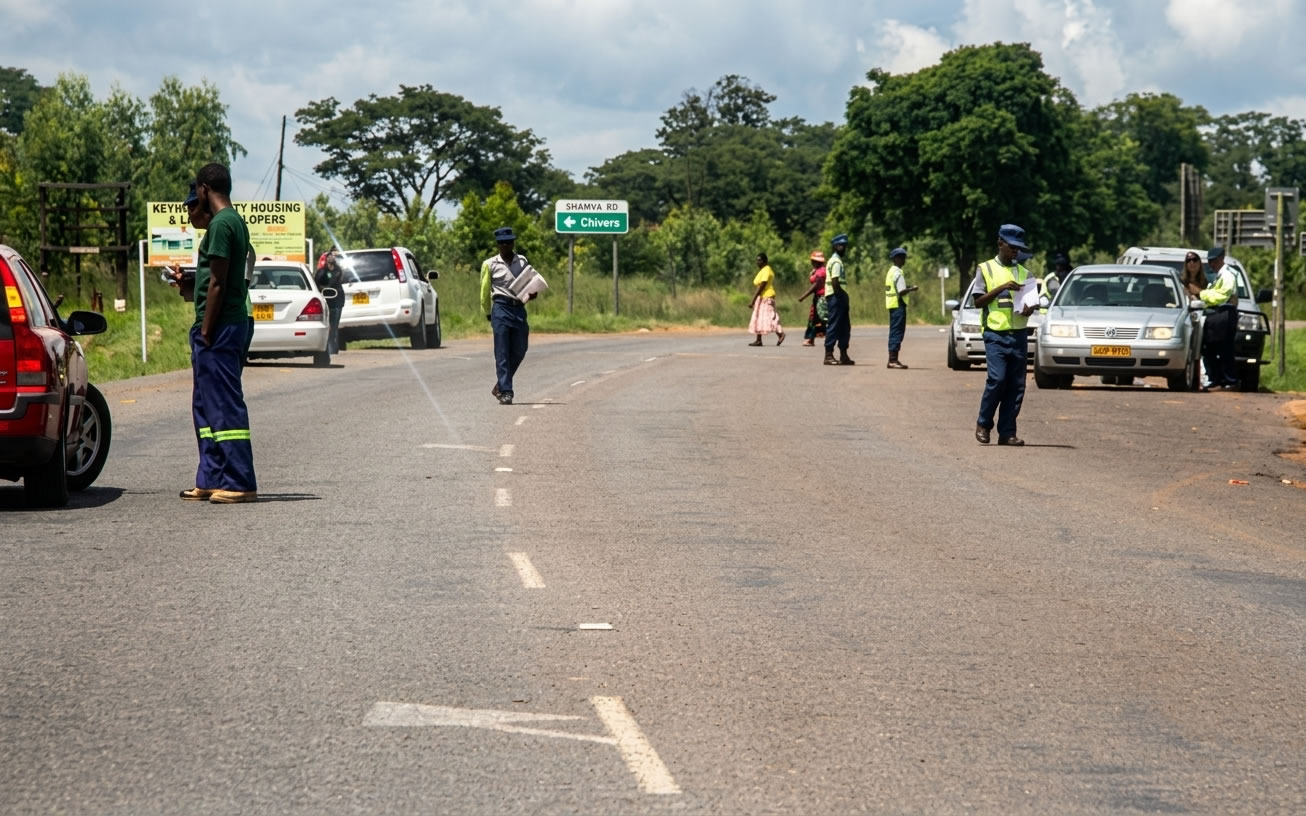
A 32-year-old Harare truck driver has been jailed for two years and banned from driving for life after he was caught behind the wheel while heavily intoxicated on a major highway.
Tapiwa Chidawa, who lives in Hatcliffe, was stopped at a security roadblock on the Harare–Chirundu Highway. A test found that his alcohol level was more than four times the legal limit. He was later convicted by the Karoi Magistrates’ Court and sentenced to 24 months in prison.
The court also barred Chidawa from driving for life, removing his right to operate any motor vehicle. The sentence followed a case in which the prosecution described the high level of impairment and the danger posed to other people using the road.
The arrest took place on one of Zimbabwe’s important transport routes. The highway carries commercial traffic travelling between Harare, Chirundu and neighbouring countries, including heavy goods vehicles and passenger vehicles. A truck driver’s ability to control a vehicle is critical on such a route, where a large vehicle shares the road with smaller cars and buses.
Officers stopped Chidawa’s truck at the roadblock and tested him for alcohol. The result showed that he was driving at more than four times the permissible limit. The case was then brought before the Karoi court, where he was found guilty and given the prison term and permanent driving ban.
The 24-month sentence is the same length as the prison term imposed in a separate recent case involving a truck driver in Bulawayo. In that matter, Tatenda Janasi, 33, was driving an Eicher Pro 1075 heavy vehicle along Nketa Drive on 13 September when he struck a stationary Toyota Vitz near Chicken Corner. The collision damaged the smaller vehicle’s right headlight and front fender. No injuries were reported.
Janasi’s alcohol concentration was recorded at 344 milligrams per 100 millilitres, against a stipulated limit of 150 milligrams. He was convicted of driving under the influence and driving without due care. The court fined him US$130 for the latter offence, with two months in prison as an alternative if he failed to pay. He received 24 months in prison for drink-driving and was banned for life from driving heavy motor vehicles.
The cases involve different circumstances and different court orders. Janasi was barred from driving heavy vehicles, while Chidawa’s ban is described as a lifetime prohibition on driving. Both cases, however, concerned truck drivers who were found to have consumed alcohol before taking control of heavy vehicles.
Another truck driver was jailed after being stopped on the Harare–Mutare Highway in June. Patrick Tumbo, 40, was driving a haulage truck and trailer when police officers at a roadblock stopped him for breaching road markings that prohibited overtaking. Officers later took him to a police station after observing abnormal behaviour and suspecting that he had been drinking.
A breathalyser test recorded Tumbo’s alcohol concentration at 212 milligrams per 100 millilitres of blood, above the reported legal limit of 80 milligrams. The court sentenced him to an effective two years in prison after finding him guilty of driving under the influence. The case began with a traffic violation at a roadblock, where police attention to the driver’s behaviour led to further testing.
Chidawa’s arrest also began at a roadblock, where officers were able to stop the vehicle and check the driver before he continued along the route. The test result became central to the case presented in court. The prosecution set out the degree of impairment and the risk the driver’s condition created for other road users.
The Harare–Chirundu route is used by long-distance haulage operators as well as motorists travelling between towns and across borders. Trucks move goods along the corridor, while passenger vehicles use the same road. The mix of traffic means that safe control of a heavy vehicle is essential, particularly when it is travelling at speed or passing other vehicles.
A truck requires space and time to slow down or change direction. When a driver is impaired, recognising a hazard and responding in time can become more difficult. Those risks affect not only the driver but also passengers and people in smaller vehicles sharing the road. The court heard details of Chidawa’s level of intoxication before imposing its sentence.
The recent convictions have brought several drink-driving cases involving commercial vehicles before courts in different parts of Zimbabwe. In June, Tumbo was sentenced after a roadblock stop on the Harare–Mutare Highway. In September, Janasi was convicted following a collision in Bulawayo. Chidawa’s case followed his arrest on the Harare–Chirundu Highway and ended with a two-year prison term and a lifetime driving ban.
Chidawa, a resident of Hatcliffe, was sentenced by the Karoi Magistrates’ Court after the National Prosecuting Authority presented the case. The prosecution detailed the test result and the danger his condition posed on a busy route. The magistrate found him guilty and imposed both the custodial sentence and the permanent ban.
The ruling means Chidawa will spend 24 months in prison and will not be permitted to drive again. His case adds another severe penalty for a professional driver convicted of operating a heavy vehicle while intoxicated. The roadblock stop brought the incident to police attention before the truck continued on the highway, and the test result formed the basis of the case that led to his conviction.