

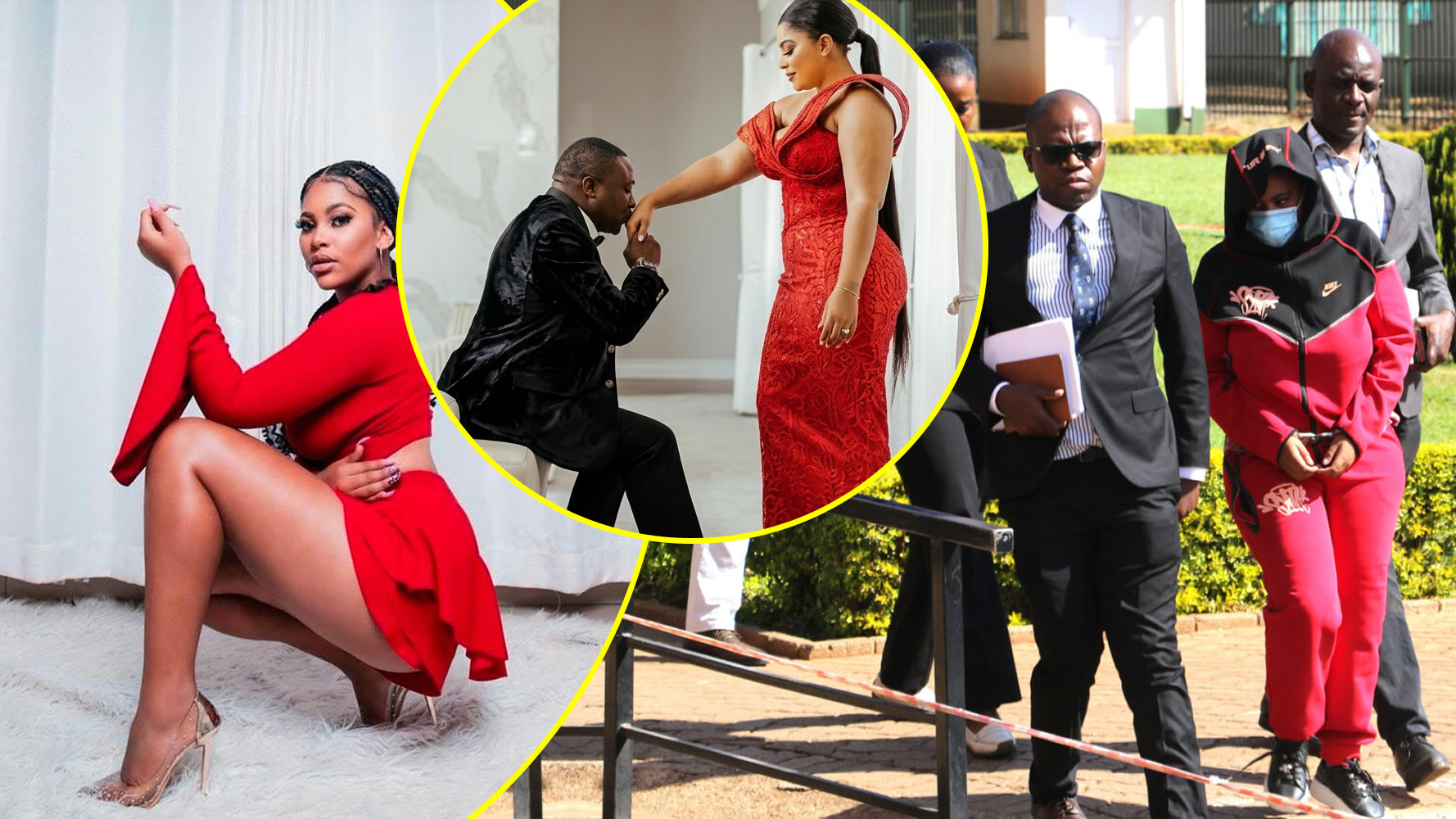
A hurried guilty plea, reduced drug charges and modest fines brought the cases against Kelsea Tafirenyika and three female relatives to a close in November. But the way those pleas were handled has raised questions about the court process, just as prosecutors abandoned a separate money-laundering case alleging that Tafirenyika built a US$9.3 million property and vehicle portfolio with proceeds from drug-related activity.
Tafirenyika, 22, is the second wife of Collins Mnangagwa, one of President Emmerson Mnangagwa’s twin sons. Her mother, Amina Jassinta Jessub Arab, 47, sister Dyonne Tanaka Tafirenyika, 28, and aunt Noreen Jessub, 51, were also caught up in the drug investigation. The four women admitted drug-related offences and were fined. Their cases did not proceed to the trials that had been scheduled.
The sequence in Harare began on 7 October, when Tafirenyika appeared before magistrate Winfilda Tiyatara on an allegation of unlawful dealing in dangerous drugs. Prosecutor Mandirasa Chigumira told the court the investigation was incomplete and sought a postponement to 27 October. Defence lawyers consented, and the court granted the request.
The next day, however, Tafirenyika was back in court before a different magistrate, Ignatio Kudakwashe Mhene. The hearing began after 4pm. Chigumira was again prosecuting, while Advocate Silvester Hashiti appeared for the defence. The lawyer already on record for Tafirenyika, Admire Rubaya, later said he had received no notification of the hearing and was not present.
The charge had changed. Instead of the original allegation of dealing in dangerous drugs, Tafirenyika faced counts of unauthorised possession of prescription preparatory medicine and unlawful possession of dangerous drugs. She pleaded guilty to both and was fined US$300 on the first count and US$100 on the second.
The court record, as described by lawyers who examined it, captures an exchange that sits at the centre of the procedural dispute. Asked whether the allegations should be read, Hashiti replied: “We can waive the reading of the allegations, we also waive reading of the state outline. Those are common cause and I have explained the full contents of both to my clients and we confirm that to be correct.”
Mhene asked: “And you said they plead guilty to all?” Hashiti answered: “Yes, for both counts,” before the magistrate concluded: “Okay, since you have explained everything and the essential elements, I have found they are guilty as pleaded to both counts.”
Lawyers who reviewed the proceedings said the record did not show Tafirenyika personally answering the magistrate or confirming that she understood and admitted the charges. They argued that the Criminal Procedure and Evidence Act requires a court to establish the facts of a guilty plea and confirm the accused’s own understanding and admission. One lawyer said: “Magistrate Mhene acted in a grossly irregular manner in failing to cause the prosecutor Chigumira to read the charges directly to Kelsea and obtaining her personal response towards the charges to which she was supposed to personally answer through her own mouth, not through Hashiti, resulting in the magistrate proceeding on an invalid plea of guilty tendered by Hashiti and not by Kelsea personally as is required at law.”
The same lawyer questioned how the case was reopened so soon after it had been postponed. A senior lawyer who had read the court record said: “An order for postponement is simply that, an order of the court. It carries particular terms which cannot be altered without an application. When an order is issued, the magistrate becomes functus officio , which is to say he or she cannot reopen the matter prior to the next remand date, except if an accused is seeking bail, or some extraordinarily exceptional circumstance.”
The courtroom exchange also included a pointed observation by the magistrate after the prosecutor and defence counsel appeared to agree on the fines. The record quotes Mhene as saying: “You two… you are actually colluding I see.”
The questions are not limited to Tafirenyika’s hearing. Her mother, sister and aunt were arrested in Bulawayo in August after police said they found cocaine and crystal methamphetamine at a lodge. They were initially charged with unlawful dealing in dangerous drugs. Magistrate Mark Dzira set trial dates for 5 and 6 November, but the three women returned to court on 2 November, before the trial was due to begin.
Their charges had been reduced to possession of dangerous drugs. They pleaded guilty and were fined: Arab US$200, Jessub US$250 and Dyonne Tafirenyika US$300. The fines carry custodial terms if unpaid: 20 days for Arab, 25 for Jessub and 30 for Dyonne. Their court appearance followed an earlier sequence of bail hearings, including a High Court decision granting bail of US$1,000 each, with passport surrender and regular police reporting among the conditions.
The case against the relatives began after police searched their rooms. The allegations recorded in the proceedings included cocaine sachets, a sachet of crystal methamphetamine and US$53,055 in cash found in Dyonne’s room. The aunt and mother were each said to have had cocaine in their rooms. Those claims formed part of the original case; the eventual court outcome was guilty pleas to the reduced possession charges and fines.
Tafirenyika’s drug case had grown into a much larger investigation. During an August raid at her Greystone Park home, police said they found pethidine and morphine ampoules, as well as five rolls of cannabis in a Lamborghini parked at the property. The drugs case first led to her arrest on 4 August. She was later granted US$1,000 bail by the High Court, then re-arrested as she left custody on a separate money-laundering allegation.
That case focused on assets investigators valued at US$9,353,750. Prosecutors alleged that drug proceeds had been used to acquire properties and vehicles. The State’s account referred to property holdings in Zimbabwe and abroad, while investigators said they were seeking to trace assets outside the country. Tafirenyika’s defence maintained that the assets were gifts from her husband and matrimonial property, not the proceeds of crime.
The dispute had already become personal and politically charged. While in custody, Tafirenyika’s lawyers sent First Lady Auxillia Mnangagwa an apology seeking an amicable resolution. They said their client “is fully committed to taking whatever steps are necessary to achieve an amicable resolution” and “profusely apologises for what has befallen the name of the first family”. The appeal did not prevent a magistrate from refusing bail in the money-laundering case on 2 September. The magistrate described Tafirenyika as “liquid” and said she “could abscond”. The High Court later overturned that ruling and granted her US$5,000 bail, with orders to surrender her passport and report to police twice a week.
In November, prosecutors withdrew the money-laundering charge, saying there was insufficient evidence to proceed. That decision was separate from the drug counts, which had already resulted in guilty pleas and fines. A separate identity-fraud case involving an identity document bearing the name Getrude Badza and Tafirenyika’s photograph was also reported to have fallen away.
The procedural criticism now concerns how the drug cases were brought to an end: a postponement followed by a rapid return to court, changes to the charges, and guilty pleas recorded through counsel rather than in the accused women’s own words. One lawyer who examined the Harare and Bulawayo proceedings described them as a “festival of irregularity” and said: “I doubt we have heard the last of it.”
The four women reportedly left Zimbabwe after paying their fines. Their departure adds a further turn to a case that began with a police raid, expanded into an investigation of alleged overseas assets and ended, in the drug matters, without the scheduled trials taking place.