


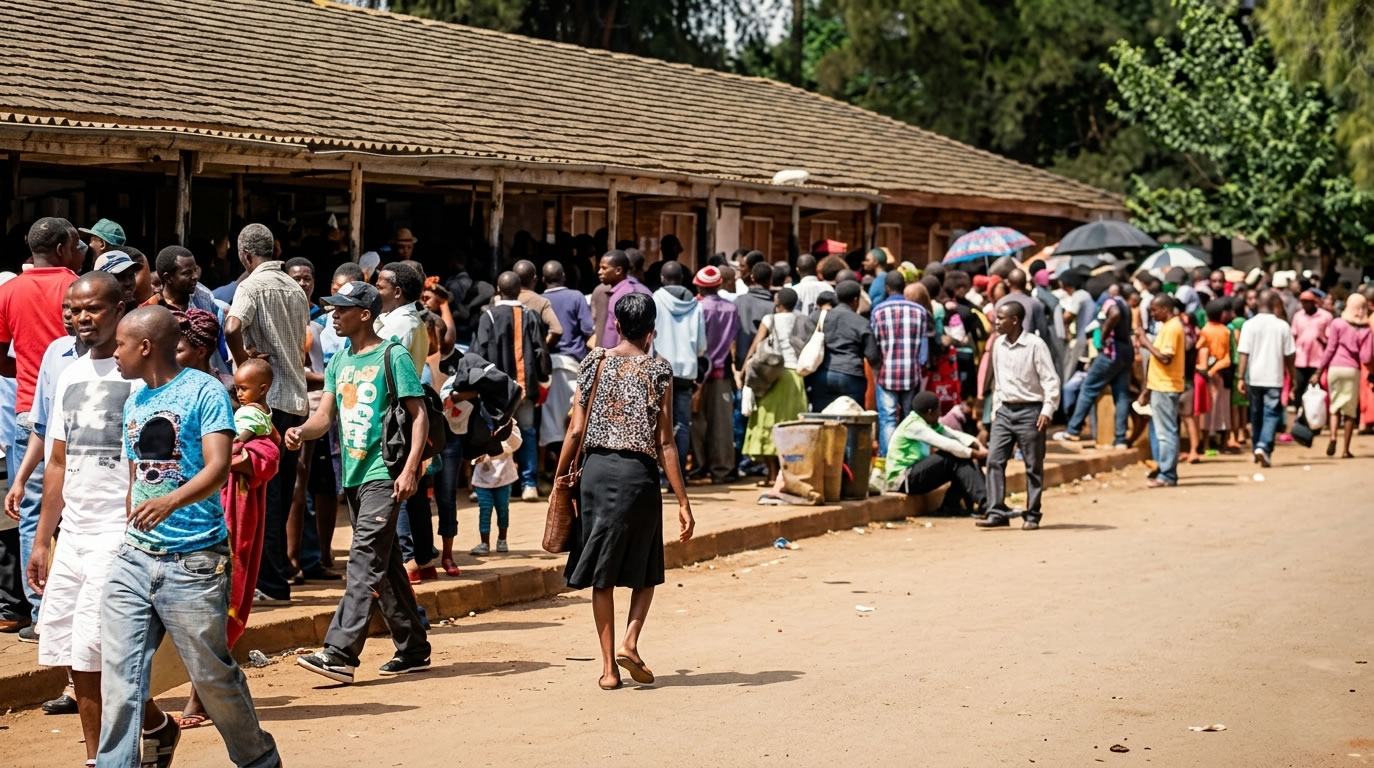
In the sweltering heat of the Harare afternoon, the queue outside the Registrar General’s office stretches like a weary serpent around the block. For the ordinary Zimbabwean, this line is a test of endurance, a purgatory where hours turn into days and days into months of waiting for a simple travel document. However, for those with an extra US$300 and the right connections, the wait is non-existent. An investigation by My Zimbabwe News has uncovered a sophisticated “queue-jumping” syndicate that has transformed the Zimbabwean passport—a fundamental right of citizenship—into a luxury commodity reserved for the highest bidder.
While the official government cost for a passport is clearly defined, the “real” price is determined in the shadows and hushed corridors of the passport offices. Undercover reporters, embedded within the chaotic ecosystem of touts and “agents” that surround the building, documented a brazen system of extortion. These middlemen, often working in seamless coordination with high-ranking officials, demand up to US$300 to process an “emergency” passport within 24 hours. This fee, which exceeds the monthly salary of many civil servants, never sees the inside of a government ledger. Instead, it vanishes into the private accounts of a cartel that profits from the desperation of a nation.
The investigation has revealed the existence of a secret “back-door” portal used by these syndicates to bypass the official online booking system. For the general public, the official website is frequently “offline” or plagued by technical glitches that make securing an appointment nearly impossible. Yet, for the cartel, the digital gates are always open. This parallel system allows “agents” to slot their clients into the processing queue ahead of thousands of citizens who have followed the rules, only to find themselves stuck in a perpetual state of “pending.”
Tracking the money trail was a central component of this investigation. The illegal fees are often funnelled through mobile money platforms or handed over in cash to middlemen who operate with a startling lack of fear, right under the noses of security cameras. These cameras, intended to deter corruption, appear to be little more than set dressing in a theatre of graft. The proceeds are then distributed among a network of complicit staff, from the front-desk clerks who facilitate the paperwork to the senior officials who provide the necessary authorisations.
This internal rot has far-reaching consequences that extend beyond the borders of Zimbabwe. Our investigation explored the direct link between this passport corruption and the rise in fraudulent visas being intercepted at the South African border. Because the official process is so broken, many Zimbabweans are forced into the arms of the cartel, which often provides documents that are either improperly issued or accompanied by forged permits. Recent incidents at the Beitbridge Border Post have seen a spike in interceptions, with South African authorities uncovering hundreds of passports being smuggled across the border, often “laced” with cash intended to bribe immigration officials.
In one particularly high-profile case in December 2025, a 43-year-old Zimbabwean national, Edward Chitaizvi, was apprehended in South Africa in possession of 582 passports and a significant amount of cash. This incident, which highlighted the sheer scale of the document-running business, is believed to be connected to the same syndicates operating within the Registrar General’s office. The passports were reportedly being transported to have them stamped illegally, bypassing the standard immigration controls that are meant to regulate the flow of people between the two nations.
The desperation that fuels this cartel is rooted in Zimbabwe’s ongoing economic hardship. For many, a passport is not just a document; it is a lifeline—a way to seek work, medical treatment, or education in neighbouring countries. The cartel understands this desperation perfectly. They have hijacked a basic right and turned it into a lucrative business model. “If you want to travel, you pay. If you don’t pay, you stay,” one agent told an undercover reporter, his voice barely a whisper as he leaned against a concrete pillar just metres from the main entrance. “The system is not for the poor. It is for those who can afford to jump.”
The Registrar General’s department has, in the past, acknowledged the existence of “touts” but has often framed them as external actors who prey on unsuspecting citizens. However, our findings suggest a far more integrated relationship. The speed with which these “emergency” documents are produced—sometimes in as little as 12 hours—indicates that the “agents” are not merely scammers but are deeply embedded in the administrative machinery. Without the active participation of the officials who operate the printing presses and manage the databases, the cartel would cease to function.
Ordinary citizens, meanwhile, continue to bear the brunt of this systemic failure. Many spend nights on the pavement, wrapped in thin blankets, just to be at the front of the queue when the doors open at 8:00 am. “I have been here three times this week,” said one elderly woman, her face etched with exhaustion. “Every time they tell me the system is down or my file is missing. But I see people coming in through the side door and leaving with their books the next day. We all know what is happening, but what can we do? We are just small people.”
The impact on the national treasury is significant. With thousands of passports being processed through the “fast-track” syndicate every month, the government is losing millions of dollars in potential revenue. If these fees were formalised and directed into the treasury, they could be used to upgrade the very systems that are currently being bypassed, potentially clearing the massive backlog that has plagued the department for years. Instead, the money serves only to line the pockets of a few well-positioned individuals, further eroding public trust in state institutions.
Legal experts and anti-corruption activists have called for a complete overhaul of the passport issuance process, including the implementation of a truly transparent and tamper-proof digital system. “The problem is not the technology; it is the people behind it,” noted a representative from a local transparency watchdog. “You can have the most advanced system in the world, but if the people operating it are part of a cartel, they will always find a way to create a ‘back door.’ What is needed is accountability and a genuine political will to root out the rot at the top.”
As the sun sets over Harare, the queue at the Registrar General’s office begins to thin, but the sense of frustration remains. For those who cannot afford the US$300 “convenience fee,” the journey towards a passport remains a long and uncertain road. The “Passport Cartel” continues to operate with impunity, a shadow government that dictates who gets to leave and who is forced to stay. It is a story of a nation where the most basic of rights has been stolen and sold back to its people at a price they can ill afford to pay.
The rise in fraudulent documents has also strained diplomatic relations with South Africa. Authorities in Pretoria have expressed growing concern over the integrity of Zimbabwean travel documents, leading to increased scrutiny and longer delays for legitimate travellers. The “Passport Cartel” is not just a local Zimbabwean problem; it is a regional security issue that facilitates illegal migration and complicates the efforts of law enforcement to track criminal elements moving across borders.
In the end, the secret US$300 fee is more than just a bribe; it is a symbol of a broken contract between a state and its citizens. When a government cannot provide a basic document without its people having to navigate a maze of corruption and extortion, the very foundation of its legitimacy is called into question. Until the “back-door” portals are closed and the middlemen are removed from the equation, the Zimbabwean passport will remain a document of the elite, while the rest of the nation waits in the sun.