


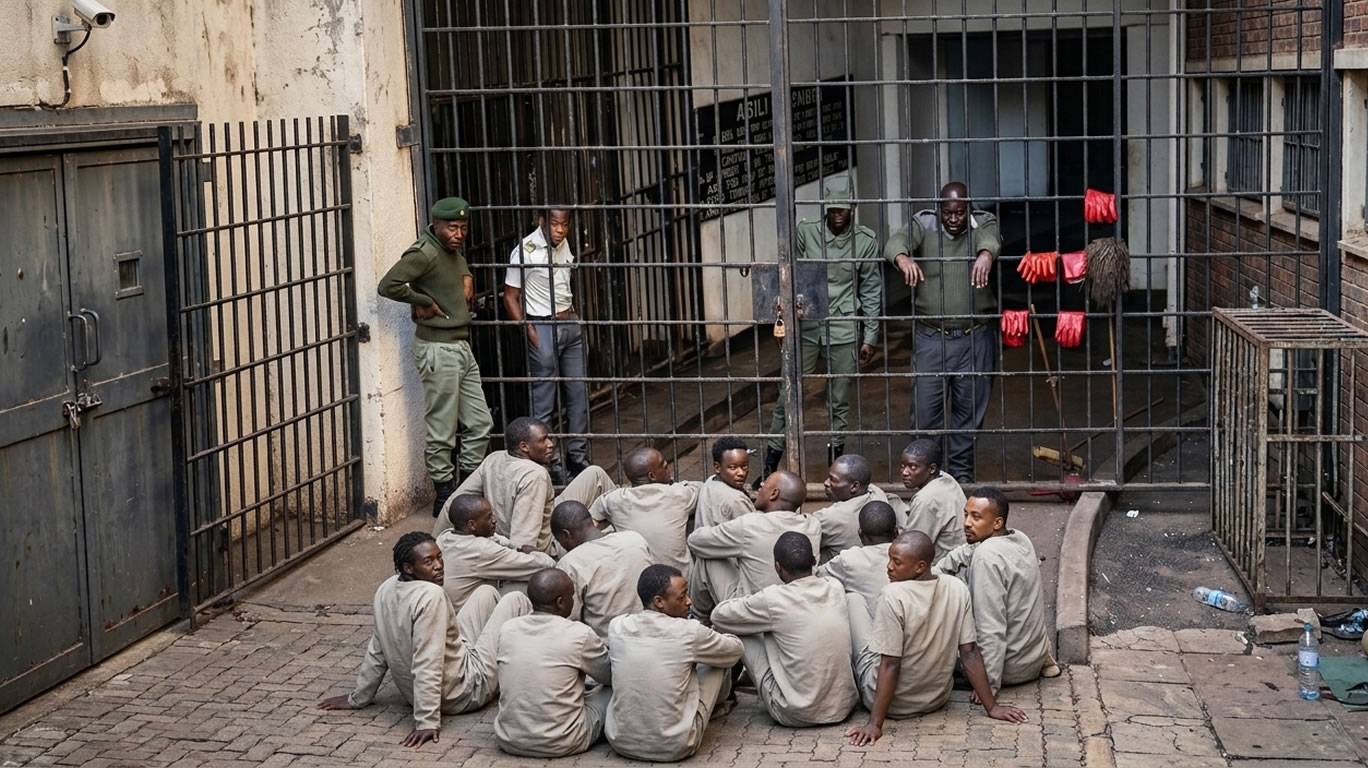
Death in Cell C: Unanswered Questions Surround the Passing of Gift Mbowa at Chikurubi Prison
The official statement released by the Zimbabwe Prisons and Correctional Service (ZPCS) on 25 March 2026 was notably concise. It confirmed that Gift Mbowa, an inmate serving a 12-month sentence, had been found unresponsive in his cell at approximately 3:00 am on 20 March 2026. The authorities cited “sudden chest pains” as the preliminary cause of death. To many, this might appear to be a tragic, yet straightforward, medical incident. However, within the confines of Chikurubi Maximum Security Prison, a more complex narrative is emerging from those who witnessed Mbowa’s final hours.
Reports from individuals close to the situation, including fellow inmates and whistle-blowers, suggest a challenging environment within the prison walls, where concerns about inmate welfare have been raised. Far from a simple medical event, Mbowa’s death has prompted questions regarding a reported altercation and the subsequent availability of medical attention. The 18-year-old, described by acquaintances as having no known prior history of heart issues, was reportedly involved in a heated exchange with high-ranking guards just 48 hours before his body was discovered in Cell C.
The official timeline provided by prison officials has drawn considerable attention. While the ZPCS has stated its commitment to a thorough investigation, acknowledging “reports circulating on social media alleging that the death may have been linked to assault,” and promising a “full and independent investigation,” questions persist. The official statement affirmed, “In line with our commitment to accountability, transparency and the protection of all persons in our custody, a full and independent investigation into circumstances surrounding the incident has been instituted.” Yet, despite these assurances, the family of the deceased has reportedly not yet received an independent autopsy report, and some accounts suggest that the “independent” investigators may be internal ZPCS personnel.
|
Key Details of the Gift Mbowa Case
|
Information
|
|
Inmate Number
|
185/26
|
|
Sentence Duration
|
12 Months
|
|
Date of Death
|
20 March 2026
|
|
Official Cause
|
Sudden Chest Pains
|
|
Location of Death
|
Cell C, Chikurubi Farm Prison
|
|
Reported Conflict
|
Altercation with guards 48 hours prior
|
Accounts from within the prison, shared by individuals who wish to remain anonymous due to safety concerns, describe a system where access to medical care can be challenging. One individual, who was in a neighbouring cell, recounted hearing desperate calls for medical assistance during Mbowa’s final night. It is claimed that Mbowa’s cellmates spent hours attempting to alert guards, requesting a medic as the young man appeared to be in distress. These pleas were reportedly met with a lack of immediate response, or in some instances, warnings from night shift guards.
This incident occurs within a broader context of concerns regarding Zimbabwe’s correctional system. In February 2026, weeks before Mbowa’s death, four members of the ZPCS were charged with murder following an alleged assault on a visitor. This development, handled by the National Prosecuting Authority (NPA), underscored ongoing discussions about conduct within the prison service. The environment within correctional facilities has, at times, been described as one where accountability can be difficult to achieve, leading to perceptions that incidents occurring within prison walls may not always be fully addressed.
Chikurubi Maximum Security Prison, originally designed for approximately 1,300 inmates, has reportedly faced significant overcrowding. By early 2026, reports indicated that the inmate population had nearly doubled its intended capacity. This chronic overcrowding contributes to challenging conditions, including issues with sanitation, water supply, and adequate nutrition, creating a high-pressure environment for both inmates and staff. In such circumstances, disciplinary measures can become a point of contention and concern.
“The ZPCS maintained that any conduct found to be inconsistent with human rights and professional standards will be dealt with in accordance with the law.” — Official ZPCS Statement, March 2026.
Despite these declarations, the circumstances surrounding the Mbowa case have led to questions about the handling of evidence. Reports from whistle-blowers suggest that guards reportedly involved in the earlier altercation were transferred, and that duty logs for the night of Mbowa’s death have been difficult to trace. This pattern raises concerns about transparency and the thoroughness of internal investigations when incidents occur. The absence of an independent autopsy further complicates efforts to ascertain the precise cause of death, making it challenging to differentiate between natural causes and other potential factors.
Beyond physical altercations, the prison system faces systemic challenges, particularly concerning medical provisions. Zimbabwean prisons have reportedly experienced critical shortages of essential medicines for several years. Forensic psychiatric patients are often housed with the general inmate population due to a lack of specialised facilities or adequate staffing. For an inmate like Mbowa, who reportedly required urgent medical attention, the prison clinic’s capacity to provide timely and effective care becomes a critical point of inquiry. It is suggested that prison clinics may often lack comprehensive medical supplies and that medical personnel might have limited training.
The broader political and social context in Zimbabwe during 2026 is also relevant. The government has continued to address issues of dissent, with authorities engaging in actions such as intimidation and arrests of individuals perceived as critical of the state. This broader atmosphere can influence perceptions of transparency and accountability within public institutions, including the prison system. When an inmate’s death occurs under disputed circumstances, the official narrative is often viewed through this lens of broader societal dynamics.
|
Comparison of Prison Conditions (2024 vs 2026)
|
2024 Estimates
|
2026 Estimates
|
|
National Prison Population
|
~22,000
|
~26,000
|
|
Overcrowding Rate
|
35%
|
50%
|
|
Reported Inmate Deaths (Annual)
|
~150
|
~210
|
|
Medical Staff to Inmate Ratio
|
1:500
|
1:750
|
As the details surrounding Gift Mbowa’s final hours are examined, numerous questions remain unanswered by the ZPCS. Why did a young man, reportedly without prior heart conditions, succumb to “chest pains”? Why were the urgent pleas from his cellmates reportedly not acted upon promptly? And what are the implications when an independent investigation into such a death is not readily available to the public or the family?
The passing of Gift Mbowa is a profound tragedy, and it serves as a stark reminder of the ongoing human rights challenges within Zimbabwe’s correctional facilities. It highlights the complexities involved in ensuring accountability and transparency within such institutions. For Mbowa’s family, the official statements and internal investigations may offer little solace as they grieve a son whose life ended under circumstances that continue to raise serious concerns.
Ultimately, the full truth of what transpired in Cell C may remain elusive. However, as long as individuals continue to voice their concerns and reports of systemic issues persist, the ZPCS will likely face ongoing scrutiny regarding its operations and its commitment to inmate welfare. The questions surrounding Gift Mbowa’s “sudden” passing underscore the need for continuous oversight and reform within the prison system, ensuring that all individuals, regardless of their incarceration, are treated with dignity and have access to appropriate care. The echoes of unanswered questions linger, prompting a deeper examination of the conditions and practices within Zimbabwe’s prisons.