


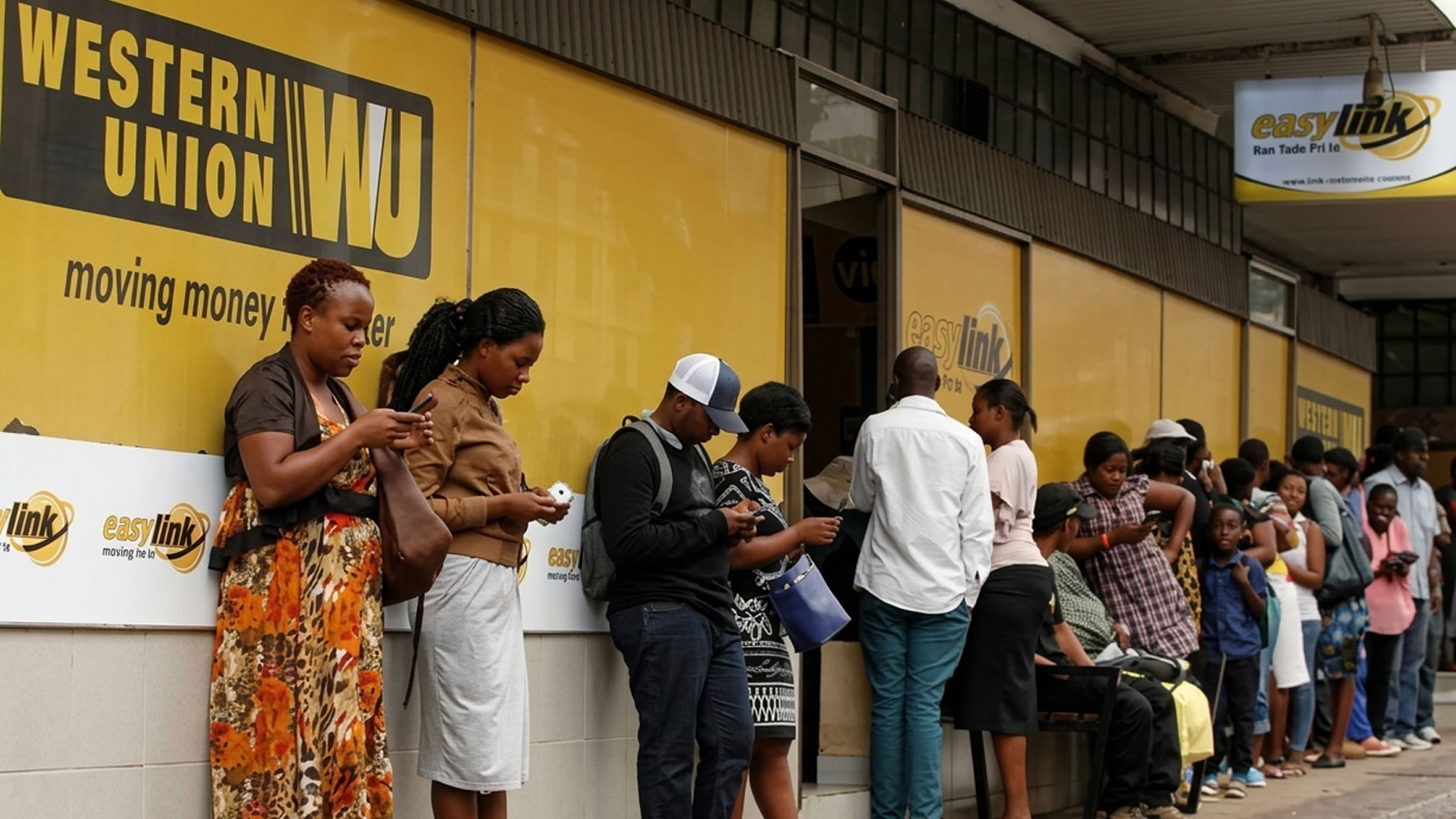
Zimbabwe’s diaspora sent home about US$2.45 billion in 2025, putting money from citizens abroad at the centre of the country’s economic story. The United Kingdom supplied approximately US$709.6 million, narrowly overtaking South Africa, which contributed about US$702.6 million, according to figures reported during Zimbabwe Diaspora Week. Together, the two corridors accounted for more than half of recorded inflows.
The figures mark an important change in the geography of Zimbabwean remittances. South Africa has long been the most obvious source because of its proximity, its large Zimbabwean migrant population and the movement of workers across the two countries’ shared border. Britain’s lead points to the growing financial weight of Zimbabweans who have settled there, even as South Africa remains deeply connected to Zimbabwean households, businesses and cross-border trade.
The headline total needs to be read carefully. The reported US$2.45 billion is presented as a full-year 2025 figure, while information published by Zimbabwe’s embassy in Washington and attributed to Reserve Bank data also put Britain ahead of South Africa in the first half of the year. Those figures cover 6 months and are not directly comparable with a full-year total. The corridor ranking appears consistent, but the total amount depends on the period and method used to count the flows.
That distinction matters because remittances are not a single, perfectly measured stream. Money can pass through banks, licensed money-transfer operators, mobile platforms, cash-pick-up services, informal couriers and personal networks. Official data are strongest where payments move through regulated channels. Transfers that avoid the formal system may still support families, but they are harder for the central bank and researchers to measure.
The size of the flows is significant for a country that continues to face foreign-currency constraints, high financing costs and pressure on household incomes. Remittances help families pay school fees, buy food, meet healthcare bills, repair homes, purchase property and keep small businesses operating. For many households, the payment arriving from a relative abroad is not surplus income. It is part of the monthly budget.
The money also serves as a private safety net where public systems are under strain. A teacher, nurse, trader or pensioner who receives support from Britain or South Africa may use it to cover expenses that wages or public provision cannot meet. In that sense, the diaspora is financing more than household consumption. It is helping families maintain access to education, health services, housing and transport.
But the same dependence raises a difficult question: is Zimbabwe turning diaspora money into productive investment, or is it relying on overseas workers to fill gaps in wages and public services?
The answer cannot be found in the headline total alone. A remittance received by a family may be used for school fees one month, food the next and a small business later in the year. Official figures generally record the arrival of funds, not what happens after the money reaches the recipient. There is no clear public breakdown showing how much of the US$2.45 billion went into consumption, how much financed businesses and how much was invested in property, agriculture or financial assets.
That missing breakdown limits the country’s ability to judge whether rising remittances are building long-term economic resilience. Household spending can protect people from immediate hardship and support local shops, transport operators and service providers. Yet it does not necessarily create new productive capacity. Investment in a poultry project, irrigation equipment, a workshop or a small manufacturing business may produce jobs and income, but only if the recipient has access to credit, reliable electricity, markets and a stable operating environment.
The Reserve Bank of Zimbabwe has recognised the need to attract more of this money into formal and productive channels. Its Diaspora Desk is intended to provide investment information, process proposals, answer questions and connect citizens abroad with opportunities in Zimbabwe. The central bank says the platform is also designed to promote secure and efficient remittance flows, improve transparency, reduce transaction costs and encourage digital financial services.
The policy ambition is clear. Zimbabwe wants the diaspora to do more than send money for immediate household needs. It wants citizens abroad to finance companies, buy assets, support development projects and participate in the formal economy. The unresolved issue is whether the available schemes have earned enough trust to persuade families and investors to commit money for the long term.
Trust is central to that decision. A sender in Britain or South Africa may choose a formal transfer because it offers a record, consumer protections and a recognised route into the banking system. The same sender may choose an informal channel if it is faster, cheaper or more convenient for a recipient in a rural area. A recipient may prefer cash if bank withdrawals are difficult, if there is uncertainty about exchange rates or if the formal service does not deliver the expected value.
The cost of sending money can affect both the route and the amount that reaches a family. A fee on a small transfer takes a larger share of the payment than the same fee on a large transfer. Exchange-rate differences can reduce the value further. The result is that a family may receive less than the sender intended, even when both parties believe they have completed the transaction efficiently. Earlier research on Zimbabwe’s remittance corridors found that pricing and access differed between formal providers and locations, illustrating why transaction costs remain an important policy issue.
Zimbabwe’s earlier remittance data already showed the speed of the increase. About US$880 million entered the country during the first 5 months of 2025, according to the reported figures, before the full-year amount reached US$2.45 billion. The rise suggests that remittances are no longer a marginal supplement to the economy. They are one of its principal sources of foreign currency and are reported to contribute more than 8% of economic output.
That strength, however, carries a vulnerability. Zimbabwe’s remittance base depends on the employment, immigration rules, living costs and economic conditions of people in Britain, South Africa and other host countries. If workers lose jobs, face higher rents or send less because of a recession, families at home may feel the effects quickly. Changes in migration policy can also alter the ability of Zimbabweans abroad to work, stay and support relatives.
South Africa’s role remains especially important despite the UK’s narrow lead. The two economies are connected by trade, travel and family networks, and many transfers from South Africa support households close to the border and in rural areas. Britain’s larger reported contribution does not make South Africa less important; it shows instead that Zimbabwe’s remittance economy now has at least two dominant corridors with different patterns of migration, distance and use.
The next test is whether policymakers can make formal transfers cheaper, faster and more reliable without excluding people who live far from banks and regulated agents. The Reserve Bank says it works with licensed money-transfer operators, banks and international partners to improve the remittance system. Those efforts will need to be judged by outcomes: lower costs, better access, clearer exchange-rate information and evidence that recipients can move from receiving money to building sustainable livelihoods.