


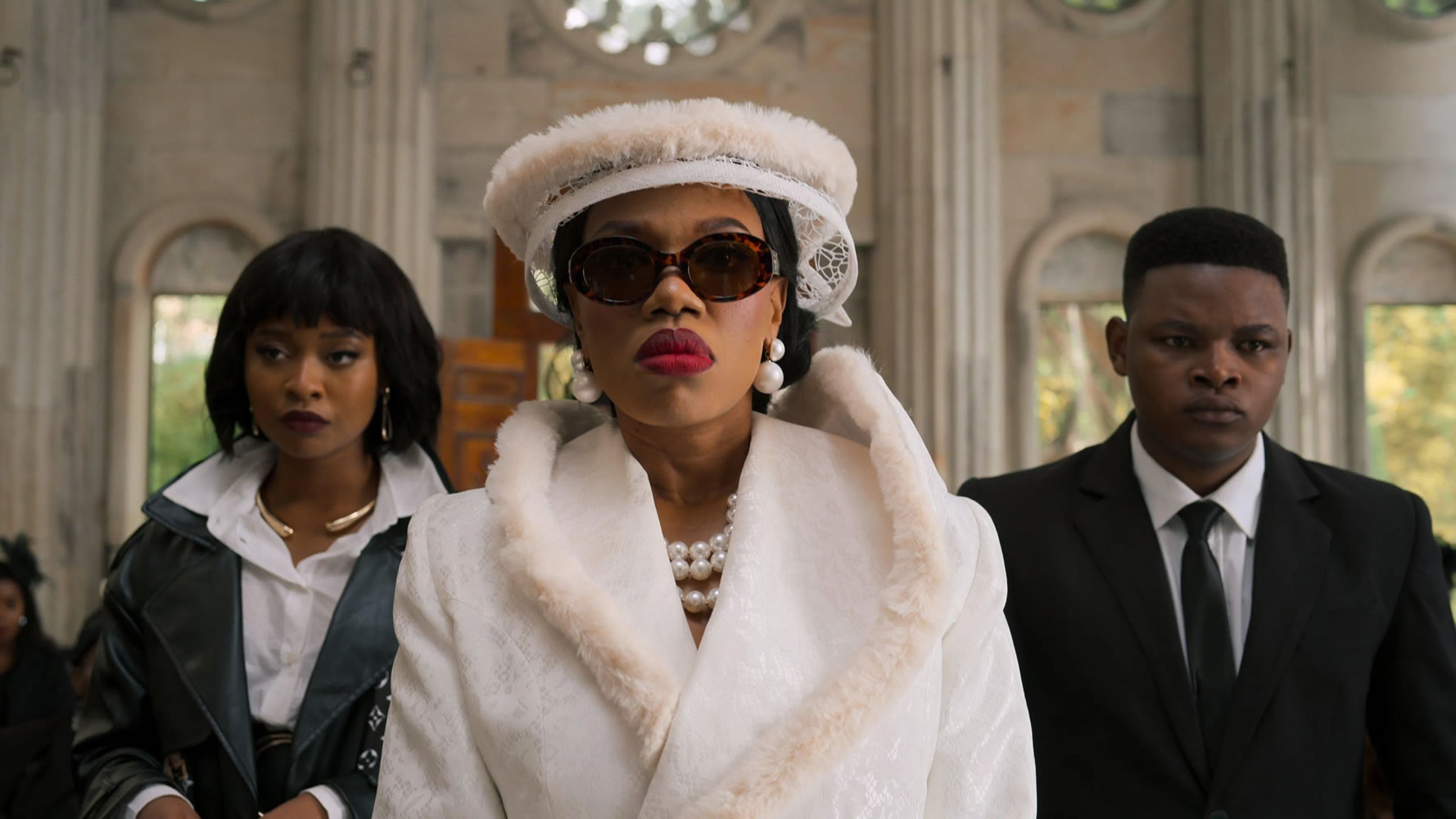
Netflix Goes Zimbabwean! The Messy, High-Stakes World of ‘The Polygamist’ Exposed
Harare – A new era for Zimbabwean storytelling is dawning as Netflix prepares to launch its highly anticipated supernovela, ‘The Polygamist’. Based on the acclaimed novel by Zimbabwean author Sue Nyathi, the series promises to be a compelling exploration of love, power, and betrayal set against the opulent yet complex backdrop of Harare’s high society. The recent release of its first teaser has ignited conversations across the continent, signalling a significant moment for African narratives on the global stage.
For years, the global streaming landscape has been dominated by stories from South Africa and Nigeria, with their vibrant film industries capturing international attention. Now, it is Zimbabwe’s turn to step into the spotlight. ‘The Polygamist’, a 22-episode series produced by the award-winning Stained Glass Productions, is poised to offer a nuanced portrayal of a society grappling with the intricate dance between tradition and modernity. It delves into themes of desire, rivalry, and the often-unseen costs of ambition, making it far more than just a television show; it is a cultural phenomenon.
The Genesis of a Phenomenon: From Page to Screen
Sue Nyathi’s novel, ‘The Polygamist’, first published in 2012, was a literary sensation that resonated deeply with readers. Nyathi herself recounted the challenging journey of her debut work, stating, “The Polygamist is my debut novel, the book that got rejected by many publishers. So I took a bet on myself and self published. The bet paid off!!” This personal triumph mirrors the broader narrative of Zimbabwean creatives striving for global recognition. The novel’s enduring popularity laid a fertile ground for its adaptation, attracting the attention of Netflix and Stained Glass Productions, a South African powerhouse known for its successful productions like ‘Uzalo’.
The narrative centres on Jonasi Gomora, a self-made CEO and banking magnate in Harare. His seemingly indomitable empire, built on shrewd business acumen and relentless ambition, begins to show cracks as his complicated personal life unravels. The series tagline from Netflix succinctly captures this central conflict: “A self-made CEO… builds an empire and a complicated personal life that begins to collapse under the weight of his choices.” Jonasi’s life is intricately woven with four distinct women, each representing a different facet of his world and challenging his carefully constructed reality.
At the heart of the story is Joyce Gomora, Jonasi’s legitimate first wife, who stood by him and contributed significantly to the establishment of his wealth. Her journey, often overlooked in narratives of powerful men, is crucial to understanding the foundations of Jonasi’s empire. Then there is Matipa, a sophisticated, high-flying professional who embodies the allure of a ‘second wife’ or mistress figure, adding layers of complexity and rivalry. Essie, a younger and more naive woman, finds herself ensnared in Jonasi’s web, highlighting the vulnerabilities within such relationships. Finally, Lindani represents another dimension of Zimbabwean society, further complicating Jonasi’s already tumultuous personal landscape. These women are not mere accessories to Jonasi’s story; they are central to the unfolding drama, each with their own desires, struggles, and perspectives.
Polygamy: A Cultural Right or a Recipe for Disaster?
‘The Polygamist’ boldly tackles the contentious issue of polygamy, a practice that exists in various forms across Africa. The series promises to explore the emotional push and pull of polygamy, not just as a lifestyle choice but as a complex social space. In Zimbabwe, while traditional forms of polygamy are recognised under customary law, the narrative often shifts when wealth and modern urban settings are involved. The series is expected to dissect the concept of ‘small houses’ – a colloquial term for extra-marital affairs or second families, often maintained discreetly by wealthy men in high society. This practice, while prevalent, remains a hushed topic, making its open portrayal on a global platform particularly significant.
The debate surrounding polygamy in contemporary Zimbabwean society is multifaceted. Proponents often cite cultural heritage and religious freedom, viewing it as a legitimate form of family structure. However, critics highlight the potential for emotional distress, financial strain, and gender inequality, particularly for the women involved. The series is poised to ignite further discussions on whether polygamy, in its modern urban manifestation, is a cultural right to be upheld or a recipe for personal and societal disaster. This tension between traditional values and modern aspirations forms a critical thematic backbone of Nyathi’s work and its screen adaptation.
Recent real-life incidents in Zimbabwe underscore the relevance and sensitivity of this topic. High-profile figures, such as Harare businessman Wicknell Chivhayo, have found themselves in the public eye regarding their marital affairs. While Chivhayo recently denied reconciliation with an ex-wife, he openly acknowledged the “cultural reality” of wealthy men engaging in polygamous or extramarital relationships. Such public discourse reflects the ongoing societal grappling with these issues. Furthermore, divorce cases involving polygamous relationships and disputes over business assets, like the widely reported Memory vs. Clever case, frequently make headlines, illustrating the tangible consequences of such arrangements. Even false rumours, such as a widely circulated claim about a government bill forcing men to marry multiple wives, demonstrate the deep-seated public interest and often volatile opinions surrounding polygamy in Zimbabwe.
The Zimbabwean Film Industry: A Rising Tide
‘The Polygamist’ marks a pivotal moment for the Zimbabwean film industry, signifying a substantial leap forward in its global presence. While the 2020 low-budget romantic comedy ‘Cook Off’ holds the distinction of being the first Zimbabwean film to be streamed on Netflix, ‘The Polygamist’ represents an entirely different scale of production. As a 22-episode supernovela, it showcases a significant investment in Zimbabwean storytelling, talent, and production capabilities. This shift from standalone films to long-form series indicates Netflix’s growing confidence in the market and its potential for compelling narratives.
The timing of this release aligns with a concerted effort by the Zimbabwean government to bolster its creative sector. In late 2024, the government launched the ‘Zimbabwe Film Strategy 2025-2030’, a comprehensive framework aimed at accelerating the development of the film industry. A key component of this strategy is a substantial financial commitment, with US$10 million earmarked for local content production. This funding, coupled with tax incentives designed to attract film productions, signals a strategic repositioning of film as a vital economic sector. The ambition is not merely to host foreign productions but to cultivate an industry capable of producing, processing, and profiting from content entirely within Zimbabwe’s borders.
Despite these promising developments, the Zimbabwean film industry continues to face considerable challenges. Issues such as limited access to funding, inadequate infrastructure, and a historical lack of visibility have long hampered its growth. However, the arrival of ‘The Polygamist’ on Netflix, with its high production values and international reach, offers a powerful counter-narrative to these struggles. It provides a global platform for Zimbabwean actors, writers, and directors, potentially inspiring a new generation of filmmakers and attracting further investment into the sector. The series is a testament to the resilience and talent within the Zimbabwean creative community, demonstrating that local stories, when told with authenticity and production quality, possess universal appeal.
The Cast and Creative Vision
The series boasts a formidable cast, with Sdumo Mtshali taking on the complex role of Jonasi Gomora and Gugu Gumede portraying Joyce Gomora. Both actors are celebrated talents, and their performances are expected to anchor the emotional depth of the supernovela. The creative team behind ‘The Polygamist’ is equally impressive, featuring a blend of seasoned and emerging talents. The executive producers, Gugu Zuma-Ncube, Thuli Zuma, and Pepsi Pokane, bring a wealth of experience from Stained Glass Productions. The directorial duties are shared by Akin Omotoso, Rolie Nikiwe, and Nthabi Tau, ensuring a diverse and dynamic visual approach to the storytelling. Busisiwe Zwane leads the writing team as head writer, supported by Nontuthuzelo Magoxo, Lorato Phefo, and Nkosazana Zuma-Mncube, who are tasked with translating Nyathi’s intricate narrative into a compelling screen adaptation.
The decision to adapt ‘The Polygamist’ into a 22-episode supernovela format allows for an in-depth exploration of its complex characters and interwoven plotlines. This extended format is particularly well-suited to the novel’s intricate portrayal of multiple relationships and the gradual unravelling of Jonasi Gomora’s life. It provides ample space to develop the backstories and motivations of each of the four women, ensuring that their perspectives are given due weight and complexity. The series is set to premiere on 12 June 2026, a date eagerly awaited by audiences keen to witness this landmark production.
Beyond Entertainment: A Mirror to Society
‘The Polygamist’ is more than just entertainment; it is a mirror reflecting contemporary Zimbabwean society. It promises to offer a gritty, unvarnished look at the realities of wealth, power, and personal choices in a rapidly evolving cultural landscape. The series’ exploration of traditional versus modern tensions is particularly pertinent in a country where societal norms are constantly being negotiated and redefined. By bringing these narratives to a global audience, Netflix is not only showcasing Zimbabwean talent but also fostering a deeper understanding of the complexities of African societies.
The series’ potential impact extends beyond the entertainment industry. It could stimulate broader societal conversations about gender roles, family structures, and the ethical implications of certain cultural practices. The portrayal of Jonasi Gomora’s “polished empire” crumbling under the weight of his personal choices serves as a cautionary tale, highlighting the universal truth that unchecked ambition and moral compromises often lead to unforeseen consequences. The “messy” and “juicy” elements of the story are not merely for dramatic effect; they are reflections of the intricate web of human relationships and the often-painful realities of life.
In conclusion, ‘The Polygamist’ represents a significant milestone for Zimbabwean storytelling. It is a testament to the power of local narratives to transcend geographical boundaries and resonate with a global audience. As the premiere date approaches, anticipation continues to build for a series that promises to be both captivating television and a profound cultural statement. Zimbabwe is indeed having its big moment on Netflix, and the world is ready to watch.