


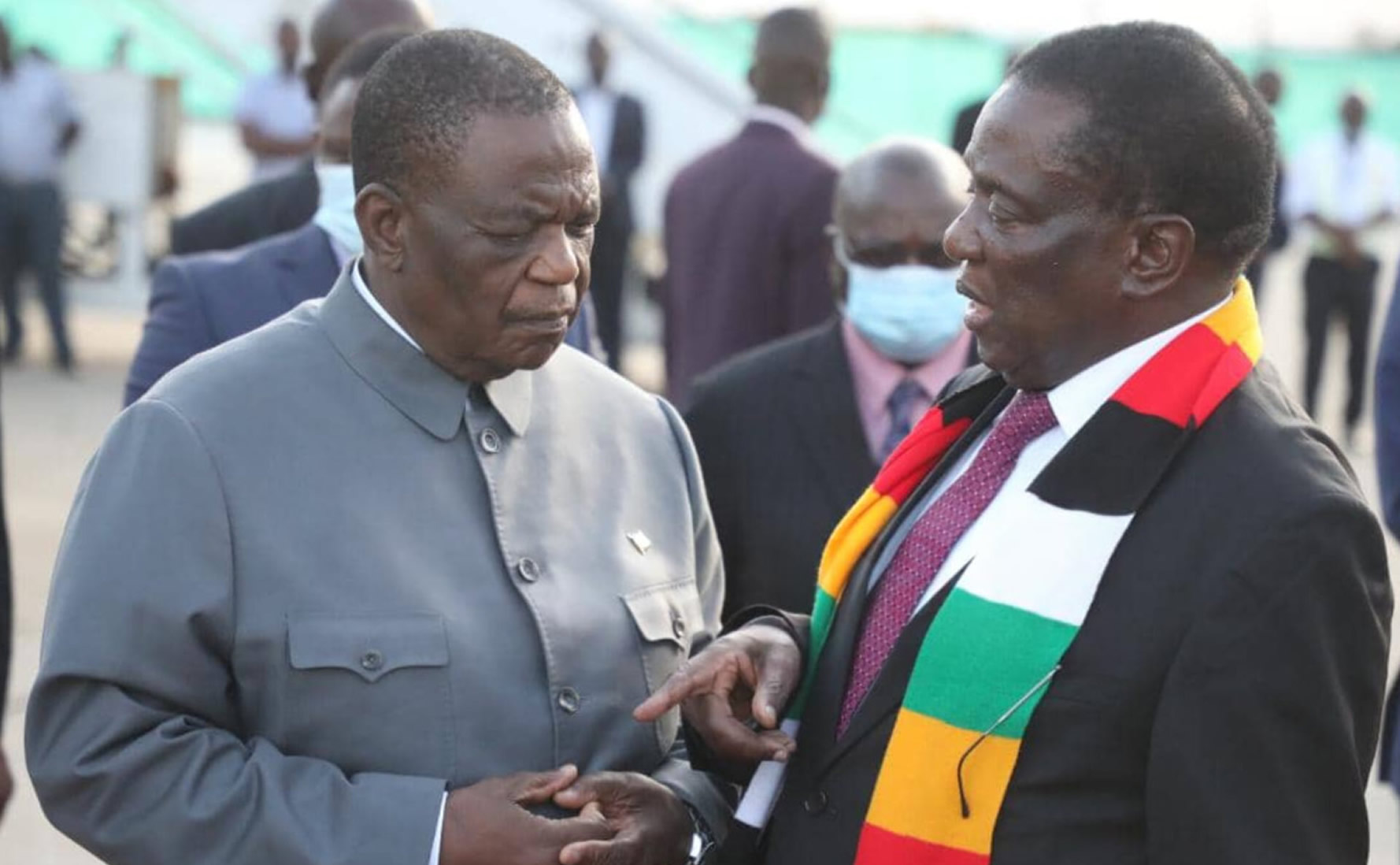
A Nation on the Brink: The Unfolding Power Struggle in Zimbabwe
Behind the carefully curated facade of unity within Zimbabwe’s “Presidency,” a brutal power struggle is quietly but fiercely unfolding. At its heart are three influential businessmen: Wicknell Chivayo, Kudakwashe Tagwirei, and Paul Tungwarara. These individuals have rapidly ascended to prominence, becoming the very embodiment of a new era of state patronage in Zimbabwe. Their rise has been marked by the securing of government contracts worth hundreds of millions of dollars, spanning diverse sectors from solar energy projects to agricultural equipment.
However, their meteoric trajectory has inadvertently created a formidable adversary in Vice President Constantino Chiwenga. The former army general, a pivotal figure in the 2017 transition that brought President Emmerson Mnangagwa to power, reportedly perceives this trio as a “parallel government” that has effectively captured the state, thereby isolating him from the crucial levers of economic power and political influence.
This investigative feature will meticulously trace the intricate money trail, from the coffers of the Reserve Bank of Zimbabwe to the labyrinthine network of offshore accounts allegedly linked to this powerful triumvirate. We will scrutinise how Kudakwashe Tagwirei’s Sakunda Holdings cemented its position as the undisputed gatekeeper of the nation’s vital fuel industry. Furthermore, we will examine how Wicknell Chivayo’s often controversial solar deals continue to receive substantial state backing, despite a history of legal challenges and public scrutiny.
The article will also introduce Paul Tungwarara, a figure less frequently discussed in the public discourse but equally influential, whose significant role in the ambitious “Cyber City” project and other mega-developments has solidified his place within the President’s inner circle. By meticulously unravelling the complex web of shell companies and state-issued tenders, we aim to demonstrate how this trio is not merely accumulating vast personal wealth but is actively funding the constitutional changes that are increasingly fracturing the ruling ZANU PF party. This is a compelling narrative of ambition, betrayal, and the silent, yet profound, war for the very soul of the Zimbabwean state.
The Architects of Influence: Unpacking the State Capture Trio
At the epicentre of this unfolding drama are three men whose names have become synonymous with immense wealth and unparalleled access to state resources. Their collective influence has reshaped the political and economic landscape of Zimbabwe, drawing both admiration and intense criticism. Each member of this trio brings a unique set of connections and business acumen to the table, forming a formidable force that has seemingly bypassed traditional political structures.
Wicknell Chivayo: A figure known for his flamboyant lifestyle and a penchant for controversial government contracts, Chivayo has become a highly visible symbol of the new patronage system. His business dealings have frequently attracted public attention, most recently through his alleged involvement in a US$40 million (approximately R700-800 million) election material tender with the South African firm Ren-Form. Chivayo is frequently seen in the company of President Mnangagwa, a proximity that has fuelled accusations of undue influence. Vice President Chiwenga has explicitly accused Chivayo, among others, of “capturing the state,” a charge that underscores the deep-seated resentment within certain factions of the ruling party. His public persona, often characterised by lavish displays of wealth and high-profile diplomatic engagements, including accompanying President Mnangagwa on visits to South African and Kenyan leaders, further solidifies his image as a powerful, well-connected individual.
Kudakwashe Tagwirei: The owner of Sakunda Holdings, Tagwirei is a colossal figure in Zimbabwe’s fuel and mining industries. His company’s reach and influence are extensive, making him a critical player in the nation’s economy. Recent investigative reports have brought to light allegations that the ruling ZANU PF party held a secret 45% stake in Sakunda Holdings. This revelation, if proven true, would suggest a deeply intertwined relationship between the party and a major private enterprise, raising serious questions about transparency and governance. Tagwirei has also been linked to complex networks of offshore accounts, a common mechanism for obscuring financial flows and beneficial ownership. Crucially, he is widely regarded as a key financier of the “ED 2030” agenda, President Mnangagwa’s ambitious plan to extend his rule beyond the current term. The Sentry, an investigative organisation, reported that Tagwirei allegedly received US$23.7 million offshore between 2014 and 2017 through fees that
“dwarfed” dividend payments, effectively diverting profits away from the party’s alleged stake.
Paul Tungwarara: While perhaps less ostentatious than Chivayo, Paul Tungwarara’s influence is equally profound. As a presidential advisor, he has taken a leading role in the ambitious US$500 million “Zim Cyber City” project in Mount Hampden. This futuristic development, envisioned as a hub for technology and innovation, has cemented Tungwarara’s position within the President’s inner circle. In March 2026, President Mnangagwa further expanded Tungwarara’s role from a Dubai-focused advisor to a “Regional Presidential Advisor” with extensive responsibilities for empowerment initiatives. His appointment to the ZANU PF Central Committee in Chipinge further underscores his growing political stature and influence within the ruling party. Tungwarara represents a new breed of political operative, bridging the gap between state-backed mega-projects and private investment, often operating with a lower public profile but with significant strategic impact.
The Kwekwe Conclave: A Display of Power and a Warning of Instability
The simmering tensions within Zimbabwe’s political elite reached a critical juncture during South African President Cyril Ramaphosa’s unannounced visit to President Mnangagwa’s Pricabe Farm in Kwekwe in May 2026. Ostensibly, the visit was for regional stability discussions, but the events that unfolded sent a clear and unambiguous message about the true centres of power in Zimbabwe. Ramaphosa’s arrival, unflagged by either Pretoria or Harare, began with a landing in the capital before he boarded a helicopter with Mnangagwa for the Kwekwe farm. There, the two leaders toured maize fields, inspected cattle operations, and observed a dam stocked with fish, presenting a veneer of agricultural diplomacy.
However, the visit transcended a mere agricultural excursion. What raised eyebrows and ignited internal fury within ZANU PF was the presence of Chivayo, Tagwirei, and Tungwarara on the official helicopter flight and their subsequent participation in briefings with the two heads of state. This “unusual arrangement” underscored their status not merely as businessmen but as key advisors and financiers of the “ED 2030” agenda—President Mnangagwa’s controversial plan to extend his tenure beyond his current term. The trio’s prominent role in such a high-level diplomatic engagement served as a stark public declaration of their influence and proximity to presidential power.
Behind closed doors, President Ramaphosa reportedly conveyed a stern warning to his Zimbabwean counterpart. Sources indicate that the South African leader expressed concerns that plans to amend the constitution to extend the presidential term could destabilise the country, a message that resonates with the growing internal dissent within ZANU PF. This warning from a regional heavyweight like Ramaphosa highlights the broader implications of the power struggle and the potential for wider instability in Southern Africa.
General Chiwenga’s Fury: A “Parallel Government” and a Betrayal of the Liberation Struggle
Vice President Constantino Chiwenga, a figure whose military background and role in the 2017 transition lend him considerable weight, has reportedly expressed profound anger and frustration at the rising influence of the business trio. In private ZANU PF meetings, Chiwenga has not minced words, reportedly blasting Chivayo, Tagwirei, and Tungwarara, describing them as a “parallel government” that has successfully “captured the state”. These are not mere political grievances; they represent a fundamental challenge to the established order and Chiwenga’s own aspirations.
Chiwenga’s critique is rooted in the historical narrative of the liberation struggle, a cornerstone of ZANU PF’s legitimacy. He has reportedly argued that the party is being sold to “tenderpreneurs who have no history in the liberation struggle”. This statement encapsulates the deep ideological chasm that has opened within the ruling party. For Chiwenga and his allies, the values of the liberation war—sacrifice, collective struggle, and national interest—are being subverted by a new class of wealthy individuals driven by personal enrichment and devoid of revolutionary credentials. This sentiment resonates with a significant faction within ZANU PF, particularly those with military backgrounds, who view the trio’s rise as a betrayal of the party’s founding principles and a direct threat to their own political future.
The Vice President’s anger is further exacerbated by the perception that the trio has effectively isolated him from the levers of economic power. As the architect of the 2017 transition, Chiwenga likely envisioned a different trajectory for post-Mugabe Zimbabwe, one where his influence would be paramount. Instead, he finds himself sidelined as the “tenderpreneurs” consolidate their control over lucrative state contracts and strategic economic sectors. This silent battle, fought in the corridors of power and behind closed doors, is not just about personal ambition; it is a struggle for the very direction and control of the Zimbabwean state.
The Constitutional Amendment No. 3: Paving the Way for “ED 2030”
Central to the power struggle and the trio’s influence is the controversial Constitutional Amendment No. 3 Bill. This legislative initiative, currently making its way through parliament, seeks to fundamentally alter Zimbabwe’s political landscape. The proposed amendments aim to extend the presidential and parliamentary terms from five to seven years and replace direct presidential elections with an electoral college composed of Members of Parliament. These changes are widely seen as the legislative cornerstone of the “ED 2030” agenda, President Mnangagwa’s plan to secure an extended period in office.
The implications of this amendment are far-reaching. Critics argue that replacing direct elections with an electoral college would significantly undermine democratic accountability and concentrate power further within the ruling party. The bill has ignited a fierce internal battle within ZANU PF, with Chiwenga’s faction reportedly opposing it, viewing it as a move to entrench Mnangagwa’s power and diminish their own prospects. The financial backing of the “ED 2030” agenda by the state capture trio is crucial in pushing through these constitutional changes, highlighting the symbiotic relationship between political power and economic influence.
The Money Trail: Funding the “ED 2030” Agenda
The financial mechanisms underpinning the “ED 2030” agenda and the state capture trio’s influence are complex and opaque. The money trail, as promised in the introduction, leads through various state institutions and private entities, ultimately serving to consolidate power and reward loyalty.
Reserve Bank of Zimbabwe (RBZ) Tenders: A significant portion of the trio’s wealth and influence stems from lucrative government contracts awarded through the Reserve Bank of Zimbabwe. These tenders, often shrouded in secrecy, provide a steady stream of revenue and opportunities for rent-seeking. The lack of transparency in these dealings has been a persistent concern for anti-corruption advocates and has fuelled suspicions of illicit financial flows.
The Mutapa Investment Fund (formerly Sovereign Wealth Fund): This fund has emerged as a critical financial instrument in the “ED 2030” strategy. In April 2026, the Mutapa Investment Fund reportedly paid over US$1 billion—an amount equivalent to approximately 5% of Zimbabwe’s Gross Domestic Product—to “mystery shareholders” of a mining firm with direct links to Kudakwashe Tagwirei. This colossal payment, made without clear public accountability, raises serious questions about the fund’s governance and its role in channelling state resources to politically connected individuals. The fund’s strategic importance lies in its ability to bypass traditional parliamentary oversight, allowing for the allocation of vast sums of money with minimal scrutiny.
The Sakunda “Hidden Stake” Controversy: The allegations surrounding ZANU PF’s secret 45% stake in Kudakwashe Tagwirei’s Sakunda Holdings are particularly illuminating. According to a dossier submitted by Vice President Chiwenga to the ZANU PF politburo in September 2025, Tagwirei was accused of “the stealing and concealment of the Party’s 45% shareholding in Sakunda Holdings held by Mvuto Investments (Private) Limited, an investment vehicle of the Party held through our National Reconstruction Group, which was purchased in November 2013”. This explosive claim suggests a deliberate effort to obscure the party’s financial interests in a major private enterprise. While ZANU PF’s legal secretary, Ziyambi Ziyambi, denied the party held shares in Sakunda in October 2025, he maintained a conspicuous silence regarding the National Reconstruction Group and Mvuto Investments.
Further investigation by The Sentry revealed that Mvuto Investments’ shareholders in 2014 included Happyton Bonyongwe, the then director general of the Central Intelligence Organisation (CIO), and two former ministers. Mvuto’s registered address was also frequently used by the CIO to register its companies, suggesting deep ties to state intelligence apparatus. The financial impact of this alleged concealment is substantial. The Sentry reported that Tagwirei allegedly received US$23.7 million offshore between 2014 and 2017 through fees that “dwarfed” dividend payments, effectively diverting profits away from the party’s alleged stake. This intricate web of financial dealings underscores the extent to which state resources are allegedly being leveraged to benefit a select few, at the expense of public accountability and the ruling party itself.
ZANU PF’s Internal Friction: A Party Divided
The power struggle between Vice President Chiwenga and the state capture trio, backed by President Mnangagwa, has created deep fissures within the ruling ZANU PF party. The party is now effectively split between two main factions:
The “ED 2030” Loyalists: This faction, primarily aligned with President Mnangagwa, benefits directly from the financial largesse and political influence of the state capture trio. Their agenda is to ensure Mnangagwa’s continued rule beyond 2028, facilitated by the proposed constitutional amendments and the strategic deployment of state resources. This group often dismisses Chiwenga’s concerns as personal ambition or a resistance to necessary economic reforms.
The Chiwenga Faction: This group comprises those who feel sidelined by the rising influence of the “tenderpreneurs” and who believe in upholding the party’s traditional values rooted in the liberation struggle. They often consist of military figures and long-standing party cadres who see Chiwenga as the rightful successor to Mnangagwa. Their grievances are not just about power but also about the perceived corruption and betrayal of the party’s revolutionary ideals. Reports of military presence at Mnangagwa’s farm in January 2026, amidst rumours of power consolidation against Chiwenga’s influence, highlight the underlying tensions and the potential for a more overt confrontation.
The internal friction within ZANU PF is not merely a squabble among elites; it has profound implications for the stability and future of Zimbabwe. The struggle between these factions, fuelled by economic interests and political ambition, threatens to tear the party apart and, by extension, destabilise the entire nation.
Conclusion: A Silent War for Zimbabwe’s Future
The silent battle unfolding within Zimbabwe’s corridors of power is a complex tapestry woven with threads of political ambition, economic opportunism, and ideological conflict. The rise of the state capture trio—Wicknell Chivayo, Kudakwashe Tagwirei, and Paul Tungwarara—has fundamentally altered the dynamics of power, creating a formidable challenge to Vice President Constantino Chiwenga’s influence and aspirations. Their ability to secure vast government contracts, their proximity to the President, and their alleged role in financing the controversial “ED 2030” agenda paint a stark picture of a state increasingly beholden to private interests.
Chiwenga’s accusations of a “parallel government” and his lament that the party is being sold to “tenderpreneurs who have no history in the liberation struggle” resonate with a significant segment of ZANU PF and the broader Zimbabwean populace. The Kwekwe meeting, with the unprecedented presence of the businessmen alongside two heads of state, served as a powerful symbol of their entrenched influence. The ongoing push for Constitutional Amendment No. 3, designed to extend President Mnangagwa’s term, further underscores the high stakes involved in this power struggle.
The intricate money trail, from the opaque tenders of the Reserve Bank of Zimbabwe to the colossal payments from the Mutapa Investment Fund and the contentious “hidden stake” in Sakunda Holdings, reveals a system where state resources are allegedly diverted to consolidate political power and enrich a select few. This has not only deepened the internal friction within ZANU PF but also raised serious concerns about governance, transparency, and the future of democratic institutions in Zimbabwe.
As this silent war continues to unfold, the future of Zimbabwe hangs in the balance. The outcome will determine not only the fate of its political leaders but also the trajectory of a nation grappling with economic challenges, political instability, and the enduring legacy of its liberation struggle. The question remains: will the forces of state capture prevail, or will the voices of accountability and genuine reform ultimately reshape Zimbabwe’s destiny?