


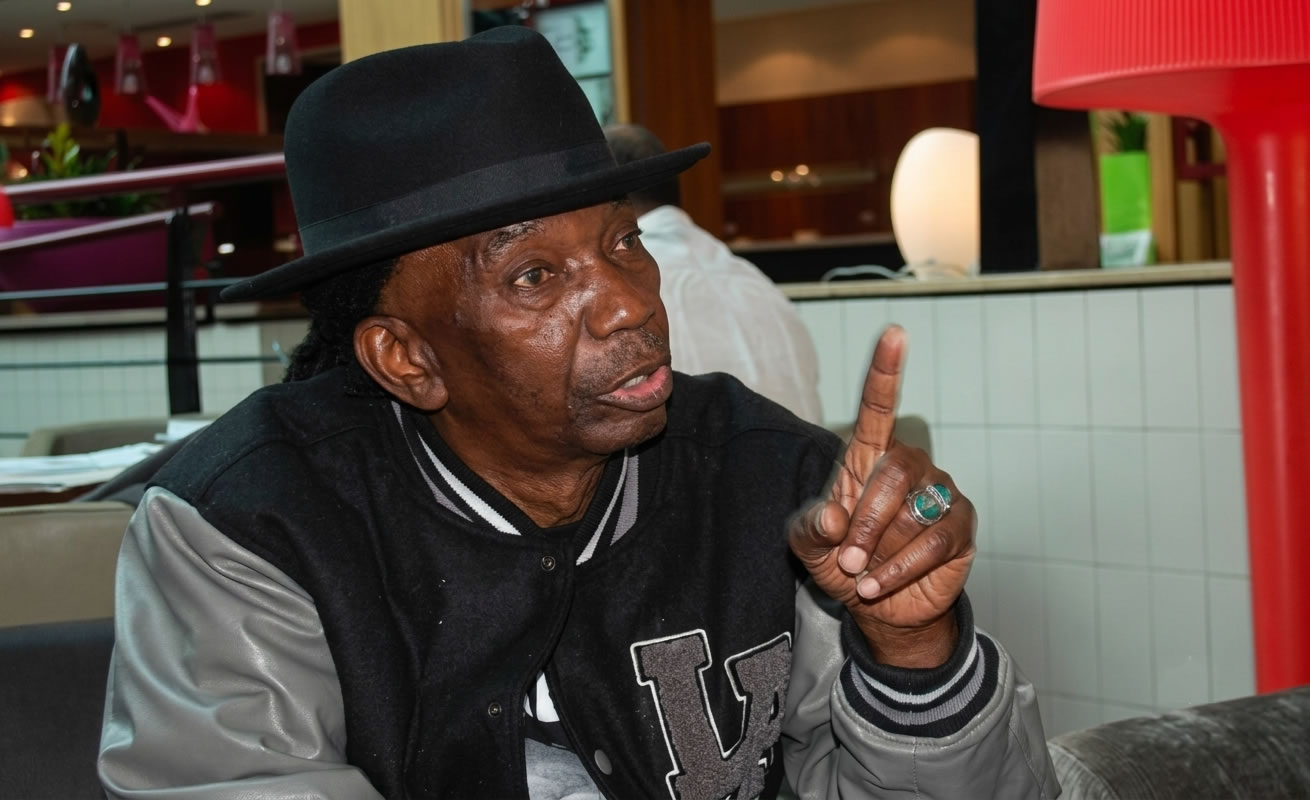
A Million-Dollar Dilemma: Thomas Mapfumo’s Crossroads
Harare – A staggering US$1.5 million offer from controversial businessman Wicknell Chivayo has ignited a fervent debate across Zimbabwe, placing legendary Chimurenga musician Thomas Mapfumo, affectionately known as Mukanya, at a pivotal moment in his illustrious career. The proposition, extended during Jah Prayzah’s 39th birthday celebrations, earmarks a substantial sum for Mukanya to perform at two high-profile events: Jah Prayzah’s upcoming wedding in August and Chivayo’s own 44th birthday bash on 22 November.
Chivayo’s offer is broken down into two distinct figures: US$500,000 for Mukanya’s appearance at Jah Prayzah’s wedding and a colossal US$1 million for his performance at the businessman’s birthday celebrations. Crucially, those close to Mukanya have indicated that no other conditions were attached to these figures, suggesting they are straightforward performance fees. This unprecedented offer comes as Mapfumo, who recently turned 81, is in the twilight of his career, with farewell shows having been lined up for the current year.
The news has, predictably, caused a stir, with Mukanya reportedly inundated with calls and messages from individuals eager to share their opinions on the development. The immediate public reaction, fuelled by the reposting of old interviews, largely suggests that Mapfumo, a long-standing critic of political corruption and social injustice, would decline such an offer. However, credible suggestions are emerging that accepting Chivayo’s proposal could provide a fitting, financially secure conclusion to a career spanning over five decades.
Voices from Mukanya’s Inner Circle
Two of Mukanya’s former lieutenants, Cuthbert Chiromo and Blessing Vava, have publicly weighed in, believing this offer represents the best possible way for the music icon to cap an illustrious career. Chiromo, Mukanya’s former long-serving manager, currently in Zimbabwe and still part of the musician’s inner circle, spoke exclusively to H-Metro, emphasising the timeliness of such a reward for Mapfumo’s immense contribution to Zimbabwean music.
“If it is a straightforward performance contract, I see no obstacle. We have not yet had the opportunity to discuss specifics as he is currently inundated with calls and messages regarding this matter,” Chiromo stated, acknowledging the whirlwind of public opinion surrounding the offer.
Addressing the instant social media pressure for Mukanya to reject the deal, Chiromo highlighted a perceived hypocrisy among many of those urging the veteran musician to snub the offer. He argued that these critics often fail to provide any tangible alternative support.
“The majority of our people have never truly supported our musicians – they only offer moral support,” Chiromo lamented. He drew on his 12 years of managing Mukanya, including extensive international tours, to illustrate a stark contrast between local and international support for artists.
“When it comes to supporting local artists, our people are consistently found wanting. Whenever we released new music, these so-called ‘number one’ fans were the first to ask for free CDs,” he recounted. “Even after giving one away, someone would easily return and say, ‘my uncle took that CD, please give me another.’ When I urged them to buy one to support the band, they would hesitate.”
Chiromo further elaborated on this disparity: “Yet, if that same person supports an EPL team, they would not think twice about spending US$80 or more on a replica jersey but parting with US$5 for their favourite artist’s CD is a tall order.” He contrasted this with experiences overseas: “Overseas, it is a different story. I offered free CDs to promoters after shows, and they would refuse, insisting on paying to support the band.”
According to Chiromo, the bulk of Mukanya’s income has historically come from outside Zimbabwe, with countries like Japan contributing significantly. “Those are his real supporters,” he asserted. He reiterated his belief that those pushing Mukanya to reject Chivayo’s offer have consistently let the musician down for decades.
“These people have always been around and I can tell you that the vast majority, over 95 percent, fall into that ‘Moral Support Crew’ category. Most never bought CDs; they always asked for free copies,” Chiromo explained. “I gave many of them our entire music catalogue for free, bearing in mind that while they got them for nothing, we paid for them.”
He continued, painting a picture of fans who would exploit their connection to the artist: “When it came to live shows, the same people would brag, ‘at Mukanya’s show, I don’t pay; I get in for free.’ This happened at shows where the band relied on gate takings and the venue owner relied on bar sales. Instead of buying a ticket, they would spend their money at the bar, effectively promoting the venue owner rather than the band.”
Chiromo also highlighted more recent infringements: “Today, some of these same individuals are printing unauthorised Thomas Mapfumo T-shirts without proper consultation. For certain images they use, I signed agreements with the photographers, yet these people violate those standing agreements without even obtaining Mukanya’s consent. They also run unauthorised social media platforms in Mukanya’s name, which have become hubs for sharing free music.”
He concluded his critique of the “Moral Support Crew” by stating: “As for the businesspeople among them, it is worth noting that in their own commercial dealings, they never vet their clients along party, tribal, or any other arbitrary lines – yet they expect Mukanya to do exactly that. In my view, the majority are neither sincere friends nor genuine fans.”
Chiromo recalled a poignant example of this lack of tangible support: “A few years ago, Mukanya’s home in Domboshava was destroyed by fire and Mr Lance Guma ran a fundraising campaign to assist in rebuilding the home. Less than US$1,000 was raised after more than a month. Food for thought.”
Chiromo firmly believes that Chivayo’s offer is the best opportunity for Mukanya to conclude his career. “Our previous biggest business transaction was US$300,000, and this offer from Mr Chivayo will undoubtedly surpass that, making it the largest deal for the Thomas Mapfumo brand,” he revealed. “It would certainly serve as a befitting way for him to bid farewell to his true fans.”
He went on to praise Chivayo’s gesture: “If anything, this offer, whether Mukanya accepts it or not, proves that Mr Chivayo is a very genuine fan, one who might well take the crown as Mukanya’s number one supporter. Thousands have claimed that title over the years, yet most found it difficult to part with US$5 for an original CD. This man is prepared to part with a fortune for Mukanya’s performance. That speaks volumes.”
Chiromo underscored Mukanya’s global impact: “This is an artist who has raised the nation’s flag high in countless countries and headlined numerous international music festivals. Of note, at the Sierra Nevada Festival, major acts like Maxi Priest opened for Mukanya and in Birmingham, Alabama, the late, great Percy Sledge did the same. Such recognition from global music icons is among the highest forms of appreciation for Mukanya’s immense contribution to the music industry.” He concluded, “The figures being offered reflect Mr Chivayo’s deep and fitting appreciation of Mukanya’s legacy and his enduring impact on Zimbabwean music.”
A Publicist’s Plea for Unity
Blessing Vava, who once served as Mukanya’s publicist, took to his Facebook page to openly urge the musician to accept the offer. “I’ve taken note of Wicknell Chivayo’s offer to the legendary Thomas Mapfumo should he be invited to perform at the anticipated wedding of Jah Prayzah,” Vava wrote. “My two cents: Mukanya should come and perform as a gesture of support to the younger generation of musicians who are carrying Zimbabwean music forward. Jah Prayzah has earned his place as a legend in his own right.”
Vava highlighted the achievements of contemporary artists: “Together with Winky D, he has risen above many of his peers through consistency, influence and longevity.” He continued, “As for Mukanya, I believe he should accept Wicknell Chivayo’s offer if indeed he is invited to perform at the anticipated wedding or for the Chivayos. Whether one agrees with Chivayo or not, this particular gesture appears to be an appreciation of Thomas Mapfumo’s immense contribution to Zimbabwean music. He may not be my favourite public figure, but I genuinely believe he is a passionate admirer of Chimurenga music.”
Crucially, Vava believes the issue should not be politicised. “Music has always had the power to unite people beyond political affiliation. During my time as Publicist for Mukanya, especially when we organised the Big Bira, I interacted with people from across the political divide, including senior ZANU PF figures who would come simply because they appreciated the legend and his music,” he explained. “That experience reinforced my belief that Chimurenga music transcends politics.”
He concluded with a direct appeal: “I’m no longer working with Mukanya, but if asked for my opinion, I would say Mudhara ngaatore bag because, unlike previous offers, it appears to come without political conditions attached. I know some people won’t agree with me but this is my personal opinion.”
The Controversial Benefactor: Wicknell Chivayo
Wicknell Chivayo, the source of this extraordinary offer, is a figure who frequently courts controversy. Known for his flamboyant lifestyle and close ties to the ruling ZANU-PF party, Chivayo has recently made headlines for his lavish gifts to other prominent Zimbabwean musicians. In the past few days alone, he has reportedly gifted Jah Prayzah a brand new 2026 Ford Ranger Platinum and US$250,000 in cash for his birthday, and Sungura music legend Aleck Macheso a 2026 Toyota Fortuner GD6. These acts of generosity, often publicised on social media, have cemented his image as a significant, albeit polarising, patron of the arts in Zimbabwe .
However, Chivayo’s wealth and influence are not without scrutiny. He is famously associated with the stalled Gwanda Solar Project, a multi-million dollar tender awarded to his company, Intratrek, despite questions surrounding his prior experience and a past criminal record . The project, intended to boost Zimbabwe’s energy supply, has been plagued by delays and allegations of misappropriated funds, leading to public questioning and legal battles . Critics often link his public displays of wealth and political affiliations, suggesting a quid pro quo relationship with the ruling elite .
Mukanya’s Enduring Legacy of Dissent
Thomas Mapfumo’s career, in stark contrast to Chivayo’s public persona, has been defined by his unwavering commitment to social commentary and political dissent through his Chimurenga music. Often dubbed the “Lion of Zimbabwe,” Mapfumo’s songs have consistently challenged authority, from the colonial Rhodesian government to the post-independence ZANU-PF regime . His music, characterised by its fusion of traditional Shona mbira music with electric instruments, became the soundtrack to Zimbabwe’s liberation struggle and later, a voice for the voiceless against corruption and misgovernance .
This stance led to his self-imposed exile in the United States in the late 1990s, where he continued to be a vocal critic of the Zimbabwean government . His return to Zimbabwe for performances has always been met with immense public interest, often carrying political undertones. The idea of Mukanya, a symbol of artistic integrity and resistance, accepting a substantial sum from a figure so closely associated with the establishment he has long criticised, presents a profound ethical and symbolic dilemma for many of his long-time followers.
A Crossroads for Zimbabwean Music
The US$1.5 million offer to Thomas Mapfumo is more than just a financial transaction; it is a cultural flashpoint. It forces a national conversation about artistic integrity, financial realities for musicians, and the complex interplay between art, commerce, and politics in Zimbabwe. For Mapfumo, it represents a choice between a financially comfortable retirement, potentially facilitated by a controversial figure, and maintaining an unblemished image of defiance that has defined his career.
As the legendary musician contemplates his decision, the eyes of a nation, and indeed the global music community, are watching. Will Mukanya accept the offer, potentially setting a new precedent for artist remuneration in Zimbabwe, or will he uphold the principles that have made him an enduring icon of resistance? The answer will undoubtedly shape narratives around his legacy and the future of Zimbabwean music for years to come.