


Trading has changed a lot over the years, and more people now compare synthetic indices vs forex before deciding where to put their money. Both markets allow you to trade price movements, but they don’t always work the same way.
Before you start on your first trade, you must understand the key differences. In this article, we are going to break down synthetic indices vs forex to make it easier to understand how each market works. Continue reading to find out more.
Understanding Synthetic Indices and Forex
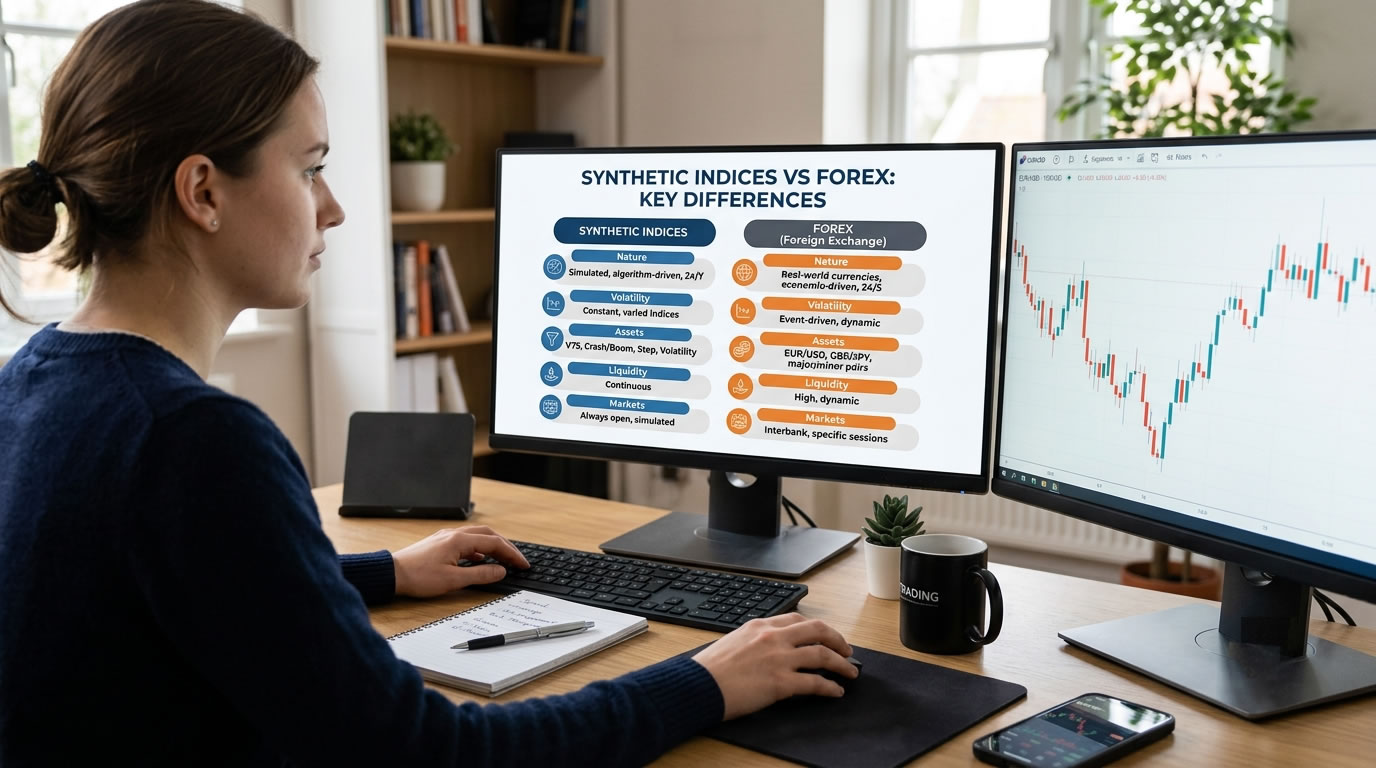
Synthetic indices are markets built by computer algorithms, not by real-world buyers and sellers. They run nonstop, every day of the year, and don’t care about bank holidays or breaking news.
Forex, on the other hand, means buying and selling actual currencies like USD or EUR. If you want a deeper breakdown of synthetic indices vs forex, guides on Syntxwiki are a helpful place to find more information before you begin trading.
How Each Market Works
Synthetic indices run all day, every day. Their prices follow an algorithm instead of real market activity. That means you can trade whenever you have time without waiting for market sessions. Many traders look at synthetic indices vs currency pairs because they want to compare how each market behaves.
Forex trading does not run all the time. It only works when big financial markets are open in different parts of the world. Prices increase and decrease because people react to news, politics, and how much demand there is for a currency. Sometimes moves are fast, and sometimes they are slow, depending on what is happening. This makes synthetic indices vs forex an important comparison for anyone planning to trade regularly.
Key Differences Between Synthetic Indices and Forex
The biggest difference between forex and synthetic indices comes down to what drives the price. Synthetic indices follow programmed algorithms, so synthetic indices vs forex price action feels patterned, even though it’s still random underneath.
Forex feels more emotional since real traders react to news and rumors in real time. On top of that, forex vs synthetic indices trading hours differ a lot. One runs around the clock, and the other pauses over weekends.
Pros and Cons of Each Market
Synthetic indices give you constant access because they never close. You also avoid sudden price moves caused by unexpected news. They are only available through selected brokers, so your choices may be limited.
Forex gives you many currency pairs and plenty of trading opportunities. At the same time, news releases can create sharp price changes. Comparing synthetic indices vs forex helps you weigh these strengths and weaknesses before choosing a market.
Choosing the Right Market for Your Trading Goals
Your choice depends on what you want from trading. If you enjoy following global news and watching currency movements, forex may suit you better. If you prefer a market that runs all the time and follows set rules, synthetic indices may be a better match.
There is no single winner in synthetic indices vs forex. Both markets have their own merits and demerits. That’s why you need to take the time to learn and practice on a demo account to help you select one that best fits your trading goals.
Conclusion
At the end of the day, synthetic indices vs forex both offer real, genuine opportunities. They just come in very different packages. Think about what you want, how much risk you can handle, and how much time you have for trading. When you choose a market that fits your own life, things become easier to understand, and you don’t keep doubting your decisions all the time.