


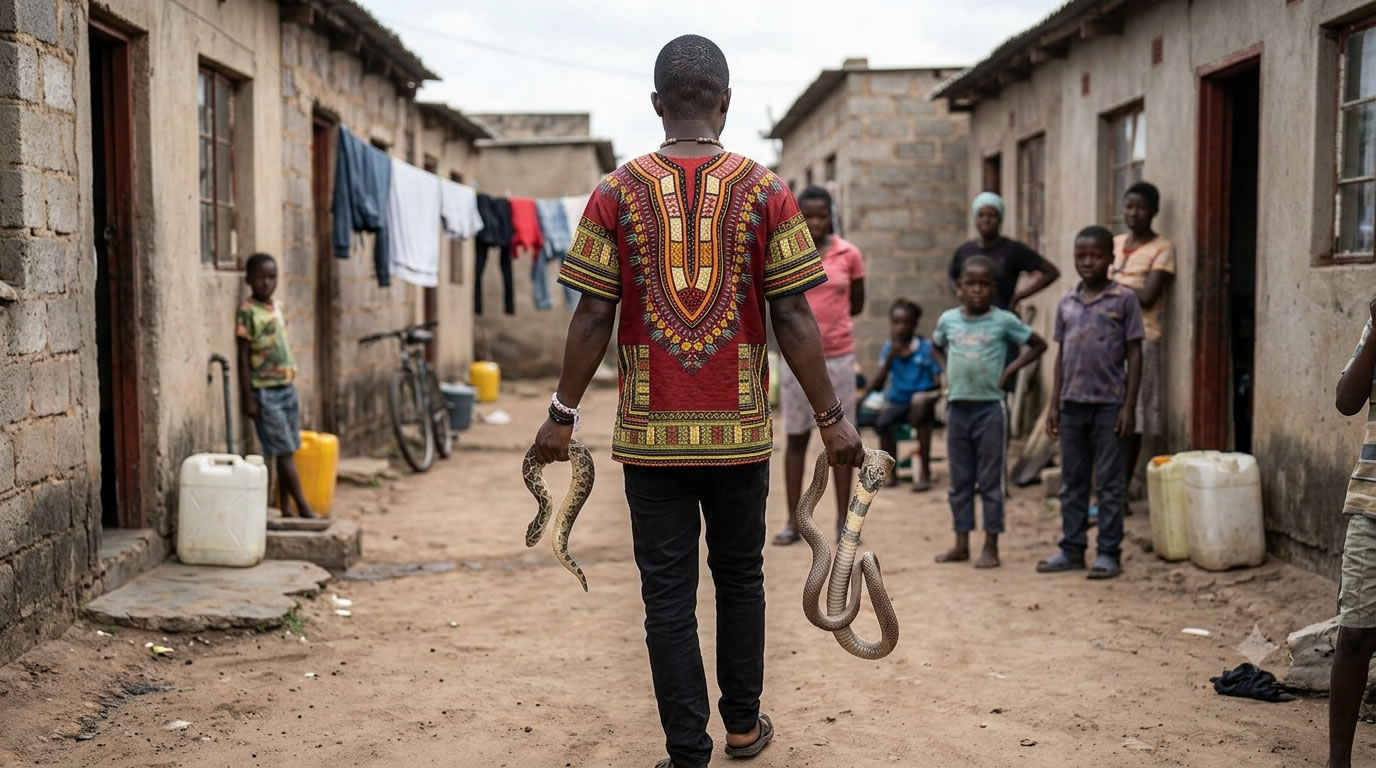
Mutare – A 19-year-old self-proclaimed traditional healer, Gift Kanodaweta, also known as James Malunga, has been apprehended in Mutare for allegedly operating without proper documentation and possessing two live, venomous snakes. The arrest, which occurred last weekend in the Chikanga area, has brought to light concerns about fraudulent traditional healing practices and the illegal trade of protected wildlife in Zimbabwe.
Kanodaweta, who claims to use the snakes in rituals to help individuals, particularly miners, acquire wealth, was taken into custody by a member of the Zimbabwe National Traditional Healers Association (ZINATHA). The acting spokesperson for the Manicaland police, Assistant Inspector Wiseman Chinyoka, confirmed the arrest, stating that Kanodaweta was engaging in fraudulent healing and traditional medicine practices under the alias Sekuru Kamutungunde.
According to police reports, Kanodaweta allegedly obtained two eggs in Mozambique in 2024, which later hatched into a cobra and a puff adder. These snakes, both highly venomous, were reportedly central to his wealth-giving rituals. Following his arrest, the reptiles were handed over to the Zimbabwe Parks and Wildlife Management Authority (ZimParks) for their safety and proper handling. Kanodaweta now faces charges of violating Section 59(1)(b) of the Parks and Wildlife Act (Chapter 20:14), which pertains to the illegal possession of protected wildlife.
Assistant Inspector Chinyoka provided further details regarding the incident: “On June 26, at 10 AM in Chikanga, Mutare, Gift Kanodaweta, also known as James Malunga (19), from Kadzinga in Chief Nyajina’s area, Murehwa, who claims to be a traditional healer using the name Sekuru Kamutungunde, was found with a puff adder and a cobra and without Parks and Wildlife permits, in violation of the Parks and Wildlife Act, 59 (Chapter 20:14).” The police spokesperson added that an informant, Paradzayi Clever Maendayi, brought the accused to ZRP Chikanga Police Station after discovering he was impersonating a traditional healer and was not registered with ZINATHA. The suspect was reportedly carrying the two snakes in his bag, which he allegedly used for rituals.
When questioned, Kanodaweta initially claimed to be a traditional healer from Malawi, despite being born and raised in Murehwa. He stated that he began traditional practices at a very young age and travelled to Mozambique in 2024 to be “fortified” in his healing work. It was there, he claims, that he was given two eggs by another traditional healer, which subsequently hatched into the cobra and puff adder. The Zimbabwe Parks and Wildlife Management Authority was promptly informed, and their team identified the snakes. Kanodaweta was then transferred to the Criminal Investigation Department (CID) Mineral Flora and Fauna Unit, where investigations are ongoing. The snakes remain in the care of ZimParks.
This incident is not an isolated one in Zimbabwe, where traditional beliefs often intertwine with practices that sometimes cross legal boundaries, particularly concerning wildlife. The use of animals, especially snakes, in rituals for wealth, protection, or other purposes, has led to several arrests and raised concerns among authorities and legitimate traditional healers alike. The cultural significance of snakes in some traditional practices, particularly the myth of the ‘money snake’ that vomits cash, is a deeply ingrained aspect of some Zimbabwean traditional beliefs. However, the illegal possession of protected species, regardless of cultural claims, remains a serious offence under Zimbabwean law.
This recent arrest echoes similar incidents across Zimbabwe, highlighting a recurring challenge for law enforcement and wildlife authorities. In May 2021, a self-styled prophet, Maxwell Muguta who was 28-year-old at the time, and was originally from Mutare, was apprehended in Marondera after being found with a Rinkal Cobra. Muguta reportedly told police that he had purchased the serpent for US$70 from a traditional healer in Seke, intending to use it for ritualistic purposes. The incident led to his appearance in court, and the cobra was subsequently placed in the care of ZimParks, much like the snakes found with Kanodaweta. This case underscores the illicit trade in protected wildlife for perceived spiritual or financial gain.
Another notable case from the same period involved Chusi Bhunu (31), a self-styled prophet from Mhangura, who was sentenced to 36 months imprisonment for illegally keeping a two-metre-long African rock python. Bhunu, a member of the Bible Fellowship Apostolic Ministry, used the python as part of his paraphernalia to fake exorcisms and healing sessions. His deception was uncovered when family members of a client became suspicious of a green sack he was carrying, which contained the snake. Bhunu’s arrest and subsequent conviction served as a stern warning against the exploitation of wildlife for fraudulent religious or traditional practices. The python, valued at a whooping US$5,000, was also taken into custody by ZimParks rangers.
The Zimbabwe National Traditional Healers Association (ZINATHA) plays a crucial role in regulating traditional healing practices within the country. The arrest of Kanodaweta by a ZINATHA member highlights the association’s efforts to curb unregistered practitioners and fraudulent activities that tarnish the reputation of legitimate traditional healers. ZINATHA’s stance is clear: while traditional healing is a recognised practice, it must adhere to established guidelines and legal frameworks, especially concerning the use of protected wildlife. The association often collaborates with law enforcement to identify and report individuals who operate outside these regulations.
The phenomenon of ‘kurombesa’ — rituals aimed at acquiring wealth — frequently involves the use of specific animals or animal parts, with snakes being particularly prominent in these beliefs. The allure of quick wealth, especially in challenging economic times, can drive individuals to seek out these rituals, sometimes leading them to unregistered practitioners who exploit these beliefs for personal gain. The cases of Kanodaweta, Muguta, and Bhunu illustrate the lengths to which some individuals will go to acquire these animals, often crossing borders or engaging in illegal trade.
As investigations into Kanodaweta’s case continue, authorities are urging the public to be vigilant and to verify the credentials of traditional healers through ZINATHA. The illegal possession of wildlife not only poses a threat to the animals themselves but also to public safety, given the venomous nature of the snakes involved in this recent incident. The collaboration between ZINATHA, the police, and ZimParks is essential in addressing these issues and ensuring that traditional practices are conducted responsibly and within the bounds of the law.