


The Service Station Scuffle: Behind the Mutare Mushikashika Viral Bashing
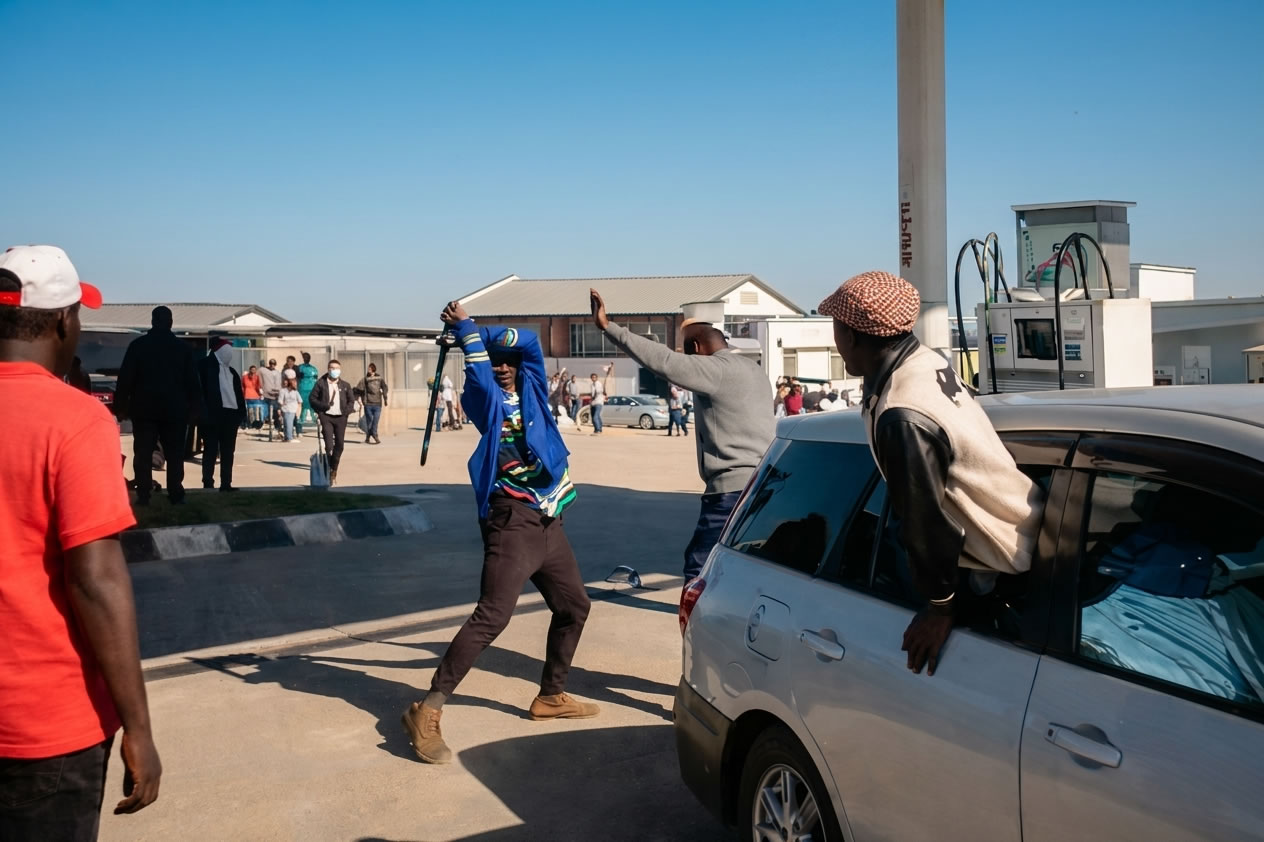
MUTARE – The grainy footage begins like so many others captured on a smartphone in contemporary Zimbabwe: a flurry of motion, the distinct sound of a scuffle, and the stunned silence of onlookers. But as the camera focuses, the scene at a local service station in Mutare reveals a sight that has become a flashpoint for a nation’s simmering tensions. A young man, identified by police as 29-year-old Brendon Tsakatsa, is seen delivering a thorough beating to a uniformed police officer.
The video, which spread across social media platforms like wildfire this past week, does not just depict a criminal act; it serves as a brutal window into the volatile “mushikashika” subculture that defines urban transport in Zimbabwe. In the footage, the officer, later identified as Constable Maxwell Mukumbuzi, appears overwhelmed as the motorist rains down blows before making a hurried escape. The incident occurred on 29 June 2026, and by the time the weekend arrived, the Zimbabwe Republic Police (ZRP) had confirmed that the long arm of the law had finally caught up with Tsakatsa.
“The ZRP reports that Brendon Tsakatsa (29) of number 1285 Chikanga 1, Mutare has been arrested for assaulting Constable Maxwell Mukumbuzi at a service station in Mutare on 29/06/26,” the official police statement read. For the authorities, it was a straightforward case of an officer being attacked in the line of duty. For the residents of Mutare, however, the incident is merely the latest chapter in a long-running and increasingly violent feud between law enforcement and the pirate taxi operators known locally as mushikashika.
A City on Edge
Mutare, a picturesque city nestled against the Eastern Highlands, has become a primary battleground for this conflict. The term “mushikashika” refers to the informal, often illegal, transport system where private vehicles — ranging from battered Toyota Wish wagons to sleek Honda Fits — shuttle passengers across the city for a fee. They are the lifeblood of the under-paid working class, filling the void left by a crumbling formal public transport infrastructure. Yet, they are also the primary targets of relentless police crackdowns.
The arrest of Tsakatsa, a resident of the sprawling Chikanga 1 suburb, has done little to quieten the debate. In the aftermath of the viral video, the ZRP issued a stern warning: “The ZRP strongly warns kombi and pirate taxi operators, as well as all members of the public, against assaulting, resisting or obstructing police officers in the lawful execution of their duties. Such conduct constitutes a criminal offence, and offenders will be arrested and brought before the courts without fear or favour.”
But on the streets of Mutare and Harare, the “lawful execution of duties” is a phrase often met with a cynical scoff. To understand why a driver would risk a lengthy prison sentence by assaulting an officer in broad daylight, one must look at the tactics employed by the traffic police. For years, the ZRP has been accused of using excessive force to impound pirate taxis. The most controversial of these tactics is the smashing of windscreens.
The War of the Windscreens
Despite official directives from police headquarters declaring the practice illegal, reports of officers using batons or even stones to shatter the windscreens of moving vehicles remain common. It is a high-stakes game of cat and mouse where the prize is a bribe or an impound fee, and the cost is often human life.
“The problem is that even if you report the police, no action is taken against the offending officer. Does the law allow a policeman to deliberately smash the windscreen of a car, kombi, whatever it is? You report that officer, nothing is done, so taking the law into one’s hand is the best thing. I support that guy; he will go to jail, but the message has been put across. That Constable has learnt something. He will be a better policeman,” noted one social media commentator, Sitshela SabaKwena, in a post that garnered significant support.
This sentiment, while legally problematic, reflects a growing frustration with what many perceive as a predatory policing system. The ZRP, however, maintains that their actions are necessary to ensure road safety. In June 2026 alone, the police intensified their crackdown, claiming the operations were yielding “major results” in reducing chaos on the roads. Yet, the statistics tell a grimmer story. During the 2026 Easter holidays, road traffic fatalities in Zimbabwe rose to 30, up from 17 the previous year. Many of these accidents are linked to high-speed chases between police and mushikashika drivers.
The Human Cost of Informal Transport
For the drivers, the mushikashika is not just a job; it is a survival strategy in an economy where formal employment is a rare luxury. A driver like Tsakatsa represents thousands of young men who have turned to the steering wheel to provide for their families. When an officer attempts to impound their vehicle—often their only asset—the reaction is frequently one of desperate, cornered aggression.
“Now he is on his own in jail, the cheerleaders are in their homes happy,” observed Essy Madzimbamuto, another local voice. This comment highlights the tragic reality for those who find themselves at the centre of these viral moments. While the public may cheer the “bashing” of a cop on a smartphone screen, the legal consequences for the individual are severe. Tsakatsa is expected to face charges of assaulting or resisting a peace officer, and if Constable Mukumbuzi’s injuries are deemed serious, the charge could be escalated to assault with intent to cause grievous bodily harm (GBH).
The ZRP has urged the public to use formal channels for grievances. “Members of the public are encouraged to cooperate with law enforcement officers and where they have grievances regarding police conduct, to seek redress through established channels rather than resorting to violence or taking the law into their own hands,” the police statement continued.
A Systemic Failure
However, the “established channels” are often viewed as a dead end. In 2024 and 2025, several high-profile incidents involving police “spikes”—metal strips thrown under moving tyres—led to fatal accidents, including the death of four people in a commuter omnibus. Each time, the public outcry was immense, and each time, the police promised internal investigations that rarely seemed to result in public accountability.
This lack of trust creates a vacuum where violence becomes a language of its own. The Mutare incident is not an isolated case of madness; it is a symptom of a systemic failure. The city’s transport needs are not being met by the government, the police are underfunded and often accused of corruption, and the drivers are operating in a legal grey area that leaves them vulnerable to extortion.
In a separate but related incident in Harare earlier this year, a municipal officer was filmed fighting for control of a steering wheel with a driver while the vehicle was in motion. These scenes of chaos have become the “new normal” on Zimbabwean roads. The police have resorted to “smashing windows of illegal taxis” as a standard operating procedure, despite the ZRP’s own spokesperson, Assistant Commissioner Paul Nyathi, previously stating that “life should not be endangered when public transport is being managed.”
The Road Ahead
As Brendon Tsakatsa awaits his day in court, the video of his encounter with Constable Mukumbuzi continues to circulate, a digital ghost haunting the narrative of law and order in Zimbabwe. The incident has forced a conversation that many in authority would rather avoid: how do you police a sector that exists because the state has failed to provide a viable alternative?
For the residents of Chikanga 1 and the wider Mutare community, the arrest is a reminder of the risks inherent in their daily commute. Whether they are passengers squeezed into a Toyota Wish or drivers dodging batons, the threat of violence is never far away. The ZRP may have won this particular round by placing Tsakatsa behind bars, but the underlying tensions remain as combustible as the fuel in the service station where the fight began.
The article ends where it began—with a grainy video and a question of justice. In a country where the line between the law and the lawless is increasingly blurred by the desperation of poverty and the heavy-handedness of authority, the scuffle at the Mutare service station is more than just a viral clip. It is a warning.
As one resident, Tichadzidza, wisely noted: “If the police officer was wrong, the best was to record him for evidence purposes… If he is the provider in his home, the children are now in a tight spot because of failing to control emotions and wanting to please a crowd that has nothing to do with you. It’s very important to have emotional intelligence.”
Whether emotional intelligence can survive the pressures of the Mutare streets remains to be seen. For now, the city waits for the next video, the next arrest, and the next chapter in the unending war of the mushikashika.