


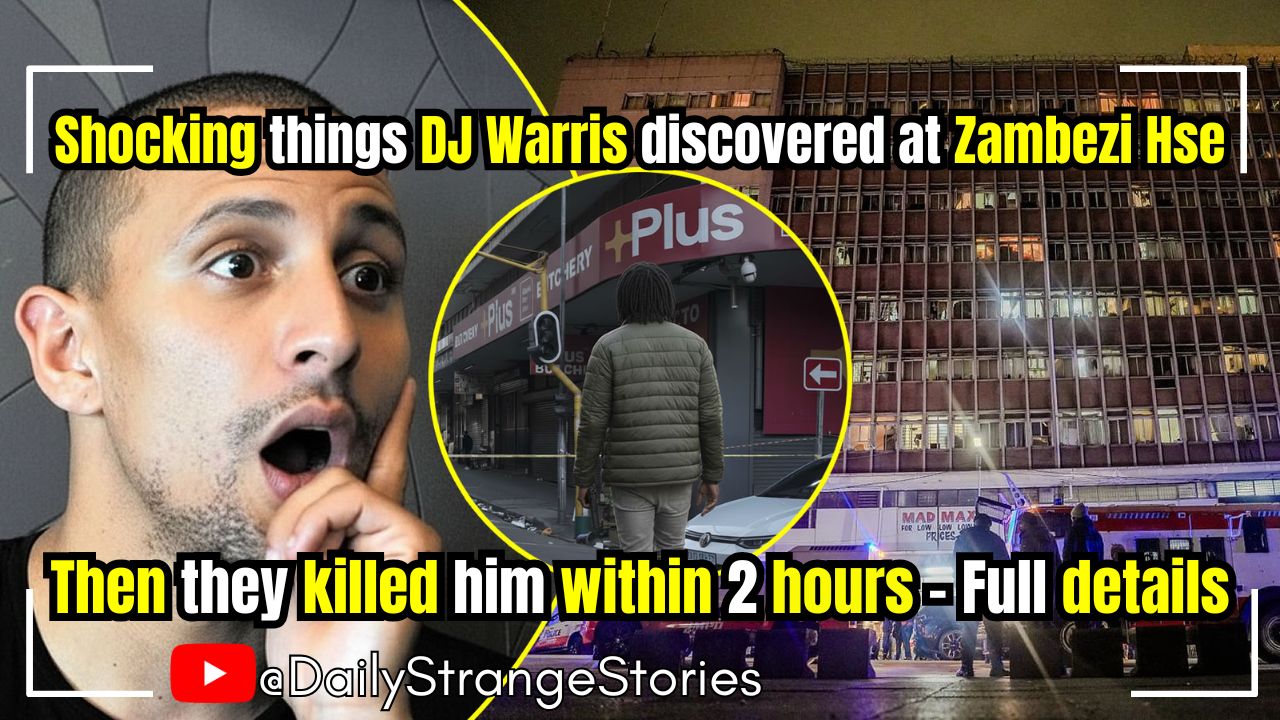
The death of Warrick “DJ Warras” Stock at Zambezi House has sparked outrage and raised serious questions about the dangers of tackling organized crime in Johannesburg. Just hours after uncovering disturbing activities, DJ Warras was fatally shot, leaving behind a legacy of fighting for safer communities.
Nicole Nelson, a close friend and business associate, revealed that DJ Warras, as head of Imperium Ops, discovered a brothel, assault reports, and drug activities, including mandrax production, within Zambezi House. The building’s concealed tunnels and illegal wiring added to the risks. Nelson believes these findings made him a target.
Sofia Khumalo, a residents’ committee member, denies involvement in DJ Warras’s death. She claims the conflict arose when DJ Warras’s company tried to stop residents from blocking rent payments and denies pocketing any money. She claims DJ Warras and his team, wearing balaclavas, were mistaken for hijackers.
A protection order granted to DJ Warras on November 21, 2025, underscores the threats he faced. Court documents cite threats from Khumalo and others, leading DJ Warras to request the removal of firearms.
DJ Warras’s approach to reclaiming hijacked buildings involved auditing residents, identifying safety hazards, installing access controls, and refurbishing spaces for existing residents, according to Nelson. This strategy aimed to improve conditions without displacement, starting at Zambezi House in March 2025.
His efforts likely clashed with established networks profiting from hijacked properties, which often serve as hubs for illicit activities, including human trafficking, prostitution, and drug distribution. Disrupting these operations can lead to severe repercussions.
Police reports indicate that DJ Warras was shot by three suspects. Investigators are considering whether it was a case of mistaken identity, but the protection orders against six individuals suggest a deliberate act. Nelson noted DJ Warras was unusually alone that morning.
This incident mirrors a pattern in Johannesburg, where organized crime syndicates turn hijacked properties into lucrative slumlord empires. Resistance often leads to sabotage. Four people were questioned after a raid at Zambezi House, and a message celebrating DJ Warras’s death was reportedly found on a confiscated phone.
Sofia Khumalo’s denial contrasts with allegations that she and others profited from the status quo, pocketing rents. This aligns with common tactics in hijacked building schemes, where internal leaders control finances and resist external intervention.
Beyond security work, DJ Warras was a prominent figure in media and entertainment. He envisioned a safer Johannesburg where families could thrive.
Johannesburg Mayor Dada Morero expressed condolences and called for justice. Former mayor Herman Mashaba vowed to intensify the fight against building hijackings.
This tragedy echoes other losses in Gauteng’s entertainment world, suggesting potential links to similar criminal networks.
Nicole Nelson emphasizes the importance of continuing DJ Warras’s blueprint. Human Settlements MMC Mlungisi Mabaso advises security firms to coordinate with the city for safety.
DJ Warras’s death may stem from his disruption of revenue streams tied to these syndicates. The story underscores the high stakes of challenging organized crime in Johannesburg’s inner city. His model for creating safe, accountable spaces offers a path to transform the city.
#SouthAfricaNews, #DJWarras, #ZambeziHouse, #Johannesburg, #Crime, #BuildingHijacking