


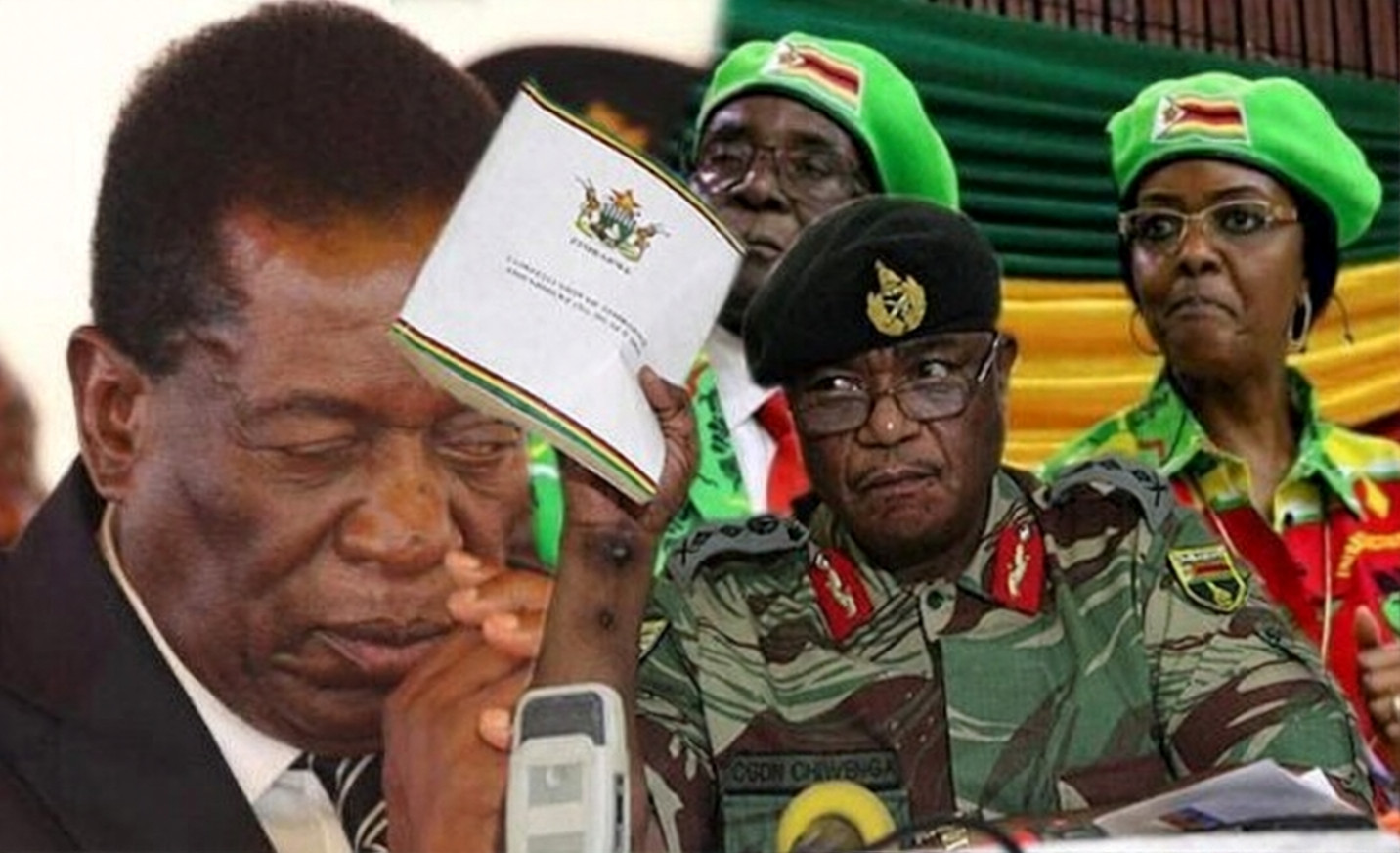
HARARE — A profound constitutional crisis is brewing in Zimbabwe as President Emmerson Mnangagwa prepares to return from his annual leave, a return that is widely expected to signal the formal commencement of a process to extend his presidency beyond the constitutionally mandated two-term limit. The ruling Zimbabwe African National Union – Patriotic Front (ZANU-PF) is pushing for a legislative amendment that would keep the 83-year-old leader in power until 2030, a move that has been met with fierce resistance from opposition parties, constitutional lawyers, and civil society organisations who are vowing a legal and civic showdown.
The political manoeuvre, which critics argue is a blatant attempt to consolidate authoritarian power, centres on the proposed Constitutional Amendment Bill No.3. The process is set to be initiated by President Mnangagwa himself, who is expected to clear the path for the Bill’s publication upon his return. A minister, speaking to The NewsHawks in a written response, confirmed the advanced stage of the preparations, stating that the drafting of the Bill has been “done and dusted.”
The standard legal process for such a constitutional change is rigorous, designed to ensure public participation and scrutiny. After the Cabinet clears the draft Bill, the Speaker of the National Assembly is required to publish the precise terms of the proposed amendment in the Government Gazette. Crucially, the Bill cannot be introduced in Parliament until at least 90 days after its publication. This mandatory waiting period is intended to allow for public scrutiny, written submissions, and public hearings to gather citizen input on the amendments. The amendment Bill must then be passed by at least a two-thirds majority in both the National Assembly and the Senate during their final readings before it is sent to the President for assent.
ZANU-PF officials, buoyed by their commanding two-thirds majority in Parliament, have openly confirmed that the proposals are ready for tabling. The party’s push gained formal momentum at its annual conference in Mutare, where delegates instructed the government to draft the necessary legislation. Justice Minister and ZANU-PF legal secretary Ziyambi Ziyambi has been tasked with ensuring the implementation of this resolution, which seeks to extend the President’s tenure by two years, from 2028 to 2030. Party insiders attempt to justify the extension by arguing that continuity is necessary to “complete development programmes,” a rhetoric that opponents dismiss as a thin veil for a personal power project that undermines the rule of law.
The Constitutional Redline: Referendum or Rupture
At the heart of the escalating tension is a fundamental disagreement over the legality of the proposed extension. The opposition and the Constitution Defenders Forum (CDF), convened by former Finance Minister Tendai Biti, have declared that the attempt to alter presidential term limits constitutes a “redline.” The CDF has stated it is “ready, legally, civically and peacefully to confront and resist any attempt to mutilate the Constitution,” citing sections 91, 95, and 328 as clear barriers to any extension.
The most potent legal weapon against the ZANU-PF plan is Section 328(7) of the 2013 Constitution. This section stipulates that any amendment extending a term limit must be done through a national referendum and, critically, cannot benefit the incumbent. To bypass this constitutional safeguard, ZANU-PF would have to amend or repeal Section 328(7) itself. Such a change, however, requires yet another national referendum where a majority of voters must approve the change, creating a legal Catch-22 for the ruling party.
Renowned constitutional law expert Professor Lovemore Madhuku has been unequivocal on this point. He has emphatically stated that neither Parliament nor Cabinet has the authority to extend a presidential term without the explicit consent of the people.
“It is impossible for parliament or cabinet to extend Mnangagwa’s tenure on their own,” Professor Madhuku recently said. “The people of Zimbabwe are the custodians of the constitution, and only they can approve such a fundamental change through a referendum.”
The CDF has dismissed the ruling party’s claims that legal barriers do not exist, stressing that party resolutions cannot override the Constitution and that Parliament should not become a rubber stamp for partisan interests. The forum warned that attempts to alter presidential term limits risk undermining democratic legitimacy and national stability, asserting that “Zimbabwe is not owned by any political party, individual, or clique. The Constitution belongs to the people, not to those who temporarily occupy office.”
Divine Entitlement and Political Factionalism
The political temperature was further raised by presidential adviser Paul Tungwarara, whose recent remarks suggesting Mnangagwa’s continued rule was “ordained by God” drew widespread criticism. Opposition politician Jameson Timba forcefully rejected this attempt to clothe political ambition in religious language.
“Zimbabwe is a constitutional republic, not a theocracy. Authority to govern flows from the Constitution and the sovereign will of the people, expressed through free and fair elections—not divine pronouncements,” Timba stated. He further warned that framing political ambitions as divinely ordained undermines both democracy and faith, adding that “History teaches that when political power claims divine entitlement, accountability collapses, corruption flourishes, and citizens are reduced from rights-holders to subjects.”
This push for extension has also exposed and exacerbated deep-seated factionalism within ZANU-PF itself. While loyalists are mobilising grassroots support for the so-called 2030 agenda, a powerful faction aligned with Vice President Constantino Chiwenga is openly resisting the move. This internal power struggle is a significant factor in the political landscape, with figures like Blessed Geza, a veteran liberation war fighter and Chiwenga ally, using platforms like YouTube livestreams to condemn the extension push, drawing thousands of viewers and amplifying the internal dissent. The President himself made no mention of the extension during his closing remarks at the party conference, and Chiwenga has maintained a conspicuous silence on the matter, a silence that is interpreted by many as a calculated political stance.
A Nation in Crisis: The Socio-Economic Backdrop
The constitutional crisis unfolds against a dire socio-economic backdrop that amplifies the public’s frustration with political longevity. Mnangagwa’s tenure, which began with promises of democratic and economic reforms following the 2017 coup that toppled Robert Mugabe, has instead been marked by a severe economic collapse. The country is grappling with hyperinflation, mass unemployment estimated by independent observers to be close to 90 per cent, and widespread allegations of corruption.
Major cities like Harare and Bulawayo are characterised by crumbling infrastructure. Harare, the capital, has endured years without reliable drinking water due to corruption and mismanagement, while electricity supply remains unreliable across the country. Critics warn that an illegal two-year extension could leave the country economically hollowed out by 2030, with allegations persisting that mineral wealth is being mortgaged to foreign interests with little benefit to ordinary citizens. Even donated Russian helicopter ambulances reportedly remain unused amid corruption allegations, symbolising the systemic decay.
Crackdown on Dissent
The escalating political tension has been accompanied by a renewed crackdown on dissent, confirming fears that the ruling party is consolidating authoritarian power. Human rights groups report that political activists and government critics continue to languish in jail without trial. A recent incident saw ten elderly activists—most in their 60s and 70s—arrested in Harare for allegedly planning a protest demanding the President’s resignation. They were charged with attempting to incite “public violence” and remain in custody, a move that opposition lawyer Tendai Biti condemned as an attempt to crush dissent. Earlier in the year, authorities detained nearly 100 young people in similar circumstances, highlighting a pattern of repression aimed at stifling any organised opposition to the ZANU-PF’s political agenda.
As the President prepares to return and initiate the legislative process, Zimbabwe stands at a critical juncture. Legal experts warn that proceeding without a referendum would not only be unconstitutional but could trigger domestic unrest, deepen international isolation, and invite sanctions. The battle over the Constitutional Amendment Bill No.3 is not merely a legal or political squabble; it is a fight for the soul of Zimbabwe’s democracy, where legality, legitimacy, and national stability are all being risked for the sake of one man’s continued hold on power.
Key Players and their and Legal or Political Stance
- President Emmerson Mnangagwa: Expected to initiate the process to extend his term to 2030, despite previous claims of being a “constitutionalist.”
- ZANU-PF: Pushing for Constitutional Amendment Bill No.3, arguing a parliamentary two-thirds majority is sufficient to pass the change.
- Constitution Defenders Forum (CDF): Vowing a legal and civic challenge, citing Section 328(7) which mandates a referendum for term limit extensions.
- Professor Lovemore Madhuku: Constitutional expert stating a referendum is an absolute requirement for such a fundamental change.
- Vice President Constantino Chiwenga Faction: Reportedly resisting the extension, indicating a significant internal power struggle within the ruling party.
- Jameson Timba: Opposition politician condemning the use of religious rhetoric to justify the extension, calling it a threat to the constitutional republic.