


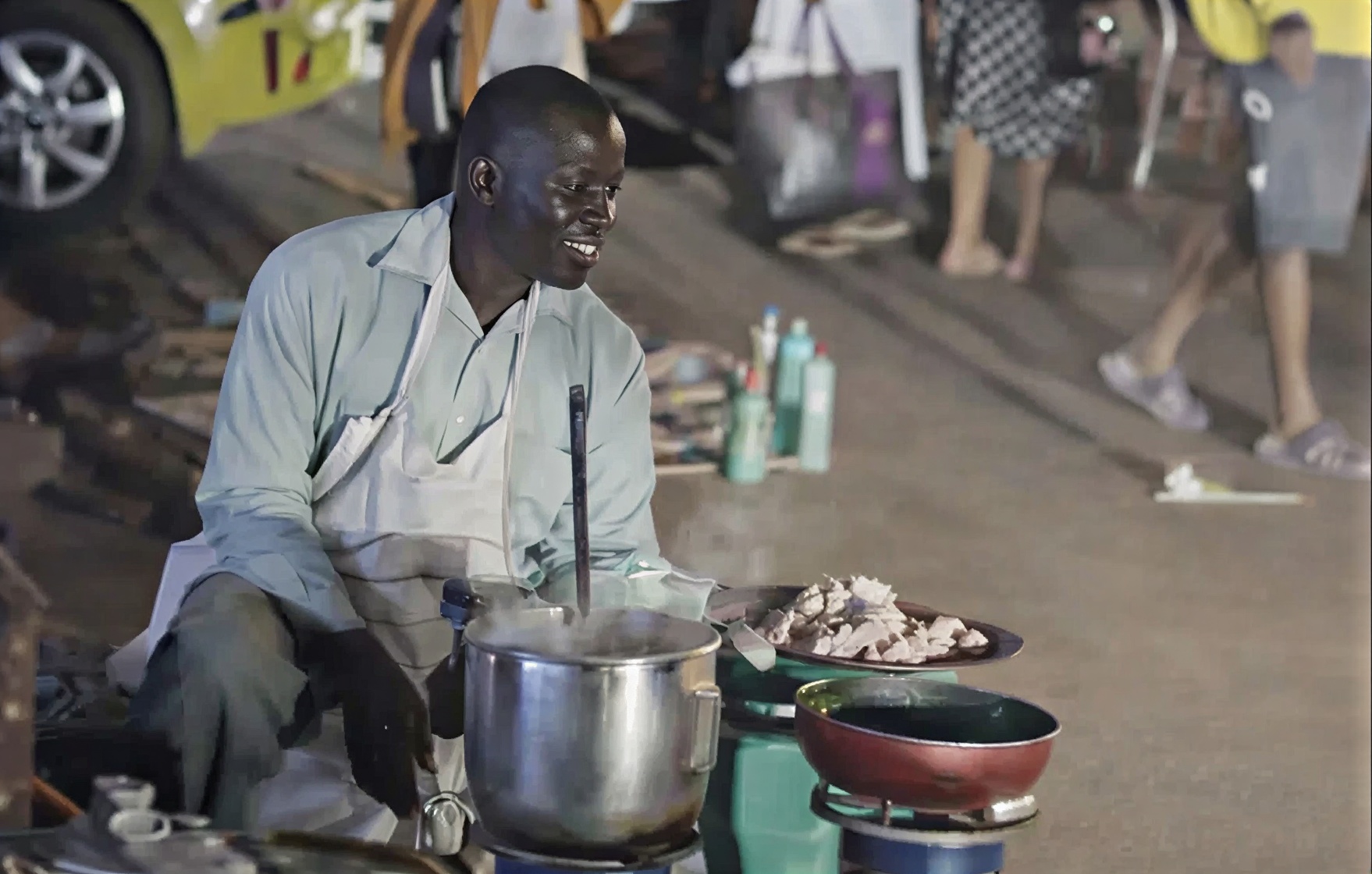
HARARE — The familiar scent of woodsmoke and cooking maize meal, once common in Harare’s high-density suburbs, has recently permeated the city’s Central Business District (CBD). This shift has transformed the modern heart of Zimbabwe’s capital into a vast, impromptu outdoor kitchen.
Harare Mayor Jacob Mafume recently declared, “Harare is not a refugee camp. Harare is the capital city. You cannot bring fire, especially gas canisters, in the middle of the City where people are moving up and down with their cars. What happens if the fire breaks out? It will destroy properties”. This statement, delivered with unwavering resolve from Town House, has instilled fear among thousands of the city’s most vulnerable residents.
The Mayor’s strong stance was triggered by a viral video showing a man calmly cooking sadza on a pavement near the Copa Cabana bus terminus. The man, later identified as a resident of Zengeza, used a gas stove to prepare a large pot of sadza and a smaller pan of relish. While some viewed this as a brazen act, Mayor Mafume condemned it as an urban
“savagery” demanding an immediate and decisive response.
“This type of serving food in the city centre is a serious public health risk,” Mafume asserted. He further elaborated on his concerns, stating, “We have noted the economic push factors, but they do not justify this! Food is a serious public health issue. Those people who fall sick, those people who die, end up using the City and the City ends up paying, and the residents are the ones who end up paying”.
However, beneath the official narrative of “hygiene” and “order,” an in-depth investigation by this publication uncovers a more poignant reality. The transformation of the CBD into an open-air kitchen is not a matter of choice but a stark necessity. For the countless individuals who now conduct their livelihoods on the streets, the formal economy has become a distant memory, a relic of a bygone era when Harare was truly the “Sunshine City.” This once-vibrant metropolis has now become a landscape where daily survival is the paramount concern.
The Streets as an Office: A Harsh Reality
For individuals like Tinashe (whose name has been changed to protect his identity), a 34-year-old former factory worker who relies on these street cooks for his meals, the Mayor’s pronouncements feel deeply personal. “He calls it a refugee camp, but where are the houses? Where are the jobs?” Tinashe questioned, holding a plastic container of food that cost him less than a pound. “If I go to a restaurant, I pay five pounds. Here, I eat for fifty pence. The Mayor wants us to starve in a clean city.” His words highlight the profound disconnect between policy and the lived experiences of the city’s residents.
The Harare City Council’s persistent failure to establish and maintain designated, adequately serviced areas for vendors is a long-standing issue that has now reached a critical juncture. Despite the council reportedly spending millions on “policing costs” to remove vendors from the streets—expenditures that some estimates suggest are eight times the council’s actual revenue from informal trade—there has been a notable absence of new, modern market stalls constructed in the CBD for years.
Consequently, the “Sunshine City” has devolved into a contentious battleground. Municipal police, frequently accused of accepting bribes to overlook illegal vending activities, engage in a continuous game of cat-and-mouse with informal traders. The recent arrest of the sadza cook is merely the latest, most publicised incident in an ongoing struggle between urban regulations and the fundamental human need for survival.
Unravelling the “Clean-Up” Conspiracy
In the bustling, yet often overlooked, corners of Harare’s bus ranks, a different narrative unfolds. Among the vendor community, conspiracy theories are as prevalent as the dust that settles on their wares. Many firmly believe that the timing of this latest crackdown is far from coincidental. With the capital frequently hosting significant international summits and foreign delegations, there is a pervasive sentiment that these “clean-up” operations are primarily a cosmetic exercise, meticulously orchestrated to present a favourable image to international visitors.
“They want the streets to look like London when the visitors come,” remarked one vendor, who chose to remain anonymous due to fears of reprisal. “But as soon as the planes leave, the rubbish stays, the sewage still flows, and we are still poor. They are hiding us like a dirty secret.” This sentiment underscores a deep-seated cynicism regarding the council’s true motivations, suggesting that the welfare of its citizens is secondary to external perceptions.
Even more unsettling are the persistent whispers of clandestine private developments. Investigative leads suggest that certain prime areas within the CBD, currently occupied by informal traders, have already been secretly designated for private developers with strong connections to the city’s political and economic elite. By initiating this “war” on vendors, the council may be systematically clearing the path for lucrative real estate projects, the details of which remain concealed from the public.
“No one can just occupy the space without our permission,” a council official was reportedly overheard stating during a recent raid. However, for the vendors, the “permission” they seek extends beyond mere bureaucratic approval from Town House. It is a fundamental right to earn a living in a country where the formal unemployment rate is estimated to exceed 80 per cent.
The Economic Abyss: A Formal Collapse
The plight of Harare’s streets is a microcosm of Zimbabwe’s broader economic woes. The introduction of the ZiG currency in 2024 was intended to usher in an era of stability. Instead, for many, it merely triggered a new wave of crackdowns on illegal money changers and informal traders. As the formal sector continues its relentless contraction, the street remains the sole arena where money, however meagre, genuinely circulates.
These “sadza cooks” are not merely a nuisance; they are a stark manifestation of this economic collapse. They provide an essential service that the formal urban infrastructure has failed to deliver: affordable, accessible food for a workforce grappling with a constantly devaluing currency. By criminalising their activities, the council is not merely addressing a “health hazard”; it is severing a vital lifeline for countless individuals and families.
“We need to take care. We need to live. We need to have livelihoods, but we must not damage,” Mayor Mafume stated, attempting to articulate a balanced perspective. Yet, in a city where raw sewage frequently overflows onto CBD streets and tap water often appears a “yellow-brown” colour due to inadequate chemical treatment, the Mayor’s intense focus on a single individual cooking sadza appears to be a severe misplacement of priorities.
The Unheard Voices: A Battle for Basic Needs
Tonight, the streets of Harare are quieter than usual. The gas cylinders have been discreetly hidden, and the cooking pots are stowed away in clandestine storage spaces. Yet, the gnawing hunger persists.
This crackdown on street vendors and cooks is not a genuine effort to sanitise the city. If it were, the council would prioritise repairing the bursting sewage pipes and clearing the mountains of uncollected refuse that truly symbolise the city’s decay. Instead, this is a direct assault on the poor, a calculated campaign to eradicate the visible manifestations of economic failure from the gaze of the affluent and powerful.
As dusk descends upon the “Sunshine City,” the fundamental struggle for basic needs endures. The sadza cook may be detained, but an army of others stands ready to fill his place. In Harare, the choice is no longer a simple dichotomy between “order” and “disorder.” It is a profound conflict between a legal framework that demands a “clean” city and the visceral imperative of a stomach that demands sustenance.
For the resilient people of Harare, the streets are more than just thoroughfares; they represent a home, a kitchen, and a final bastion of survival. No amount of municipal policing can alter the undeniable truth that until the underlying economic issues are resolved, the “refugee camp” that Mayor Mafume so vehemently denounces will remain the harsh reality for the vast majority of his constituents.