


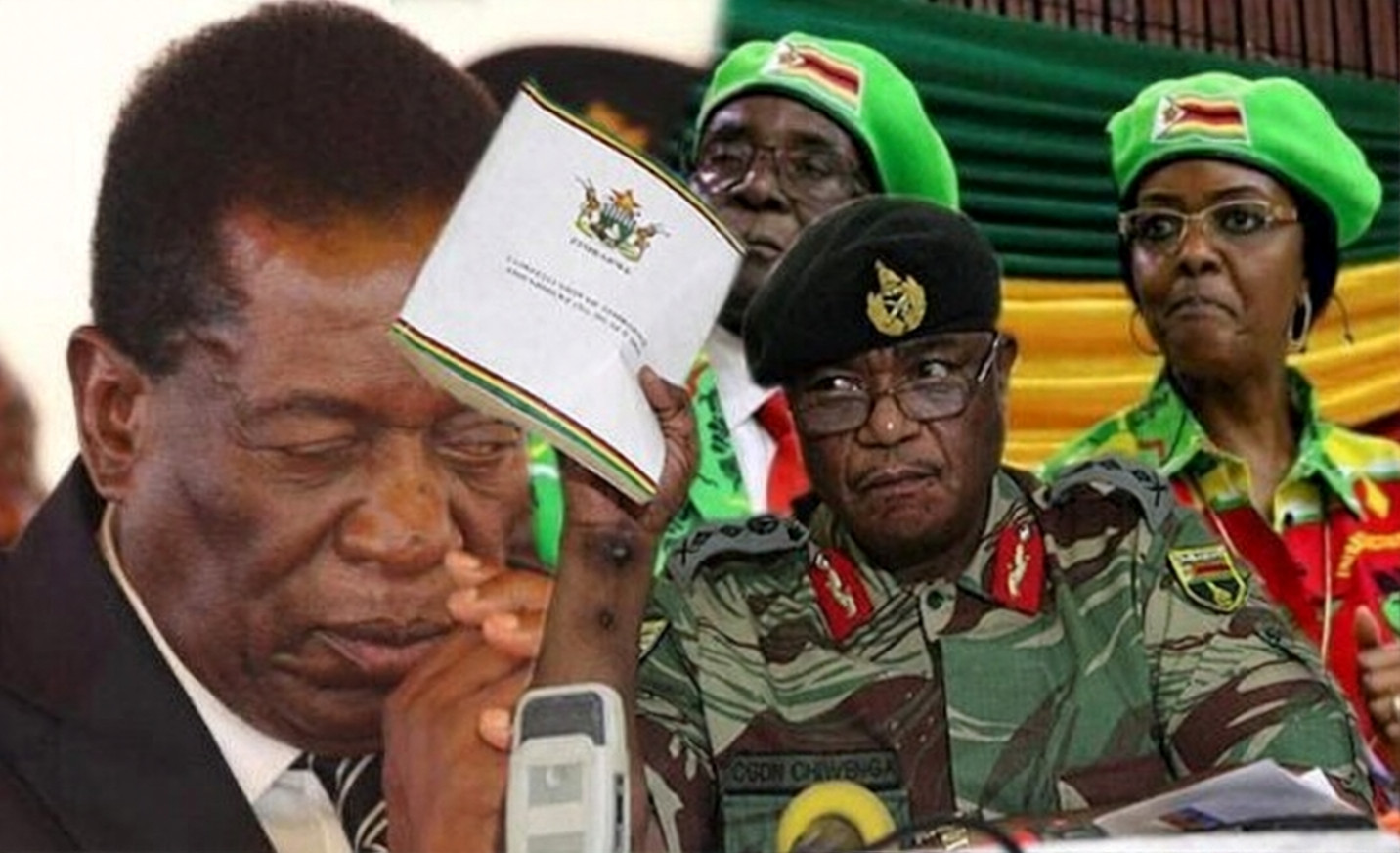
In the quiet corridors of Harare’s government offices, a document is circulating that has set the political landscape of Zimbabwe on a collision course with its own history. What appears on the surface to be a series of technical legislative adjustments is, according to a growing chorus of critics, a calculated blueprint for the entrenchment of power. The Constitution of Zimbabwe (Amendment) Bill No. 3 of 2026 has become the centrepiece of a high-stakes gamble by President Emmerson Mnangagwa’s administration to extend his rule beyond the strict limits set by the 2013 Constitution.
While the ruling ZANU-PF party maintains that these changes are designed to streamline governance and ensure national stability, the parallels to the late Robert Mugabe’s era are becoming impossible to ignore. For nearly four decades, Mugabe utilised constitutional “mutilations” to consolidate his grip on the nation, and many fear that his successor is now following the same well-worn path. The Bill, which seeks to extend presidential terms from five to seven years, is seen by many as the opening salvo in the “2030 Agenda”—a political movement dedicated to keeping Mnangagwa in office well past his current legal limit of 2028.
The legal language of the Bill is as intricate as it is revealing. By shifting the presidential term to seven years, the administration effectively resets the political clock. However, a significant legal hurdle remains in the form of Section 328(7) of the Constitution. This clause explicitly states that any amendment to a term-limit provision cannot benefit the person who held the office before the amendment was made. To bypass this, legal experts suggest that the government may attempt a “constitutional coup” by amending this restrictive clause itself, potentially necessitating a national referendum that many fear will be marred by the same irregularities seen in previous Zimbabwean elections.
The atmosphere of suspicion was further heightened on 9th March 2026, when the Matabeleland-based pressure group Ibhetshu Likazulu abruptly withdrew its court challenge against the Bill. The withdrawal, which initially seemed like a victory for the government, has instead raised questions about the hazardous environment in which opposition voices must now operate. In a statement released on Monday, the group’s Secretary General, Mbuso Fuzwayo, revealed the grim reality behind their decision. “It is a difficult decision we had to take following advice from some of our stakeholders concerned in light of an unrelenting smear campaign to soil the reputation of the organisation and myself as its secretary general in particular,” Fuzwayo stated.
This withdrawal is not merely a legal setback; it is a symptom of a political landscape increasingly dominated by “regime enablers” and “vicious propaganda.” Fuzwayo was clear that the termination of the court route did not signal a surrender. “This termination of the court route does not in any way mean that, as Ibhetshu Likazulu, we are abandoning our strong opposition to the 2030 agenda and its mutilation of the Constitution,” he insisted. “We continue the fight by other means together with other constitution defenders who have made a stand against among other things the extension of President Mnangagwa’s term beyond 2028.”
The “network” fighting against these changes is a diverse coalition of lawyers, politicians, civil society leaders, and youth activists. Among them is constitutional law expert Dr. Mavedzenge, who has been vocal in his criticism of the Bill. Dr. Mavedzenge added that the central objective of the proposed Amendment Bill is “to extend President Emmerson Mnangagwa’s term of office without a vote.” He further characterised the move as a “planned constitutional coup,” suggesting that the government is attempting to circumvent the will of the people through legislative sleight of hand.
The resistance is not limited to secular groups. Church leaders across Zimbabwe have emerged as a moral bulwark against the proposed amendments. In a joint declaration, they expressed firm opposition to the Bill, warning that it could “weaken the spirit” of the nation and “threaten constitutional integrity.” Their pastoral statements reflect a deep-seated fear that the country is sliding back into the autocracy that defined the Mugabe years. These leaders argue that the 2013 Constitution was a hard-won victory for the people of Zimbabwe, representing a collective desire for limited executive power and democratic accountability.
Historical context provides a sobering perspective on the current situation. Across the African continent, the practice of “third-termism” or term-limit evasion has frequently led to increased corruption, conflict, and political instability. In Guinea, President Alpha Condé’s successful attempt to change the constitution to allow for a third term eventually led to his ousting in a military coup. Similarly, in Ivory Coast, Alassane Ouattara’s controversial third term sparked widespread protests and political division. The African Center for Strategic Studies has noted that leaders who evade term limits are often linked to higher levels of autocracy and a greater propensity for coups.
In Zimbabwe, the 2030 Agenda is also believed to be tied to internal power struggles within ZANU-PF. Speculation is rife that the push for a term extension is a strategic manoeuvre to block Vice President Constantino Chiwenga from succeeding Mnangagwa. Chiwenga, the former military general who led the 2017 coup that toppled Mugabe, is widely seen as the heir apparent. By extending his own rule, Mnangagwa may be attempting to consolidate his faction’s control over the party and the state, effectively sidelining his most powerful rival.
The challenges faced by those opposing the Bill are immense. In rural Zimbabwe, where internet access is limited and the cost of data is prohibitively high, many citizens remain unaware of the full implications of the proposed changes. The government’s promise of “public consultations” is viewed with scepticism by groups like Open Parly, which has pointed out the logistical and political barriers to genuine citizen engagement. For many Zimbabweans, the struggle is not just about legal clauses, but about the very future of their democracy.
The Bill also seeks to alter the presidential election process, a move that critics say will further erode the independence of the electoral system. Justice Minister Ziyambi Ziyambi has defended the Bill, arguing that it is necessary for “streamlining governance.” However, his assertions have done little to quiet the “firestorm of speculation” that has erupted since the Bill was gazetted. Pro-government voices, such as Cde Togarepi, have described the amendments as a “comprehensive antidote to governance challenges,” but these claims are frequently dismissed by the opposition as “defending power” rather than “defending development.”
The role of the youth in this struggle cannot be understated. While some state-aligned youth groups have held demonstrations in support of the Bill, declaring it a “roadmap to prosperity,” other young activists, particularly those in the diaspora, have voiced their fears of retribution. Names like Theophilas Mkuhlani and Kudzaishe Dodzo have emerged as prominent anti-2030 campaigners, representing a generation that is increasingly unwilling to see their future mortgaged to the ambitions of an ageing political elite.
As the legal battle continues, all eyes are on the Constitutional Court. A group of war veterans, represented by the renowned constitutional lawyer Professor Lovemore Madhuku, has filed a case contesting the Bill. Professor Madhuku argues that bypassing a national referendum undermines the very foundation of the 2013 Constitution. “In that regard, we support colleagues who have also taken the matter to court, especially those represented by Professor Lovemore Madhuku,” Ibhetshu Likazulu stated in their withdrawal announcement, highlighting the importance of a unified legal front.
The “hidden agenda” of the Constitutional Amendment Bill No. 3 is, in the eyes of its detractors, a clear attempt to return Zimbabwe to a “forever” presidency. The strategies employed by the ruling party—smear campaigns, propaganda, and the manipulation of legal language—are all too familiar to those who lived through the Mugabe era. The question that remains for every Zimbabwean is whether the nation’s democratic foundations are strong enough to withstand this latest assault, or if the country is destined to repeat the mistakes of its past.
The investigation into this Bill reveals a complex web of political interests, legal manoeuvres, and personal ambitions. It is a story of a nation at a crossroads, where the pursuit of power threatens to overshadow the needs of the people. Whether through the courts, the streets, or the ballot box, the fight for Zimbabwe’s constitutional integrity is far from over. As Mbuso Fuzwayo and his colleagues have made clear, the struggle for constitutionalism may have turned “ugly and hazardous,” but it is a struggle that they, and many others, are not yet ready to abandon.
In the end, the Constitutional Amendment Bill No. 3 is more than just a piece of legislation; it is a test of Zimbabwe’s resolve. If allowed to pass unchallenged, it could signal the end of the democratic aspirations that were so briefly glimpsed in 2013. For a nation that has already endured decades of authoritarian rule, the prospect of another “forever” presidency is a burden that many believe Zimbabwe simply cannot afford to bear. The shadows of the past are long, and as the 2030 Agenda gathers momentum, the light of democracy in Zimbabwe appears to be flickering.
The network of defenders remains vigilant, despite the “vicious propaganda” and the hazards of the political landscape. Their motivations are rooted in a desire for a country where the law is supreme and where power is held in trust, not as a permanent possession. As this investigation has uncovered, the Bill’s hidden details and potential conspiracies are a warning to all citizens. The battle for the soul of Zimbabwe is being fought in the fine print of constitutional amendments, and the outcome will determine the fate of generations to come.
Is this merely a routine amendment, or a calculated move to consolidate power? The evidence gathered in this investigation points firmly toward the latter. The “2030 Agenda” is not about development; it is about the survival of a political system that has long prioritised its own longevity over the welfare of its citizens. As the story of the Constitutional Amendment Bill No. 3 continues to unfold, the people of Zimbabwe must decide if they are willing to allow history to repeat itself, or if they will stand firm in defence of the constitution they so painstakingly built.