


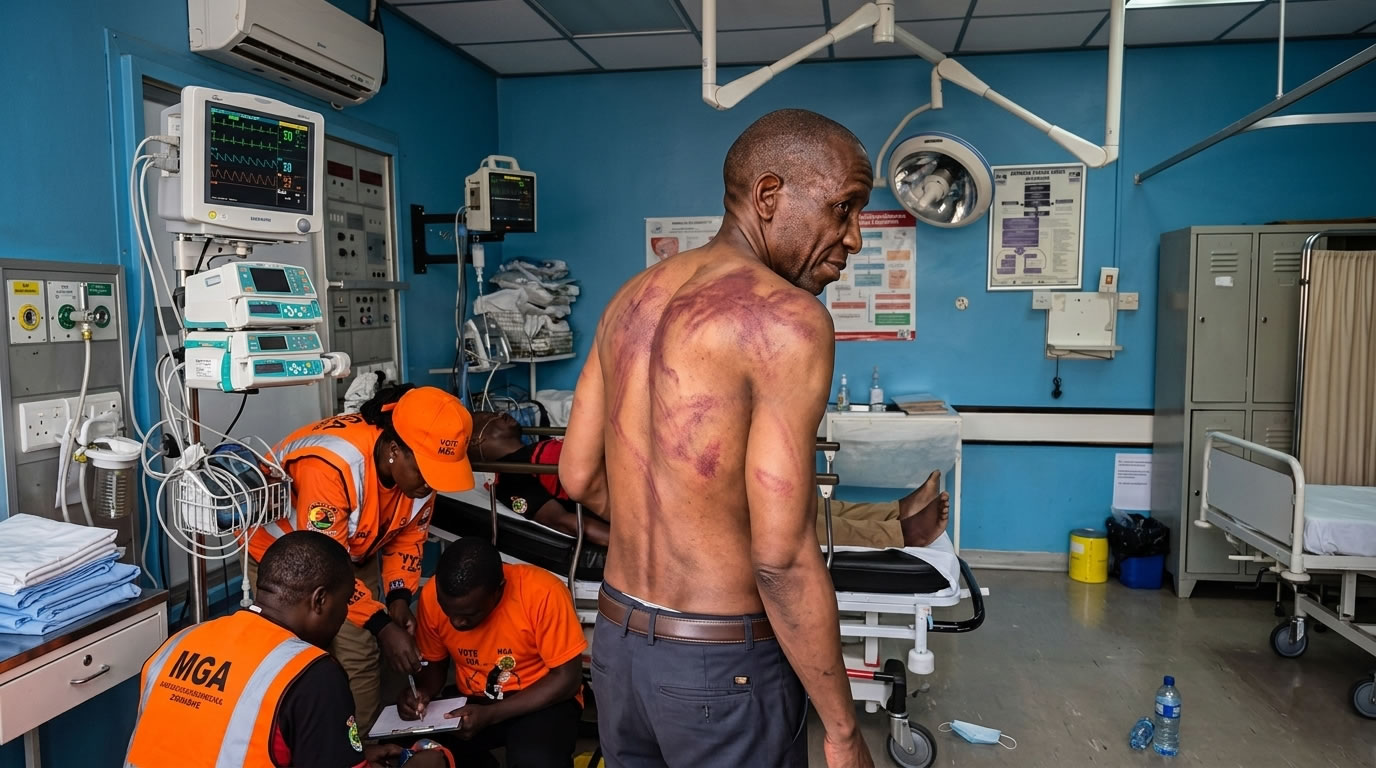
HARARE – A chilling return to the shadows has gripped Zimbabwe, as reports emerge of a shadowy paramilitary unit, ominously dubbed the “Black Bag” squad, orchestrating a new wave of abductions and what victims describe as “balaclava justice.” This investigative report delves into the resurgence of these clandestine operations, exposing a sophisticated machinery of repression designed to silence dissent and instill pre-emptive terror ahead of proposed constitutional changes. The echoes of a dark past are palpable, with blindfolds, balaclavas, and beatings once again becoming a grim reality on the streets of Zimbabwe’s major cities.
The recent incidents paint a disturbing picture of a highly professionalised operation. On 19 February 2026, Baird Gore, a member of the Citizens Defence Force (CDF), was allegedly abducted, subjected to torture, and subsequently dumped in police cells. Just weeks later, in early March 2026, members of the National Constitutional Assembly (NCA) faced a similar ordeal. Following a meeting, they were snatched and later abandoned in Highlands, Harare. The NCA offices themselves were ambushed, with Professor Lovemore Madhuku, a prominent NCA leader, among those reportedly attacked. These events are not isolated; they form part of a broader, coordinated strategy to stifle opposition voices and consolidate power, particularly in the context of President Emmerson Mnangagwa’s purported “ED2030” agenda, which many fear is a push for a third term.
The modus operandi of the “Black Bag” squad is disturbingly consistent. Victims recount being seized by unknown individuals in unmarked vehicles, often the infamous “white twin cabs” – double-cab trucks that have become synonymous with state-sponsored abductions in Zimbabwe. These operations are not random acts of violence but appear to be meticulously planned, with targets identified and monitored. The abducted individuals are then taken to “safe houses,” often located discreetly within residential suburbs, where the “balaclava justice” is meted out. The psychological impact of these disappearances is profound, leaving a trail of fear and uncertainty in their wake.
Technology plays a crucial role in the squad’s operations. Our research indicates the use of sophisticated surveillance tools, including IMSI-catchers, capable of intercepting mobile phone calls and messages within a specific radius. This technology allows the perpetrators to track activists and monitor their communications, providing a digital net to complement their physical abductions. Furthermore, social media monitoring “war rooms” are reportedly staffed by “cyber-warriors,” known locally as “Varakashi” – pro-establishment trolls who identify potential targets based on their online activity. This digital surveillance infrastructure enables the “Black Bag” squads to act with precision, targeting individuals before they can mobilise or vocalise their dissent effectively.
Funding for these clandestine operations appears to originate from opaque sources, allowing the “Black Bag” squad to operate outside conventional oversight. Investigations suggest that “off-budget” mining revenues, particularly from diamond fields like Marange, are being diverted to finance these units. This financial autonomy provides the government with “plausible deniability,” as the units can operate independently of official police and military command structures. This lack of transparency and accountability further entrenches the culture of impunity, making it exceedingly difficult to trace the chain of command or hold perpetrators responsible for their actions.
The involvement of foreign military instructors in training these units adds another layer of complexity to the situation. While specific details are often shrouded in secrecy, reports suggest that foreign entities, notably China, have been involved in providing military training and equipment to Zimbabwean security forces. This external support, whether direct or indirect, contributes to the professionalisation of these paramilitary units, enhancing their capabilities and further entrenching their repressive tactics. The geopolitical implications of such collaborations are significant, as they can embolden regimes to suppress internal dissent with greater efficiency and fewer international repercussions.
The “hit list” of the “Black Bag” squad has expanded beyond traditional political activists to encompass a broader spectrum of society. Investigative journalists, student leaders, and even disgruntled members of the civil service who have leaked sensitive documents are now among those targeted. This widening net underscores the regime’s determination to eliminate any form of opposition or critical voice. The psychological warfare employed during these “disappearances” is particularly brutal, involving mock executions and forced confessions, designed to break the spirit of the victims and deter others from speaking out. After their ordeal, victims are often “dumped” in remote areas, serving as a stark warning to the wider population.
The traditional justice system in Zimbabwe appears powerless to halt these abductions. The perpetrators are often the very individuals entrusted with enforcing the law, creating a profound crisis of trust and accountability. This systemic failure means that victims have little recourse, and the cycle of repression continues unchecked. The case of Itai Dzamara, a prominent pro-democracy activist abducted on 9 March 2015 and still missing, serves as a chilling reminder of the enduring impunity enjoyed by those who orchestrate these disappearances. His unresolved case highlights the deep-seated challenges in achieving justice and accountability in Zimbabwe.
This investigative piece serves as a call to awareness, shedding light on the machinery of repression that underpins the push for a third term. The “balaclava justice” being meted out in the dead of night is a stark manifestation of a complex network of intelligence and paramilitary forces that keep the population in a state of constant fear. The courage of those who refuse to be silenced, despite the reign of terror by the “Black Bag” squads, stands as a testament to the enduring human spirit in the face of adversity. The international community must take heed of these developments, as the erosion of human rights and democratic principles in Zimbabwe has far-reaching implications for regional stability and global justice.