


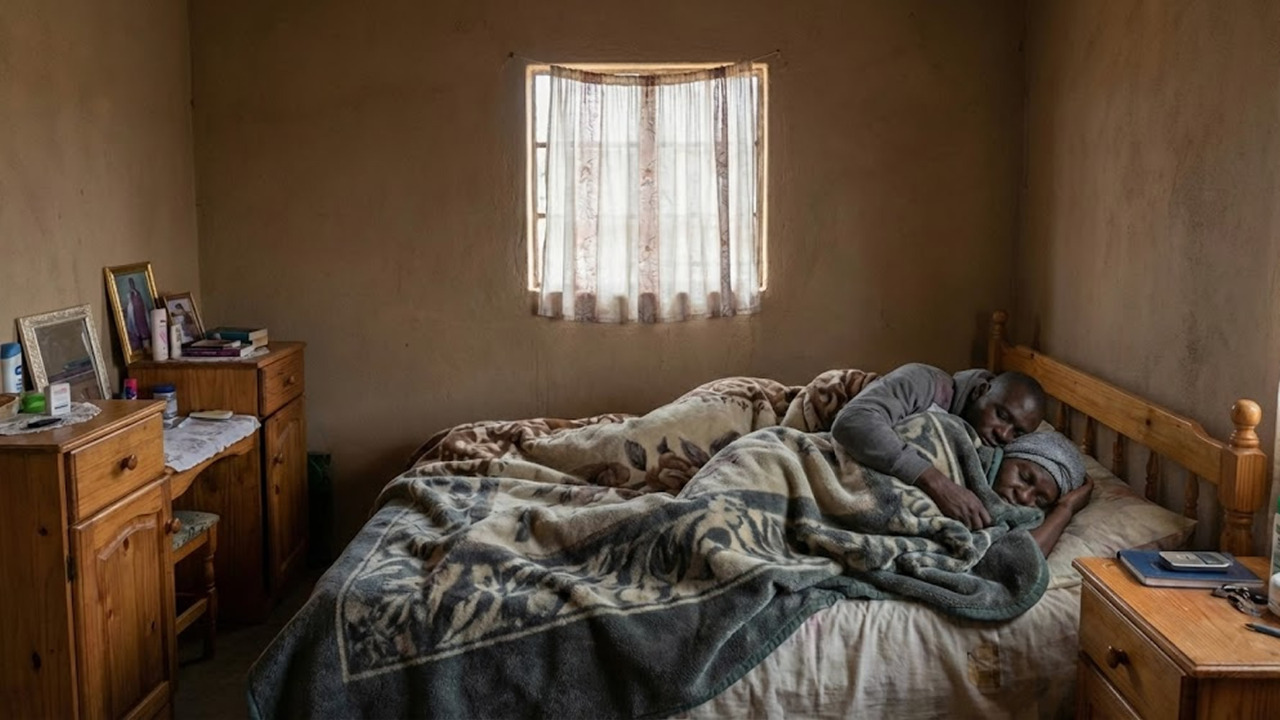
GOKWE — In the dusty, sun-drenched plains of Gokwe North, where the rhythm of life is usually dictated by the cotton harvest and the lowing of cattle, a different kind of crisis has emerged from behind the closed doors of a family home. It is a story of “bedroom blues” so profound that it has moved from the private whispers of a marriage into the public scrutiny of Chief Chireya’s traditional court.
The complainant, Irene Chipatu, a mother of seven, recently stunned a gathering of villagers and elders when she dragged her husband, Tasara Nyengera, before the traditional leadership. Her grievance was as blunt as it was heartbreaking: a “serious sex drought” that has left her marriage parched and her heart heavy. In a culture where such matters are often shrouded in a veil of modesty, Chipatu’s public declaration has highlighted a growing, yet often ignored, issue in rural Zimbabwean marriages—the intersection of physical health, traditional beliefs, and the desperate struggle to maintain marital harmony.
The “Retired” Snake
“Chief, the snake just lies there like a dead log. It never rises for any occasion,” Chipatu told the court last Sunday. The statement, delivered with the raw frustration of a woman who feels she has reached her breaking point, left the assembled villagers struggling to maintain their composure. Yet, beneath the initial ripples of suppressed laughter, there was a palpable sense of tragedy.
Chipatu’s metaphor was clear to everyone present. She alleged that her husband’s “trouser snake has retired from duty,” a colourful but painful description of chronic erectile dysfunction. For a couple that has already brought seven children into the world, the sudden descent into what she described as a bedroom “colder than a winter night in the bush” has been a shock to the system.
The details revealed in court suggest that this is not a new problem, but rather a long-standing battle that the couple has fought with varying degrees of success. According to Chipatu, the only times her husband managed to perform his marital duties in the past were after visits to traditional healers. These practitioners would prepare special herbs—often referred to locally as “waking up the tiger”—to provide a temporary reprieve from his condition.
“Without the medicine, nothing happens,” she lamented. It was these “brief herbal miracles,” she claimed, that allowed the couple to conceive their seven children. However, the situation has now taken a turn for the worse. The drought has reportedly stretched for almost a year, and the herbal remedies that once offered a glimmer of hope seem to have lost their potency—or, perhaps more accurately, their welcome.
A Marriage in Turmoil
The investigation into the couple’s domestic life reveals a deeper layer of conflict beyond the physical. Chipatu told the court that whenever attempts are made to seek help, Nyengera allegedly becomes obstructive. She accused him of destroying traditional medicines and prayer items intended to improve his condition. This behaviour, she argued, has left her feeling not only neglected but also fearful that her marriage is on the verge of total collapse.
“I am frustrated and scared,” she admitted to the elders. “It feels like our marriage is slowly collapsing because he refuses to accept the help that could save us.”
The case, which has now been formally referred to Chief Chireya, has become a talking point throughout the district. It touches on a sensitive nerve in a region where a man’s virility is often tied to his social standing and his ability to provide for and expand his family. Nyengera’s alleged refusal to engage with the remedies provided by his wife suggests a complex mix of shame, denial, and perhaps a loss of faith in the traditional systems that once sustained him.
The Broader Context: A Growing Concern in Gokwe
While the case of Chipatu and Nyengera is particularly dramatic, it is far from an isolated incident. Traditional leaders in Gokwe North have recently raised the alarm over a worrying decline in marital values and a rise in domestic disputes. Just days before this case came to light, reports emerged of a chief in the same district decrying a surge in adultery cases, which he attributed to a broader erosion of the social and cultural values that once upheld the institution of marriage.
In many of these disputes, “bedroom issues” are the silent catalyst. Economic stress, poor diets, and the prevalence of lifestyle diseases like diabetes and hypertension are increasingly being linked to rising rates of erectile dysfunction in rural Zimbabwe. Yet, the stigma associated with the condition often prevents men from seeking modern medical help, leaving them reliant on traditional herbs that may not address the underlying physical causes.
In a similar case reported in the neighbouring district of Mutasa, a 52-year-old woman, Chipo Kembo, sought relief from her marriage, citing her husband’s bedwetting and general lack of “marital vigor.” These stories point to a trend where women are becoming increasingly vocal about their right to sexual satisfaction and emotional support within marriage, breaking long-standing taboos in the process.
The Role of Traditional Jurisprudence
The referral of the case to Chief Chireya highlights the enduring importance of traditional courts in Zimbabwe’s rural areas. For the Shangwe people of Gokwe, the chief’s court is not just a place of judgment but a forum for mediation and the restoration of social balance. The Shangwe philosophy of justice often involves “truth-telling” and “reparation,” aiming to heal the rift between parties rather than simply punishing an offender.
Traditional leaders at the gathering urged other couples facing similar troubles to communicate openly. “Seek medical or traditional assistance before small issues turn into full-blown marital wars,” one elder advised. This dual approach—acknowledging both the spiritual/traditional and the physical/medical—is a hallmark of how these communities navigate the complexities of modern life.
However, the efficacy of these traditional mechanisms is being tested. As marriages face the pressures of the 21st century, some wonder if the “metaphysical role” of the courts is enough to solve problems that are increasingly rooted in physical health and economic hardship.
Waiting for the “Snake” to Wake
As it stands, the court has ordered Irene Chipatu and Tasara Nyengera to return in two weeks. The cooling-off period is intended to allow the couple to reflect on the chief’s guidance and perhaps seek further assistance. For the villagers of Gokwe, the wait is filled with a mixture of curiosity and concern.
Will the “sleeping snake” finally wake up? Or will the drought in the Nyengera household lead to the permanent dissolution of a marriage that has already produced a large family?
The story of the “Gokwe Sex Drought” is more than just a piece of village gossip. It is a window into the private struggles of a community trying to balance tradition with the harsh realities of the present. It is a reminder that behind every “stunned villager” and “suppressed laugh” is a human story of longing, frustration, and the desperate search for a way back to the warmth of the marriage bed.
For now, the people of Gokwe watch and wait, hoping that the next court session will bring a resolution that restores peace to a home currently defined by its silence.
|
Date
|
Location
|
Incident Description
|
Outcome
|
|
Oct 2025
|
Mutasa
|
52-year-old woman complains of husband’s bedwetting and impotence.
|
Case brought to Mutasa Community Court for mediation.
|
|
Aug 2023
|
Harare
|
5-year “sex drought” ends in a bitter divorce.
|
Mother-in-law blamed for the couple’s bedroom failures.
|
|
Nov 2022
|
Gutu
|
Polygamous man ordered to “prove” his erectile dysfunction with other wives.
|
Traditional court intervention to verify claims of selective impotence.
|
|
Mar 2026
|
Gokwe North
|
Chief decries rising adultery cases linked to marital neglect.
|
Call for a return to traditional family values.
|
These incidents suggest that the “sex drought” in Gokwe is part of a larger, systemic issue where traditional norms are clashing with modern stressors, leaving many couples in a state of perpetual “bedroom blues.”