


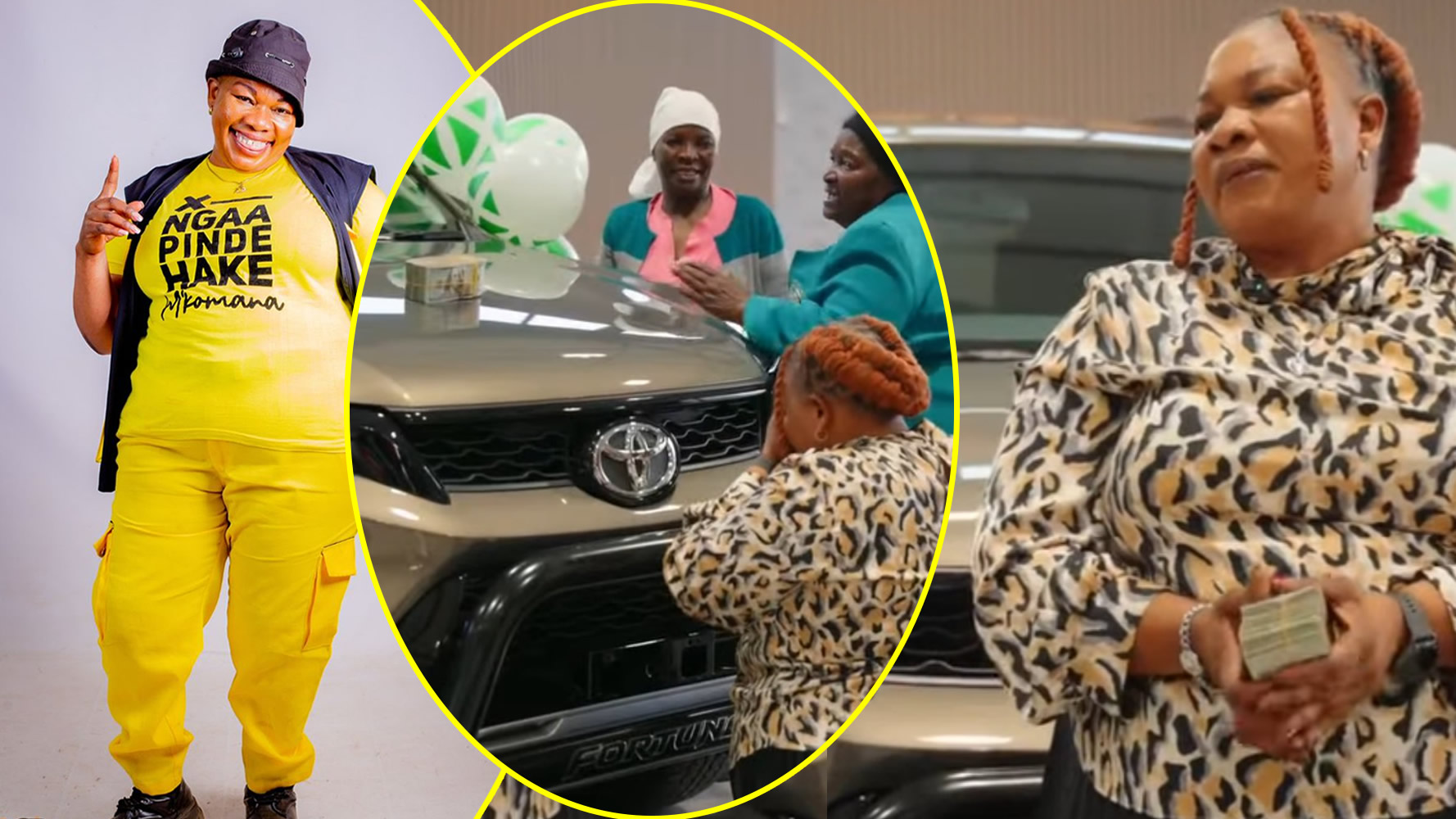
HARARE – In the dusty streets of Budiriro, where clean water is often a luxury and political loyalty is the currency of survival, a brand-new vehicle and a US$50,000 cash bundle have sparked a firestorm that threatens to consume what remains of Zimbabwe’s opposition credibility. Susan Matsunga, the Budiriro North legislator for the Citizens Coalition for Change (CCC), now finds herself in “hot water” following her acceptance of a lavish “gift” from the flamboyant and deeply controversial businessman, Wicknell Chivayo.
The controversy erupted after Chivayo rewarded Matsunga with the staggering sum and a luxury car, explicitly stating it was in recognition of her public praise for President Emmerson Mnangagwa and his adviser, Paul Tungwarara. The scene of the “political conversion” was the unveiling of boreholes drilled under the Presidential Borehole Drilling Scheme—a project implemented in the heart of an opposition stronghold. During the event, Matsunga did the unthinkable for an opposition MP: she commended Mnangagwa for the project, crediting the Zanu PF-led government for bringing development to her constituency.
View this post on Instagram
For Chivayo, a man whose wealth is frequently linked to lucrative and often questioned government tenders, the gift was a simple act of “appreciation.” However, for a nation weary of “tenderpreneurship” and political chicanery, it looked like something far more sinister.
“There is no such thing as a ‘good faith’ donation of US$50,000 and a car to an opposition MP in exchange for praising the President,” observed political analyst Ruben Mbofana. “It’s not philanthropy; it’s political capture. The Wicknell Chivayo angle is simple: he uses money from controversial government tenders—taxpayer money—to buy the loyalty of the very people who are supposed to hold him and the government accountable.”
Mbofana’s assessment was blunt, describing the gift as a “bribe wrapped in a ribbon.” He argued that by taking the donation, Matsunga had not just been “blessed” but had been fundamentally compromised. “She can’t provide oversight on the same system that just bought her a car. It is a slap in the face to the people of Budiriro who are struggling while their representative is busy being ‘sponsored’ by a tenderpreneur,” he added.
The backlash was not confined to academic circles. On the ground, the sentiment was one of betrayal. Critics have accused Matsunga of “political prostitution,” a term used by analyst Rejoice Ngwenya to describe the current state of Zimbabwean politics. “It is a manifestation of desperate starvation that afflicts Zimbabwean politicians,” Ngwenya remarked. “She is not serious opposition but a rabid opportunist constipating herself with political low-hanging fruit. It just shows the kind of clowns that Nelson Chamisa nominated in 2023.”
While the public and analysts fumed, the faction of the CCC led by Sengezo Tshabangu appeared remarkably unbothered. Tshabangu, who rose to notoriety by declaring himself the party’s interim secretary-general and subsequently recalling dozens of elected MPs and councillors, has long been accused of being a Zanu PF proxy. His camp’s response to the Matsunga scandal did little to dispel those rumours.
Nqobizitha Mlilo, the spokesperson for the Tshabangu-led faction, dismissed the outcry as “blown out of proportion.” In a statement that seemed to prioritise individual “political conscience” over party integrity, Mlilo said, “During an interregnum, morbid symptoms appear. These include irrelevant parties invited to comment on matters that do not concern them. Commenting on the alleged donation to Budiriro North Member of Parliament Honourable Matsunga is clearly one such.”
Mlilo further distanced the party from the transaction, stating, “As we understand it, the donation is to the member and person concerned, not the party. Generally, accepting or declining such donations is subject to the personal politics and political conscience of the individual member.” He concluded by suggesting that the country is in a “delicate reconstructive transition” and that public representatives should merely be “mindful of their responsibilities.”
When contacted for her own perspective, Matsunga was brief. She confirmed the donation was “welcome” but quickly retreated behind party lines, referring all further questions to the party’s chief whip, Charles Moyo, who then pointed back to Mlilo. This circular accountability has become a hallmark of the Tshabangu-led opposition, which many believe has been systematically hollowed out to serve the interests of the ruling party.
The Matsunga incident is not an isolated case of political realignment. Sengezo Tshabangu himself has been a study in public adoration for the man he is theoretically supposed to oppose. From the onset of his controversial rise, Tshabangu has been seen showering praises on President Mnangagwa. His actions have gone beyond mere rhetoric; he has been a frequent guest at Zanu PF-linked functions, most notably participating in a high-profile tour of President Mnangagwa’s Pricabe Farm in Kwekwe.
Tshabangu’s affinity for the “Second Republic” has led to even more startling proposals. He has openly advocated for a “political arrangement” with Zanu PF that could see the suspension of elections well beyond 2030. Speaking on the matter, Tshabangu once declared, “If extending President Mnangagwa’s stay in power until 2030 would make the people of Zimbabwe happy, we should support it.” This stance has effectively endorsed the “2030 VaMnangagwa Vanenge Vachitonga” (Mnangagwa will still be ruling in 2030) slogan, a rallying cry for Zanu PF hardliners seeking to scrap constitutional term limits.
The pattern of “Sir Wicknell’s” generosity provides a telling backdrop to Matsunga’s windfall. Chivayo, whose past includes a conviction for money laundering and a history of stalled multi-million dollar projects like the Gwanda solar plant, has spent the last year on a spending spree of historic proportions. He has gifted luxury vehicles—ranging from Toyota Fortuners to Mercedes-Benz Maybachs—to a long list of musicians, church leaders, and social media influencers who have expressed support for the President.
From football legends like Moses Chunga to religious figures like Prophet Walter Magaya, the “Chivayo list” is a directory of Zimbabwe’s influential voices, all now seemingly indebted to a man whose wealth flows from the state’s coffers. The addition of an opposition MP to this list marks a significant escalation in what many describe as the “monetisation” of Zimbabwean democracy.
As the dust settles on the borehole unveiling in Budiriro, the questions remain. How can an MP, gifted a fortune by a government-linked businessman for praising the President, ever hope to stand in Parliament and demand transparency? How can a constituency trust a representative whose loyalty has been bought with a US$50,000 “ribbon”?
For the people of Zimbabwe, the Matsunga scandal is a sobering reminder of the fragility of the democratic process. It highlights a political landscape where the lines between the “loyal opposition” and the “ruling elite” have not just blurred but have been erased by the stroke of a chequebook. In this “reconstructive transition” that Tshabangu’s camp speaks of, it appears the only things being reconstructed are the bank accounts of the well-connected, while the foundations of accountability are systematically dismantled, one luxury car at a time.