


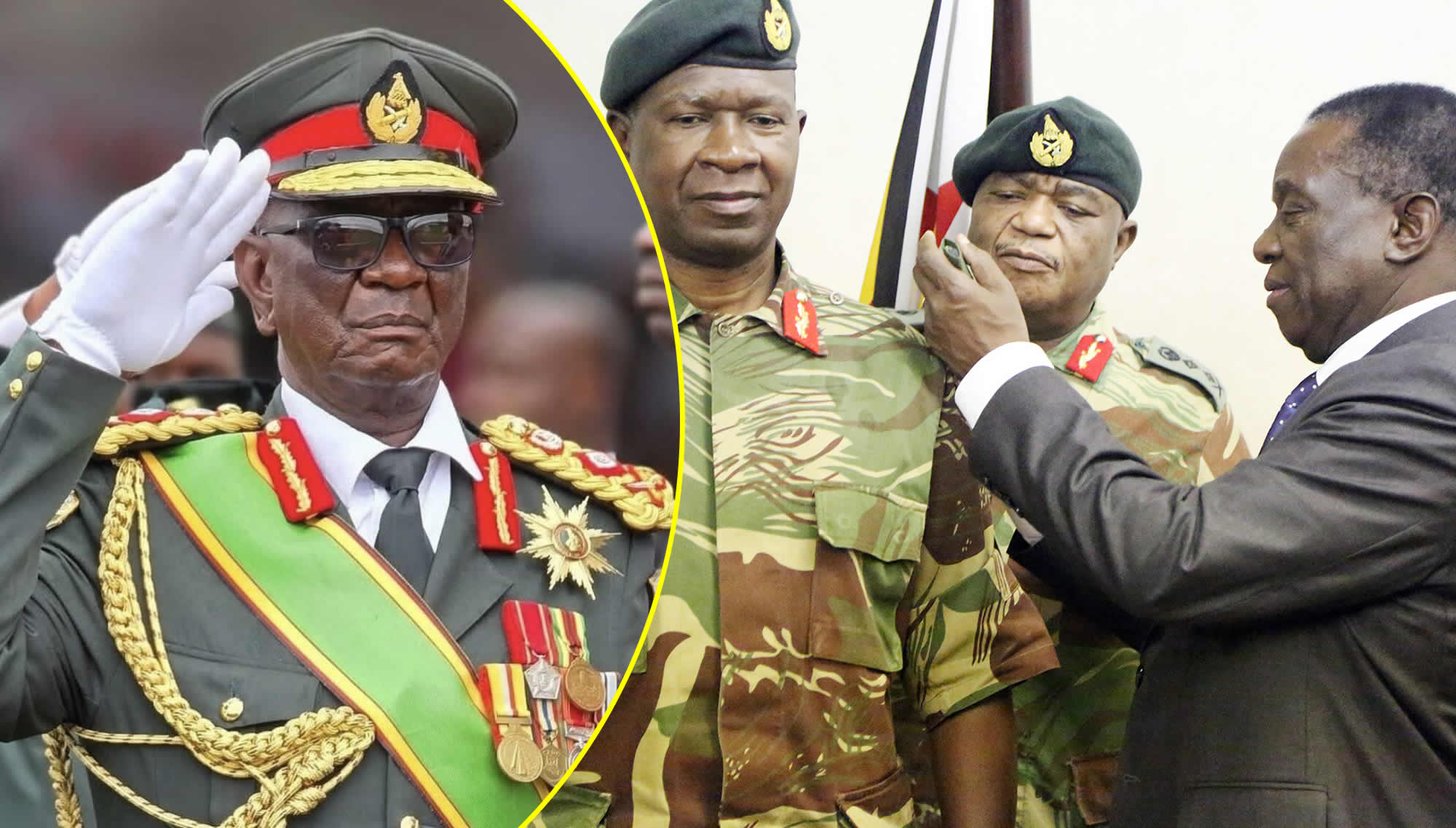
The political landscape in Zimbabwe has been significantly altered by an unexpected intervention from the top brass of the Zimbabwe Defence Forces (ZDF). While public discourse has focused on the Constitutional Amendment Bill No. 3 (CAB3) as a mere administrative shift, an in-depth investigation reveals a much deeper rift within the
“New Dispensation.”
Military generals, who were once the bedrock of President Emmerson Mnangagwa’s rise to power, are now reportedly the ones pushing for a national referendum on proposed constitutional changes. This move is not merely about democratic procedure; it is a calculated “checkmate” designed to stall the President’s alleged “ED2030” agenda.
Insiders suggest that the military is wary of the removal of direct presidential elections, fearing that such a move would centralise power in a way that marginalises the security establishment’s influence. By demanding a referendum, the generals are effectively handing the power back to a disgruntled public, knowing full well that a national vote on term extensions would likely fail. This explores the “silent war” in the corridors of power, analysing how the very men who installed the current administration are now becoming the primary obstacle to its permanence. This isn’t just about law—it’s about survival for the political elite and the military’s attempt to safeguard its own interests against a burgeoning autocracy.
The Constitutional Amendment Bill No. 3: A Gateway to Extended Rule
At the heart of this political maelstrom is the proposed Constitutional Amendment Bill No. 3, or CAB3. This legislation, recently backed by the Zimbabwean cabinet on February 10, 2026, seeks to introduce several significant changes to the nation’s supreme law. Foremost among these is the extension of the presidential term from the current five years to seven years. This particular amendment would allow President Mnangagwa, who is 83 years old and currently slated to step down in 2028 after serving two five-year terms, to remain in office until 2030.
Beyond the term extension, CAB3 also proposes a radical shift in the presidential election method. Instead of the current system of direct popular vote, the bill suggests that the president be elected by Parliament. Furthermore, the bill aims to expand the Senate by allowing the president to appoint an additional 10 senators, thereby boosting the total number of seats to 90.
Justice Minister Ziyambi Ziyambi, in presenting the bill, stated that these amendments would “enhance political stability and policy continuity to allow development programmes to be implemented to completion”. However, critics and opposition figures view these changes as a blatant attempt to consolidate power and undermine democratic processes. Jameson Timba, a senior leader in Zimbabwe’s opposition movement, described the cabinet’s approval of these changes as “politically destabilising”. His group, the Defend the Constitution Platform, has pledged to “defend the constitution against its capture”
and is consulting lawyers and international partners to oppose the bill.
The Military’s Unexpected Stance: A Referendum Demand
The most surprising development in this unfolding drama is the direct intervention of a group of retired military generals and liberation war veterans. On March 12, 2026, this influential group formally urged Parliament to subject CAB3 to a national referendum. Represented by retired Air Marshal Henry Muchena, their letter to Parliament argues that any major changes to Zimbabwe’s Constitution must be approved directly by the people, not solely by legislators.
Their demand for a referendum is rooted in Zimbabwe’s democratic traditions and the history of the ruling ZANU-PF party. They contend that “The source of power is the people”, and that constitutional changes of such magnitude require a national mandate. The generals hark back to the 2000 constitutional referendum, where a military-initiated draft constitution was ultimately rejected by voters. They highlighted this historical event as an example of democracy in action, stating, “That was democracy at play and we accepted the people’s will”.
The retired officers are particularly critical of the proposal to have the president elected by Parliament. They argue that such a system would undermine the fundamental democratic principle of universal suffrage, a principle for which they fought during the liberation struggle. “This would be inimical to the principle of one man, one vote that we fought for,” the group asserted. They further cautioned that this system would echo the restricted voting practices of the Rhodesian era under former Prime Minister Ian Smith, where a limited electorate determined leadership.
Crucially, the generals invoked Section 212 of Zimbabwe’s Constitution, which outlines the Zimbabwe Defence Forces’ role in defending and upholding the Constitution. They reminded Parliament that this mandate was given to the military by citizens during the 2013 constitutional referendum, when the current constitution was overwhelmingly approved. The group issued a stern warning, indicating that they would not remain passive if attempts were made to alter constitutional provisions without the consent of the electorate.
The “ED2030” Agenda and the Military’s Interests
The military’s sudden opposition is widely seen as a strategic move to counter President Mnangagwa’s “ED2030” agenda, which aims to extend his tenure. This agenda has been brewing for months, becoming an official party position by October 2025. The generals, who were instrumental in Mnangagwa’s ascent to power following the 2017 military-backed removal of Robert Mugabe, are now perceived as safeguarding their own interests against what they view as a burgeoning autocracy.
Their concern stems from the potential centralisation of power that would marginalise the security establishment’s influence. By pushing for a referendum, the military is effectively placing the decision in the hands of a public that is largely disgruntled. Opposition politician David Coltart aptly noted, “Any amendment which has the ‘effect’ of extending an incumbent’s tenure should be subjected to a referendum. They know that if that happens, they will fail, so they will do all in their power to prevent a referendum from happening”. This suggests that the military’s demand for a referendum is a calculated “checkmate,” anticipating public rejection of the term extensions.
A History of Military Intervention and Political Tensions
The relationship between Zimbabwe’s military and its political leadership has always been complex and deeply intertwined. The 2017 military intervention, which led to Robert Mugabe’s resignation and Mnangagwa’s presidency, underscored the military’s significant role as a political kingmaker. However, this alliance appears to be fraying as Mnangagwa seeks to consolidate power further.
Factionalism within the ruling ZANU-PF party, particularly between Mnangagwa’s “ED2030” camp and Vice President Constantino Chiwenga’s faction, has been a persistent undercurrent. Chiwenga, a former military chief who spearheaded the 2017 coup, is widely considered Mnangagwa’s primary rival and potential successor. The appointment of Lieutenant General (Retired) Anselem Sanyatwe as army chief in October 2023, a few months after the August 2023 elections, was seen as a strategic power play within this dynamic. While Sanyatwe was once a close ally, the current situation suggests a shift in allegiances or a broader military consensus against the proposed constitutional changes.
Recent incidents further highlight the military’s continued influence and the volatile political climate. On March 31, 2025, the military deployed into the streets in response to planned protests, effectively quelling dissent and demonstrating their firm grip on the “New Dispensation”. This incident serves as a stark reminder of the military’s readiness to intervene in civilian affairs, a power they seem unwilling to relinquish.
The Public’s Role and the Path Forward
The demand for a national referendum effectively hands the power back to the Zimbabwean public. With widespread discontent over issues such as rampant corruption and human rights abuses under Mnangagwa’s leadership, coupled with economic hardship despite claims of growth, a national vote on term extensions is highly likely to fail. The government’s past attempts to suppress demonstrations against the term extension plans, which resulted in numerous arrests, further underscore the public’s opposition.
The retired generals, describing themselves as “stockholders” in the ruling ZANU PF due to their historical role in the liberation struggle, believe they have a right to influence the party’s direction. Their intervention introduces a significant hurdle to Mnangagwa’s ambitions, forcing a potential confrontation between the executive and a powerful segment of the military, backed by public sentiment.
As the Constitutional Amendment Bill No. 3 makes its way through Parliament, the eyes of the nation, and indeed the international community, will be on Zimbabwe. The outcome of this “silent war” in the corridors of power will not only determine the future of President Mnangagwa’s leadership but also the delicate balance of power between the political elite and the military, and ultimately, the trajectory of Zimbabwe’s democratic future.