


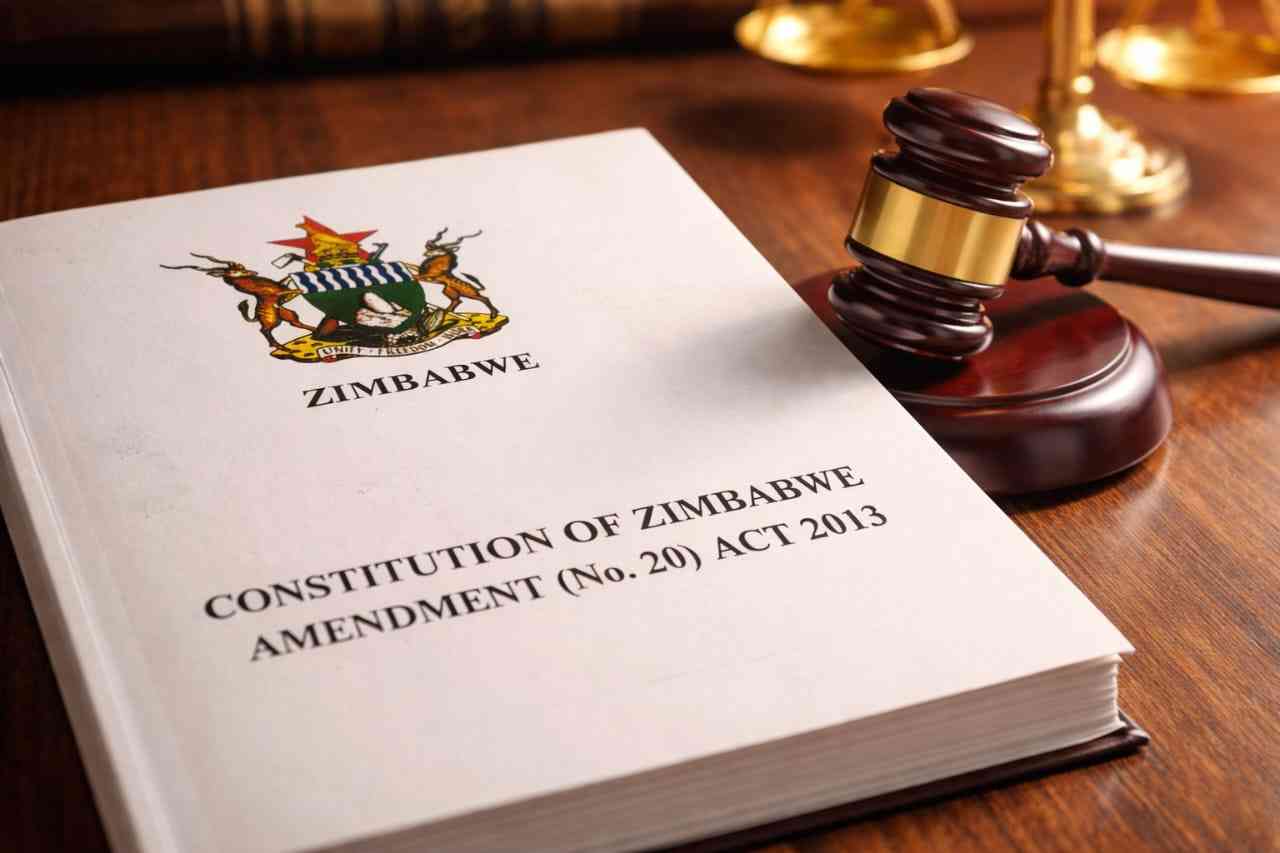
While the political corridors of Harare are buzzing with the latest maneuvers of the ruling elite, a quiet legal revolution is being etched into the very fabric of the nation’s supreme law. For months, the public gaze has been fixed on the high-stakes drama of “power consolidation”—the whispers of presidential term extensions and the restructuring of judicial appointments. Yet, buried beneath the dense, technical jargon of Constitutional Amendment 3 lies a hidden detail that could inadvertently trigger the most significant shift in Zimbabwean governance since the 2013 Constitution.
Our investigative analysis reveals that Constitutional Amendment 3 is not just a tool for centralising authority; it is a complex legal double-edged sword. While the headlines scream about the “extension of terms” from five to seven years or the potential for a “third term” under a different name, the fine print regarding local government autonomy tells a far more nuanced story. This “secret clause,” tucked away in the amendments to Section 264 and Article 154, may have created a legal “trap” that the legal minds in Zanu PF did not fully anticipate—a lifeline that could empower the opposition in ways previously thought impossible.
“Politics often rewards preparation,” noted one legal expert close to the drafting process, who spoke on condition of anonymity. “While the focus was on the top of the pyramid, the foundation was being subtly altered. The new provisions for local government autonomy, if implemented as written, could create ‘pockets of resistance’ that the central government cannot easily shut down.”
To understand the magnitude of this shift, one must look at the historical friction between the central government and opposition-led urban councils. For decades, cities like Harare and Bulawayo have been the battlegrounds of Zimbabwean politics, with the Ministry of Local Government often using its oversight powers to throttle the budgets and resources of councils controlled by the opposition. However, the amendments proposed in Bill No. 3 of 2026 introduce a set of reforms that, taken together, could reinforce constitutional governance at the local level.
Specifically, the amendment seeks to clarify and entrench the “devolution of power, responsibilities, and resources” to provincial and local levels. While Section 264 has always existed in the 2013 Constitution, its implementation has been stalled by a lack of enabling legislation. Amendment 3, however, moves beyond mere aspiration. It introduces specific language that grants local authorities greater leverage over their own budgets and the management of local resources. This isn’t just a technicality; it is a potential financial divorce from the restrictive oversight of the central treasury.
In recent weeks, the tension has been palpable. On 4 March 2026, it was reported that 90 out of 92 local authorities had their budgets approved, but with strict conditions that many viewed as a final attempt at central control. “The government is tightening budget oversight even as they gazette the very law that could loosen it,” says a senior official within the Bulawayo City Council. “It’s a race against time. They want to lock in control before the new constitutional reality sets in.”
The “secret lifeline” for the opposition lies in the new Article 154(2)(b), which some analysts suggest could remove the two-term limit for mayors or, more crucially, redefine the relationship between elected mayors and the central government. In the past, the Minister of Local Government could suspend or dismiss mayors with relative ease. The new amendment, however, raises the bar for such interventions, requiring a more rigorous, constitutionally-mandated process that mirrors the protection given to other high-ranking officials.
Is this a genuine move toward devolution, or a strategic error by the ruling party? Some believe it is an “Afrocentric re-engagement” strategy—a way to show international observers that Zimbabwe is serious about “structured governance” and “inclusive investment.” By granting local authorities more power, the government may be trying to attract foreign capital that is often wary of a highly centralised and unpredictable central administration.
However, the “hidden conspiracy” behind the timing of this amendment suggests a more pragmatic motive. With the electoral cycle proposed to move from five to seven years, the ruling party may be looking for a way to maintain stability in the interim. By throwing a “bone” of autonomy to the opposition-led councils, they may hope to reduce the immediate pressure for national-level change. But in doing so, they may have handed the opposition a powerful tool for self-sustainment.
“If an opposition-led council can now manage its own water, its own roads, and its own local taxes without constant interference from Harare, they become a model of alternative governance,” explains a constitutional law professor. “They are no longer just ‘complainers’ in the system; they become ‘competitors’ with real resources. That is a game-changer.”
The impact is already being felt on the ground. In Bulawayo, Mayor David Coltart has been vocal about the need for presidential intervention to stop the “reign of terror” by Chinese gold miners who are destroying the city’s water sources. Under the old system, his pleas often fell on deaf ears. But with the new autonomy clauses, the council may soon have the legal standing to take direct action—including the power to sue foreign firms and enforce local environmental laws—without waiting for a green light from a reluctant central government.
This shift represents a “win” for the citizen in a sea of otherwise restrictive legislation. For the average resident of Harare or Bulawayo, the “secret clause” means that the person they elect to lead their city might finally have the power to deliver services. It simplifies the hidden details of governance, moving away from the “lawless” state where only the President can save a community from environmental or economic disaster.
Yet, the risks remain. Critics argue that the amendment could also “weaken local government autonomy by reintroducing conflicts over jurisdiction and funding” if the enabling acts are not carefully crafted. There is also the fear that the central government will find new, informal ways to bypass the constitution, as has been the case in the past.
“Securing local government autonomy in a constitution is by no means a guarantee for sustained devolution over time,” warns a report from Oxford Constitutional Law. The history of Zimbabwe is littered with “paper protections” that vanished when they became politically inconvenient.
But for now, the opposition and civil society groups are cautiously optimistic. The “Baobab” statement from retired generals and the public hearings scheduled for July 2025 and 2026 indicate that the nation is at a crossroads. While the “New Dispensation” seeks to consolidate its power at the top, it may have inadvertently sowed the seeds of a decentralized resistance at the bottom.
As the Bill moves through Parliament, the battle for the “fine print” continues. Investigative journalism thrives in these shadows, finding the hidden lifelines that the powerful try to keep secret. Whether Constitutional Amendment 3 becomes a monument to central control or a bridge to local empowerment remains to be seen. But one thing is clear: the “secret clause” has been found, and the opposition is already reaching for the lifeline.
In the end, the story of Amendment 3 is not just about the politicians in Harare. It is about the “vibrant media” that refuses to be an “adversary of the State” and instead chooses to be a guardian of the truth. It is about the citizens who, for the first time in a decade, might see their local votes translate into real, autonomous power. This is the “hidden truth” behind the rising political tensions—a struggle for the soul of Zimbabwean governance, fought one clause at a time.