


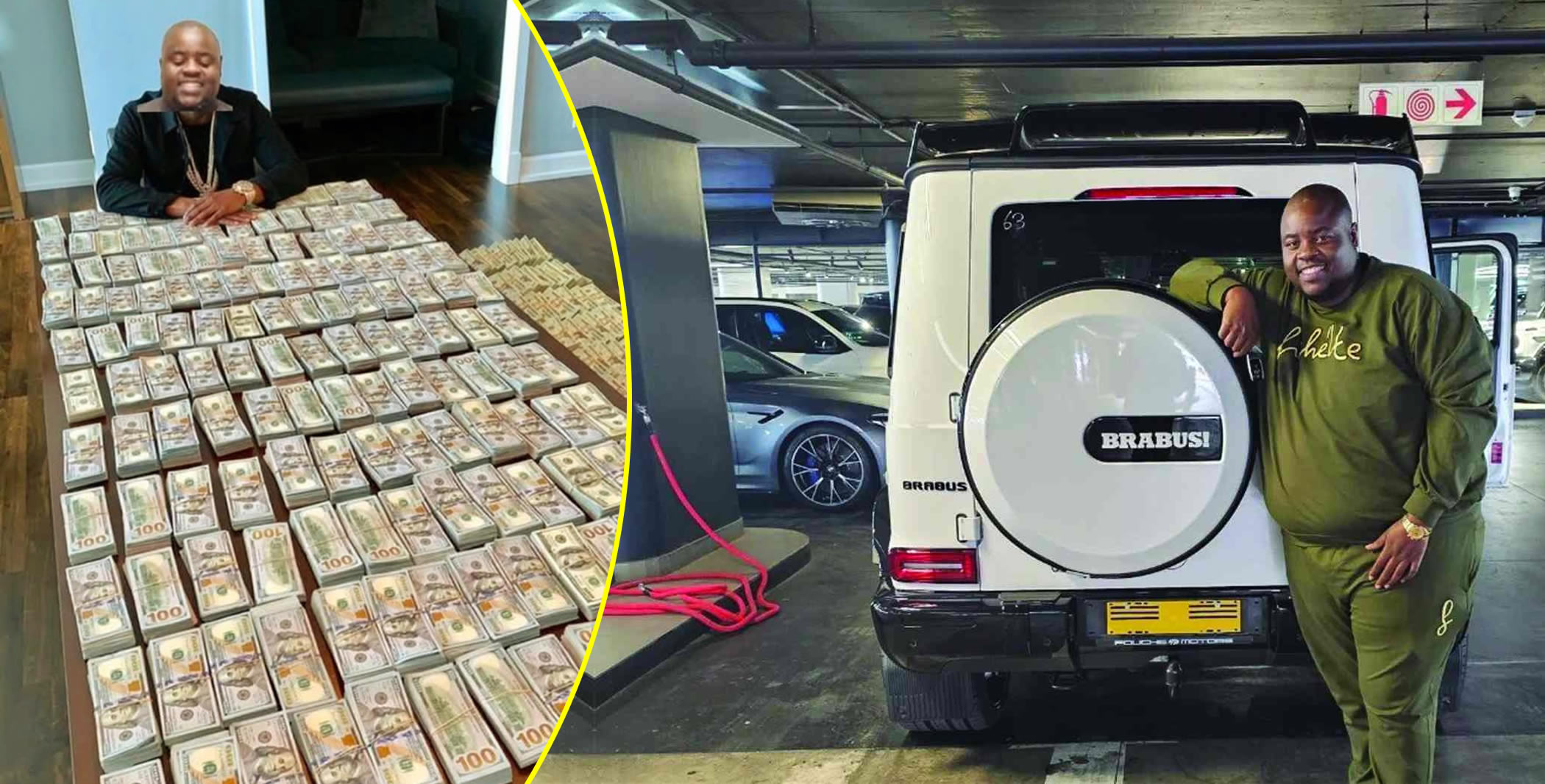
Wicknell Chivayo is a name that sparks both envy and outrage in Zimbabwe. To his followers on social media, he is the “Sir Wicknell” who gifts luxury Mercedes-Benz cars to musicians and spends thousands of dollars on flamboyant displays of wealth. But behind the flashy cars and the constant stream of social media giveaways lies a massive procurement scandal involving a South African printing firm, Ren-Form, and a staggering R570 million. While the public sees a “philanthropist” handing out the keys to brand-new vehicles, our investigation uncovers a middleman who has mastered the art of “inflated contracts” at the expense of the Zimbabwean taxpayer.
We have tracked the paper trail from the industrial suburbs of Pretoria to the corridors of power in Harare. What we found was a simple contract for election materials and government stationery that was padded by hundreds of millions of Rand. This is not just a story of a single deal gone wrong; it is an explanation of the “Kickback Culture” that defines Zimbabwean procurement today. It is a system where “middlemen” like Chivayo add no value to the process but act as “tollgates” for state funds, ensuring that a significant portion of the money intended for public services ends up in private pockets.
The Anatomy of an Inflation
At the heart of the scandal is Ren-Form, a family-owned commercial printing company based in Selby, central Johannesburg. Traditionally a firm that produced ballot papers, Ren-Form branched out during the last Zimbabwean election cycle to become a “one-stop shop” for the Zimbabwe Electoral Commission (ZEC). They were no longer just printing paper; they were supplying electronic equipment, high-visibility vests, and even portable toilets.
The numbers are, quite frankly, difficult to believe. Leaked documents and invoices reveal a level of price gouging that borders on the absurd. In one instance, Ren-Form invoiced the ZEC R23 million for a single server. Industry experts and market prices suggest that the same server normally costs just R90,000. That is an inflation of over 25,000 per cent.
The Biometric Voter Registration (BVR) kits tell a similar story. In the original quote, Ren-Form priced each kit at $5,000. However, by the time the final invoice was issued just a few weeks later, the price had tripled to nearly $16,000 per unit. To put this in perspective, the United Nations Development Programme (UNDP) purchased similar BVR kits for the 2021 elections in Honduras at a cost of just $3,600 per unit.
When asked to explain these discrepancies, Ren-Form’s sales director, Jean-Pierre du Sart, offered a vague justification. “In any project there’s changes,” he said, dismissing the allegations of price gouging. While the company does not dispute the authenticity of the invoices, they have hidden behind confidentiality clauses in their contract with the ZEC to avoid providing specific details.
The Middleman and the Tollgate
Wicknell Chivayo did not provide the servers. He did not manufacture the BVR kits. He did not even operate the printing presses. He acted as an “agent” for Ren-Form. In the world of Zimbabwean procurement, “agent” is often a polite term for a well-connected individual who ensures a contract is awarded in exchange for a massive cut of the proceeds.
Chivayo’s former business partners, Mike Chimombe and Moses Mpofu, who have since had a bitter falling out with him, accuse Chivayo and Ren-Form of inflating costs by up to 235 per cent. They claim that as soon as the Zimbabwean government paid Ren-Form, the printing firm transferred a massive portion of those funds to one of Chivayo’s South African companies, Intratrek.
South Africa’s Financial Intelligence Centre (FIC) has since produced a report that confirms these suspicions. The report concludes that Ren-Form received over R1.1 billion from the Zimbabwe Ministry of Finance and Economic Development. Of that staggering amount, more than R800 million was transferred directly to the business bank accounts of Wicknell Chivayo.
This is the “Kickback Culture” in its purest form. The state pays a premium for goods and services, and the “middleman” takes the lion’s share, leaving the actual supplier with a fraction of the total payment. The middleman acts as a tollgate on the road of public finance, demanding a fee for every dollar that passes through.
The Protection Circles
The question on everyone’s lips in Harare is simple: Why is the Zimbabwe Anti-Corruption Commission (ZACC) so hesitant to move on these files despite the evidence being public? The answer lies in the “Protection Circles” that surround certain businessmen, making them seemingly “untouchable” by the law.
Chivayo has been caught on audio clips, which he later claimed were fakes, discussing how he shares the proceeds of the ZEC tender with senior officials. In these recordings, he refers to high-ranking individuals by their initials or codenames, boasting of his proximity to the presidency. He even claimed that President Emmerson Mnangagwa calls him “my son.” While the President’s spokesperson has condemned this as “name-dropping,” the reality is that Chivayo continues to operate with impunity.
ZACC initially opened an investigation into the matter but recently closed the file, claiming they could find no “contractual evidence” tying Chivayo to the deal. This is a classic example of what Zimbabweans have come to call the “catch and release” policy. High-profile individuals are arrested or investigated amid much fanfare, only to be cleared or have their cases languish in the courts indefinitely.
Meanwhile, in South Africa, the investigation by the Hawks—the elite crime-busting unit—is reportedly “very much alive.” The contrast is stark: while South African authorities follow the money trail provided by the FIC, Zimbabwean authorities appear to be looking the other way.
The Human Cost of Capture
To understand the true impact of this scandal, one must look beyond the numbers on the invoices and the luxury cars in Chivayo’s driveway. By breaking down the figures, we can see the opportunity cost of this single “printing” deal.
The money lost to inflation and kickbacks in this contract alone could have funded the entire national school feeding programme for a year. In a country where many children go to school on an empty stomach and the education system is struggling for resources, R570 million is not just a statistic. It is the difference between a child receiving a meal and going hungry. It is the difference between a school having textbooks and a teacher having a desk.
This is a classic tale of “State Capture,” where the procurement process has been hijacked by a few well-connected individuals at the expense of the taxpayer. When the state’s resources are diverted into the bank accounts of middlemen, the entire nation suffers. The “Protection Circles” do not just protect individuals; they protect a system of plunder that drains the lifeblood of the country.
A Pattern of Impunity
The Ren-Form scandal is not Chivayo’s first brush with controversy. He was previously embroiled in the Gwanda solar project scandal, where his company, Intratrek, received millions of dollars in advance payments for a project that failed to materialise for years. Despite the public outcry and legal challenges, he emerged largely unscathed, further cementing his reputation as an “untouchable.”
His former partners, Chimombe and Mpofu, have not been so lucky. They were recently arrested as part of a separate investigation into the “presidential goat scheme,” where they allegedly failed to deliver goats intended for poor rural households. While they languish in custody, Chivayo continues his “philanthropic” activities, seemingly emboldened by his survival of the printing scandal.
Even more concerning is the regional reach of this network. In late 2024, Ren-Form was awarded an “emergency” contract to print ballot papers for the Namibian elections, leading to protests and accusations that the “Zimbabwean model” of procurement was being exported. It seems that once a firm masters the art of the “inflated contract” in one country, they are quick to seek opportunities in others.
The Need for Accountability
The “Chivayo Files” represent a critical test for Zimbabwe’s institutions. If ZACC continues to ignore the clear paper trail and the findings of international investigators, it will confirm the suspicion that it is merely a tool for political theatre rather than an independent watchdog.
Real accountability requires more than just condemning “name-dropping.” It requires a thorough investigation into the “Kickback Culture” and the dismantling of the “Protection Circles” that allow state capture to flourish. It requires a procurement system that values transparency and value for money over political connections.
Until that happens, the Zimbabwean taxpayer will continue to pay the price. They will pay for the R23 million servers, the $16,000 BVR kits, and the luxury Rolls-Royces that follow every major government contract. And they will pay with the hunger of their children and the decay of their public services.
The story of the R570 million printing scandal is a reminder that corruption is not a victimless crime. Every Rand that is siphoned off by a middleman is a Rand that is stolen from a school, a hospital, or a feeding programme. It is time for the “The Chivayo Files” to be opened, not just by journalists, but by the very institutions meant to protect the people of Zimbabwe.