


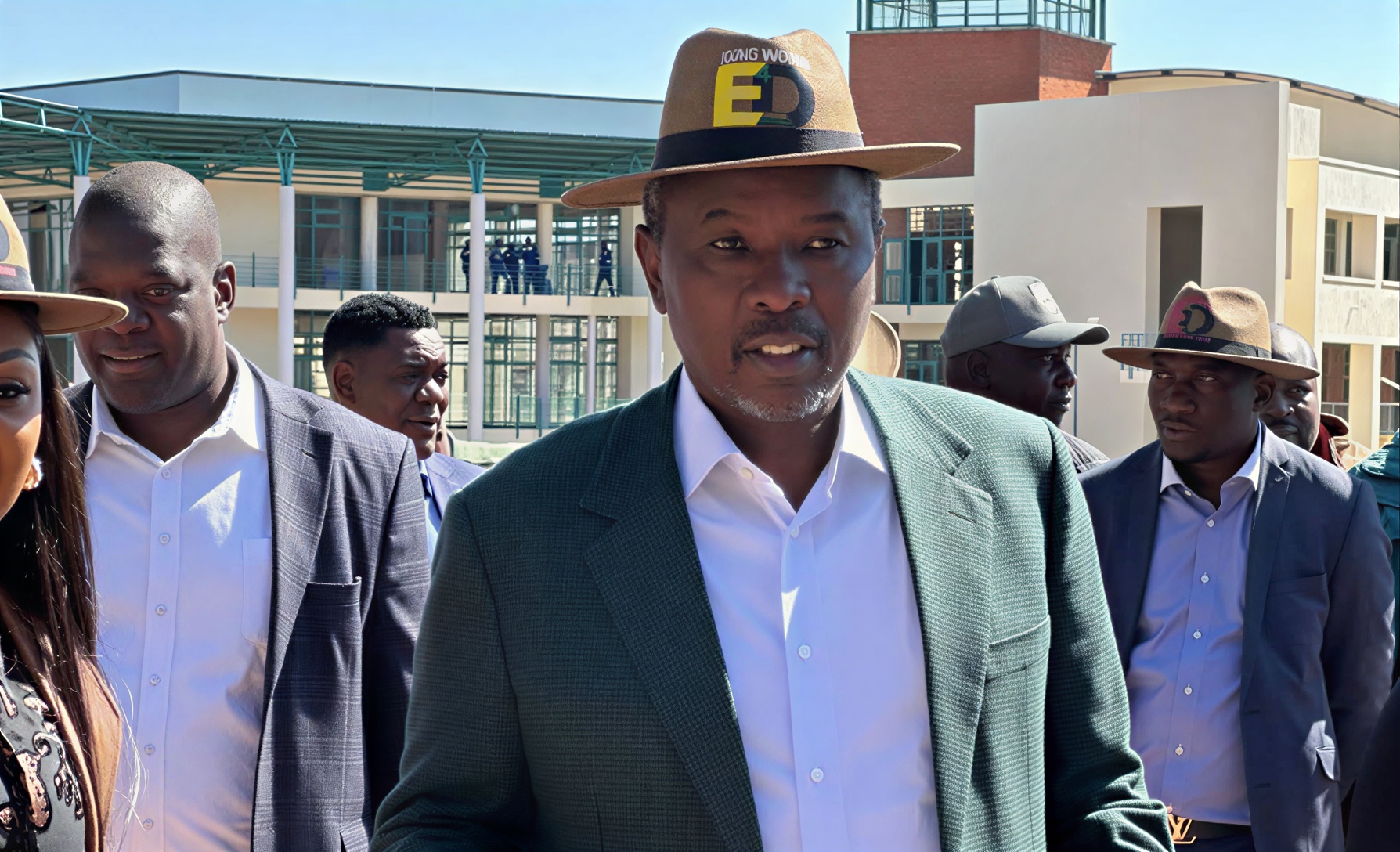
BULAWAYO – The recent pledge by sanctioned tycoon Kudakwashe Tagwirei to rehabilitate psychiatric hospitals has cast a revealing light on the opaque world of mining and influence in Zimbabwe. This act of philanthropy, a US$350,000 commitment to Ingutsheni Central Hospital, unfolded just as RioZim Limited, a diversified resource group, was stripped of its 40-year control over the Sengwa coalfields. The juxtaposition of these events raises critical questions: Is Tagwirei’s benevolence a genuine act of goodwill, or a calculated public relations manoeuvre amidst ongoing sanctions and scrutiny? More critically, what does RioZim’s abrupt license cancellation truly signify about Zimbabwe’s mining secrets and the pervasive ‘Tagwirei Factor’?
This investigative report delves into the intricate connections between political power, corporate interests, and the vast mineral wealth of Zimbabwe. It scrutinises the circumstances surrounding RioZim’s lost concession, questioning whether it was a legitimate regulatory action or a strategic move to reallocate valuable mining assets to favoured entities. By connecting the dots between high-profile philanthropic gestures and significant shifts in the mining landscape, this piece aims to expose the underlying power dynamics that govern Zimbabwe’s resource economy, revealing who truly profits and who loses out in this high-stakes game.
The Sudden Loss: Why RioZim’s License Was Revoked
RioZim Limited, a former unit of the global giant Rio Tinto, had held Special Grant Number 849 for the Sengwa coalfields for over four decades. This concession, located in Gokwe North, is no ordinary asset; it holds an estimated 1.3 billion tonnes of coal reserves, a resource central to a proposed US$3 billion project to build a 2,800-megawatt power plant. For thirty years, however, RioZim had struggled to secure the necessary investment, a deadlock the government eventually cited as justification for the cancellation under its “use-it-or-lose-it” policy.
However, the manner in which the license was revoked has sparked a legal firestorm, hinting at deeper machinations within Zimbabwe’s mining sector. In a High Court application filed this month, RioZim’s subsidiary, Sengwa Colliery, challenged the Ministry of Mines’ decision with language that was as sharp as it was desperate. Through their lawyer, Admire Rubaya, the company described the cancellation as “a story of power, impropriety, and the profound betrayal of a national trust, ripped away in a matter of weeks through a process so tainted by illegality, haste, and disregard for the rule of law”.
Rubaya’s court papers argue that the Ministry of Mines committed a “brazen usurpation of executive authority.” Under Zimbabwean law, the power to cancel such a special grant rests solely with the President, and even then, only after a mandatory twelve-month notice period. No such notice was ever issued. Instead, the grant was cancelled with immediate effect and handed over to a new entity: George Mining Private Limited.
Unpacking Zimbabwe’s Mining Secrets: The Mystery of George Mining
The identity and backing of George Mining Private Limited are central to understanding the opaque nature of Zimbabwe’s mining sector. In his filings, Rubaya notes that George Mining is an entity whose “financial substance and technical capacity remain, conspicuously and tellingly, a mystery hidden from this Court”. This lack of transparency is a recurring theme in Zimbabwean mining, where new players often emerge with little public record or clear ownership.
The silence from the Ministry of Mines has been described by RioZim as “deafening” and “damning.” Of the six respondents in the case, five—including the Ministry—have elected not to oppose the application. Only George Mining, the direct beneficiary of the cancellation, has come forward to defend what RioZim calls “the indefensible”. This reluctance by government entities to engage in legal defence further fuels suspicions of impropriety and hidden agendas.
Such opacity has led to widespread speculation that George Mining is a shell company, a vehicle designed to facilitate the reallocation of national resources to favoured entities. This pattern is one that has been observed repeatedly in Zimbabwe, where valuable mining assets are stripped from established players and handed to opaque companies with deep political connections, often without competitive bidding or clear justification.
The ‘Tagwirei Factor’: Influence, Sanctions, and Sanitisation
Kudakwashe Tagwirei is no stranger to such speculation and the intricate web of Zimbabwe’s political economy. Sanctioned by the United States Treasury in 2020 for his alleged role in corruption and his close ties to the Mnangagwa administration, Tagwirei has spent years navigating a complex landscape of international restrictions and domestic expansion. The U.S. government has previously accused him of using “shadowy shell games” to move assets and avoid the impact of sanctions.
In this context, his recent philanthropic activities, such as the US$350,000 pledge to Ingutsheni Central Hospital, take on a different colour. Through his Sakunda Holdings and the Bridging Gaps Foundation, Tagwirei has committed tens of millions of dollars to healthcare and infrastructure projects. Arundel Hospital in Harare, which provides free healthcare to hundreds of Zimbabweans daily, is perhaps his most visible success.
But critics argue that these acts of philanthropy are part of a broader strategy to sanitise his image. By stepping in to fund public services that the state can no longer support, Tagwirei positions himself as an indispensable national benefactor. This “goodwill” provides a powerful shield against the scrutiny that follows his business dealings in the mining and energy sectors, allowing the ‘Tagwirei Factor’ to continue shaping policy and resource allocation.
The Kuvimba Connection and Resource Reallocation
The ‘Tagwirei Factor’ is perhaps most evident in the rise of Kuvimba Mining House. Ostensibly a government-controlled entity designed to hold the state’s mining interests, Kuvimba has rapidly acquired a portfolio of gold, lithium, and platinum mines. However, investigations by groups like The Sentry and Bloomberg have repeatedly linked Kuvimba’s assets back to Tagwirei and his Landela Mining Ventures.
The reallocation of the Sengwa coalfields fits into a broader trend of mining asset consolidation under the current administration. Whether it is the sudden ban on lithium concentrate exports—a move that favoured companies with existing processing capacity—or the revocation of long-held concessions, the goal appears to be the redistribution of wealth toward a select group of politically aligned conglomerates. This pattern of resource reallocation, often benefiting entities linked to powerful individuals, is a key aspect of Zimbabwe’s mining secrets.
A System Under Strain: The Human Cost
While the legal battle over Sengwa rages in the High Court, the human cost of Zimbabwe’s economic mismanagement remains stark. At Ingutsheni Central Hospital, the facility that Tagwirei is now helping to rehabilitate, patients have suffered for years from shortages of essential medications and aging infrastructure. Vice President Mohadi’s admission that conditions were “heartbreaking” is a rare moment of candour from the government, acknowledging the state’s failure in its primary duty to care for its most vulnerable citizens.
That the government now relies on the generosity of a sanctioned tycoon to fix these problems is a testament to the depth of the crisis. The fundraising luncheon in Bulawayo raised over US$2 million, with seat sales alone bringing in US$600,000. These are significant sums, but they are a drop in the ocean compared to the billions of dollars in mineral wealth that are at stake in the Sengwa coalfields and other mining concessions across the country.
The High-Stakes Game: A Test of the Rule of Law
As RioZim asks the Court to stand as a “bastion against the erosion of property rights and the shadowy re-allocation of national resources,” the future of Zimbabwe’s mining sector hangs in the balance. The Sengwa case is more than just a dispute over a coal mine; it is a critical test of the rule of law in a country where administrative caprice often overrides established statutes.
For Kudakwashe Tagwirei, the game continues. Whether he is opening a new fuel station on behalf of the President or pledging hundreds of thousands of dollars to a psychiatric hospital, his presence is felt at every level of the Zimbabwean political economy. He is the ultimate insider, a man who has mastered the art of turning political proximity into corporate power.
But as the details of the Sengwa cancellation emerge, the ‘Tagwirei Factor’ is being scrutinised as never before. The question remains: Is his philanthropy a genuine act of goodwill, or is it the public face of a system that is systematically stripping the nation of its mineral wealth for the benefit of a few? The answer lies deep within Zimbabwe’s mining secrets, a complex web of influence, power, and opaque dealings that the RioZim case has brought to the forefront.