


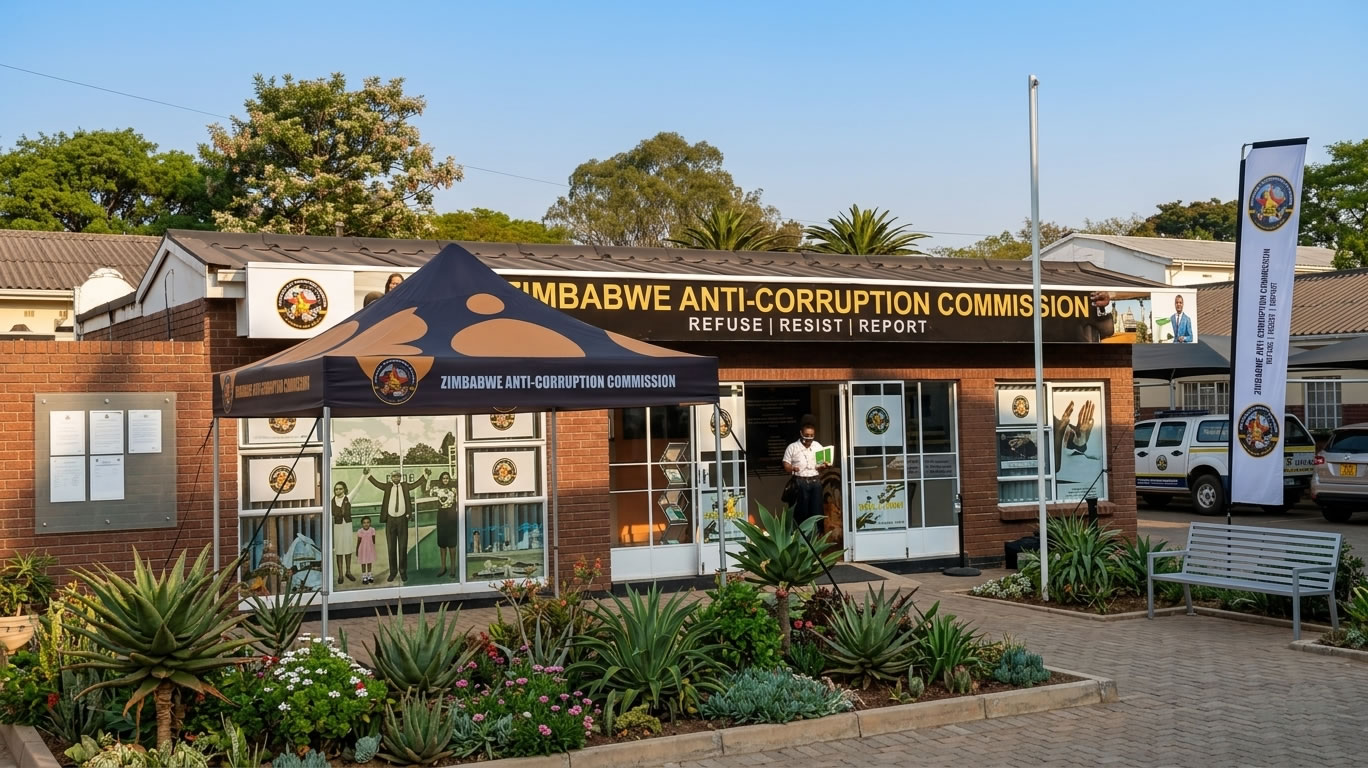
HARARE — When the National Prosecuting Authority of Zimbabwe (NPAZ) and the Zimbabwe Anti-Corruption Commission (ZACC) recently announced the recovery of US$200 million in assets, the news was precisely what a cash-strapped government needed. Prosecutor General Justice Loyce Matanda-Moyo further declared 2026 as the “year of corporate accountability”. This bold statement aimed to signal a new era of transparency and an end to impunity. However, beneath these official pronouncements lies a murky reality that many Zimbabweans find all too familiar.
The figure of US$200 million is a staggering sum in a nation where public services often suffer from underfunding. Yet, as the headlines fade, a troubling question persists: where is this wealth truly going? While the state celebrates its “recovered” loot, an investigative deep dive reveals a systemic lack of transparency that threatens to undermine the very accountability the Prosecutor General claims to champion.
For years, Zimbabwe’s anti-corruption drive has been plagued by the perception that “big fish” – high-profile individuals with political connections – remain untouchable. The recent announcements have done little to dispel this. While the state has successfully pursued former officials like Frank Chitukutuku, the former chief executive of the Zimbabwe National Road Administration (ZINARA), whose assets worth millions were forfeited, these cases are often seen as targeting less powerful individuals within a much larger, more entrenched system of corruption.
Chitukutuku’s downfall, which led to the forfeiture of luxury mansions, high-end vehicles, and farming equipment, is frequently cited by the NPAZ as a landmark success. Similarly, the convictions of businessmen Moses Mpofu and Mike Chimombe in the “Presidential Goat Pass On Scheme” – a fraud case involving irregular tenders – have been presented as proof that the justice system is becoming more effective. However, for many citizens, these victories appear to be carefully orchestrated public relations efforts, designed to appease international donors and a frustrated populace, while the truly powerful continue to operate without consequence.
The declaration of 2026 as the “year of corporate accountability” demands rigorous scrutiny. To many observers, it sounds less like a genuine policy shift and more like a public relations exercise. The mechanisms of asset recovery in Zimbabwe are often described by legal experts as opaque and vulnerable to political interference. There is no publicly accessible, detailed breakdown of the US$200 million, nor is there a clear audit trail of its original sources or current utilisation.
The government’s plan to integrate forfeited assets into the national Treasury has been met with significant scepticism. Without a robust, independent oversight mechanism, there is a real danger that this recovered wealth could simply disappear into another opaque channel, effectively being misappropriated for a second time. Transparency International Zimbabwe (TIZ) has repeatedly raised concerns about this lack of clarity. In their 2024 Corruption Perceptions Index, Zimbabwe’s score dropped to a dismal 21 out of 100, ranking it among the most corrupt nations globally. This decline suggests that despite official announcements, the reality on the ground indicates a deepening of graft rather than its eradication.
The contrast between official rhetoric and political reality was perhaps most starkly illustrated by the Al Jazeera “Gold Mafia” investigation in 2023. The documentary exposed a sophisticated network of gold smuggling and money laundering that allegedly reached into the highest levels of the state. It implicated individuals close to the presidency, yet subsequent investigations by ZACC and the NPAZ have not resulted in high-profile convictions of the principal actors. Instead, the focus has remained on smaller players, reinforcing the perception that the system targets the less powerful while shielding the influential.
Even within Parliament, speaking out against high-level corruption can have severe repercussions. Consider the case of Energy Mutodi, the former chairperson of the Budget and Finance Committee. Mutodi publicly accused George Guvamatanga, the Permanent Secretary in the Ministry of Finance, of siphoning millions through corrupt kickbacks, alleging that Guvamatanga demanded a percentage from every Treasury payment to contractors. In a functioning democracy, such serious allegations from a senior parliamentarian would trigger an immediate independent inquiry. In Zimbabwe, Mutodi was forced into a humiliating public retraction within days, a move widely interpreted as the result of immense political pressure from the Executive.
This pattern of protecting the ruling elite is precisely why the US Treasury took the unprecedented step in March 2024 of placing sanctions on President Emmerson Mnangagwa himself, along with several key allies. The US government cited their involvement in serious corruption and human rights abuses, a move that directly challenged the Harare administration’s claim to be a “Second Republic” built on reform and accountability. When the head of state is under international sanction for corruption, the domestic anti-corruption drive inevitably loses its moral authority.
The public’s perception of these asset recoveries is overwhelmingly one of doubt. Citizens are not asking for more press conferences; they are demanding tangible improvements in their lives. They want to see the recovered millions translated into functional schools, well-stocked pharmacies, and reliable infrastructure. They also question why individuals like Kudakwashe Tagwirei, who has been implicated in numerous multi-billion dollar scandals, including the Command Agriculture scheme and questionable acquisitions of major banks, continue to enjoy unfettered access to power and state contracts.
The true measure of an anti-corruption campaign lies not in the figures announced, but in the equitable distribution of justice. A system that secures seventeen convictions in high-profile cases, as the NPAZ claims, must be weighed against the numerous cases that never reach a courtroom because the accused are considered “sacred cows.” Justice Loyce Matanda-Moyo’s promise that “there are no sacred cows” is a noble sentiment, but it remains a promise largely unfulfilled.
As 2026 progresses, the scrutiny on the NPAZ and ZACC will only intensify. The international community, particularly the donors the government seeks to appease, will be looking for more than just a list of seized cars and houses. They will be looking for the prosecution of those who have institutionalised corruption at the highest levels of the state. They will be looking for a transparent accounting of every cent of that US$200 million.
The investigative process must be genuinely robust and independent. It cannot be a tool for selective application, used to settle political scores or to create a façade of progress. If the mechanisms of recovery remain susceptible to the whims of the powerful, then the US$200 million loot is not being repatriated for the public good; it is merely being reshuffled within a closed loop of elite accumulation.
Ultimately, the fight against graft is a fight for the soul of the nation. It is about restoring public trust in the institutions of governance and ensuring that the country’s wealth benefits the many, not just the connected few. Until there is a detailed, public breakdown of the recovered assets and a demonstrable end to the protection of the “big fish,” the US$200 million will remain a symbol of what is missing in Zimbabwe: genuine accountability.
The story of Zimbabwe’s recovered wealth is far from over. It is a narrative of discrepancies between official pronouncements and the reality on the ground. Whether 2026 will truly be the year of corporate accountability or just another chapter in a long history of state-sponsored public relations remains to be seen. But one thing is certain: the people of Zimbabwe are watching, and they are no longer easily fooled by the glitter of a recovered loot that they never get to see or touch.
In the end, the US$200 million loot represents a crossroads. It can be the foundation of a new, transparent Zimbabwe, or it can be the latest evidence of a system that has mastered the art of the performative arrest while the true architects of the nation’s decline remain comfortably beyond the reach of the law. The world is waiting for an answer, but more importantly, so are the millions of Zimbabweans who have paid the price for this corruption with their futures.