


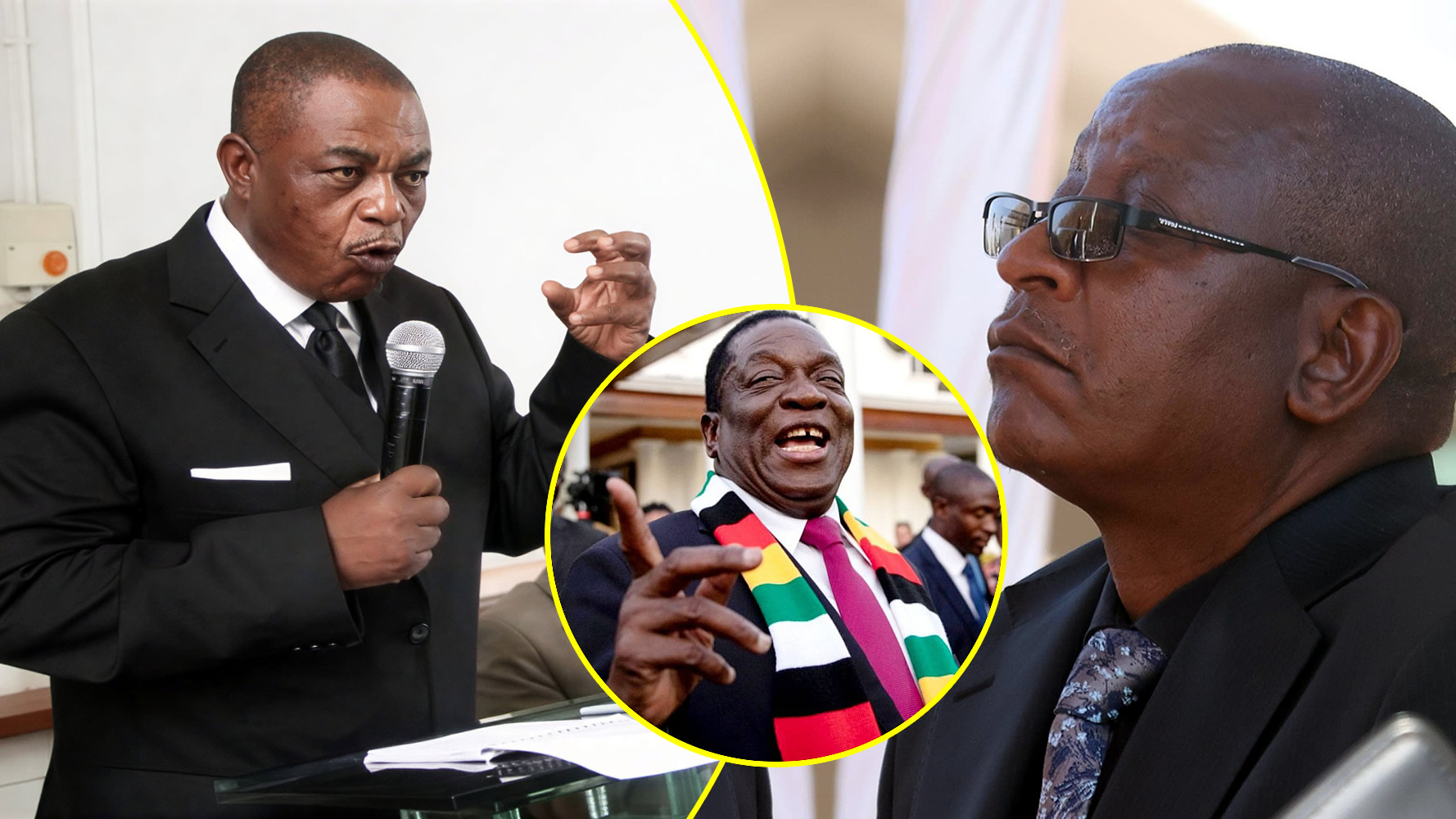
HARARE – Beneath the veneer of party unity, a fierce internal power struggle is raging within Zimbabwe’s ruling ZANU-PF, pitting an entrenched “corrupt cabal” against factions reportedly coalescing around Vice President General (Retired) Constantino Chiwenga. This simmering conflict, intensified by the looming 2028 succession battle, threatens to destabilise the political landscape and reshape the future of the nation. This investigative report delves into the clandestine manoeuvres, strategic alliances, and ideological fault lines that define this internal war.
The conflict reached a boiling point on 17 September 2025, when Vice President Chiwenga tabled a searing 17-page dossier before the ZANU-PF Politburo. The document, which accused President Emmerson Mnangagwa’s inner circle of “corruption, capture and betrayal,” laid bare the deep-seated divisions within the party. Chiwenga’s dossier specifically targeted prominent businessmen such as Kudakwashe Tagwirei, Wicknell Chivayo, Scott Sakupwanya, and Delish Nguwaya, labelling them as “criminals” who were allegedly “looting state coffers.”
President Mnangagwa, through his Secretary for Legal Affairs, Ziyambi Ziyambi, swiftly hit back. In an explosive Politburo meeting on 14 October 2025, Ziyambi presented a 25-page response that vehemently dismissed Chiwenga’s allegations. Ziyambi branded Chiwenga’s document as “fundamentally flawed, treasonous, and lacking appreciation of party procedures and the national constitution.” He further asserted that “at its core, the document advocates for the unlawful removal of a constitutionally elected President,” adding that “any attempt to destabilise or subvert a constitutionally elected government is treasonous.”
One of the central points of contention in Chiwenga’s dossier was the “2030 Agenda,” which he argued undermined the constitution and party unity by seeking to extend President Mnangagwa’s tenure beyond the constitutionally mandated two terms. However, Ziyambi countered this by stating that the “2030 Agenda” was, in fact, Resolution Number One of the 2024 ZANU-PF National People’s Conference and therefore fully constitutional. “The president is a constitutionalist who has not deviated from the constitution at any time,” Ziyambi declared. He clarified that “there were thirty-one resolutions from the last conference, and Agenda 2030 was resolution number one. There is therefore nothing unconstitutional about it.” He ominously added, “Given the underlying circumstances, any attempt to destabilise the government on the basis of such falsehoods is tantamount to treason.”
The Vice President’s dossier also reportedly claimed that the 2017 military intervention, known as Operation Restore Legacy, was a sacrifice made by a select few, implying the military, and that this legacy was now being betrayed by the alleged corruption. In a surprising revelation, Ziyambi disclosed that businessman Kudakwashe Tagwirei, one of the individuals accused of state capture by Chiwenga, had significantly bankrolled the 2017 operation. According to Ziyambi, Tagwirei provided “a total of five million litres of fuel, food and other provisions for soldiers as requested by the then CDF, General Chiwenga. Furthermore, he put in one million litres of fuel and US$1.6 million to the party.” This revelation adds another layer of complexity to the internal dynamics, suggesting a deeper, intertwined relationship between political power and economic influence.
The heated exchange between Mnangagwa and Chiwenga comes at a critical juncture, as ZANU-PF prepares for its National People’s Conference in Mutare, scheduled for 13 to 18 October 2025. Party insiders suggest that this conference could be a decisive moment, setting the tone for a bruising internal power struggle as political lines have clearly been drawn. The outcomes of this conference, particularly regarding the proposed constitutional amendments and the 2030 Agenda, are keenly watched by both party members and the wider Zimbabwean populace.
The historical context of ZANU-PF’s succession politics provides a crucial backdrop to the current events. The party has a long history of internal conflicts that have often led to dramatic shifts in leadership. The ousting of former President Robert Mugabe in 2017, which brought Mnangagwa to power with Chiwenga’s crucial support, serves as a stark reminder of the volatile nature of power within ZANU-PF. The current struggle mirrors past factional battles, where alliances are fluid and the stakes are incredibly high.
The implications of this internal war extend far beyond the confines of the ruling party. The stability of Zimbabwe’s political landscape and its future direction are intrinsically linked to the outcome of this power struggle. Ordinary Zimbabweans are grappling with economic challenges, and the perception of widespread corruption within the ruling elite only exacerbates public discontent. The accusations of state capture and the alleged looting of state coffers by individuals close to the President raise serious questions about governance and accountability.
The “corrupt cabal,” as described by Chiwenga, is perceived to wield significant influence over key economic sectors, with a vested interest in maintaining the status quo. Their alleged control over resources and their ability to manipulate political processes are central to Chiwenga’s accusations. Conversely, Chiwenga’s faction is seen as presenting an alternative vision, potentially advocating for reforms and a different approach to governance. The perceived threat they pose to the old guard stems from their potential to disrupt established networks of power and patronage.
The subtle and overt tactics employed by both sides are evident in media narratives, public appearances, and behind-the-scenes political machinations. The leaking of Chiwenga’s dossier and Ziyambi’s subsequent detailed response are clear examples of how information is strategically deployed in this battle for dominance. The accusations of treason and incitement hurled at Chiwenga by Mnangagwa’s allies demonstrate the high stakes and the personal nature of this conflict.
As the 2028 succession battle draws closer, the internal dynamics within ZANU-PF will continue to evolve. The interplay between political ambition, economic interests, and historical grievances will shape the trajectory of the party and, by extension, the nation. The outcome of “The War Within” will undoubtedly have profound consequences for Zimbabwe, determining not only who holds power but also the direction of its governance and economic future.
This investigation aims to dissect the whispers and rumours from verifiable intelligence, revealing why the established ‘cabal’ is reportedly terrified of the Vice President’s next move and what this means for Zimbabwe’s political stability and future direction. The struggle is not merely about individual personalities but about the very soul of ZANU-PF and the future of Zimbabwe.