


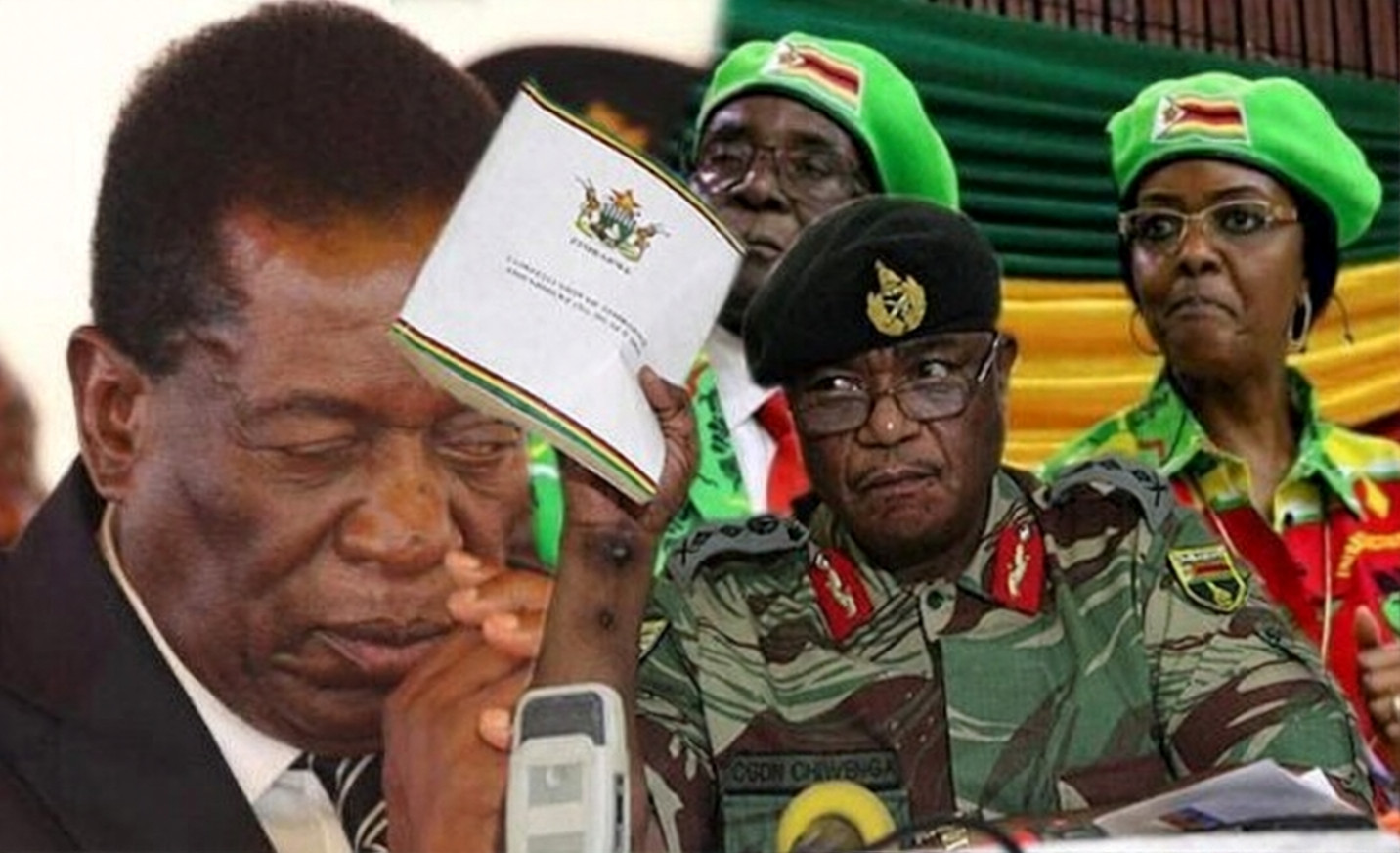
Harare – A political storm is brewing in Zimbabwe, as President Emmerson Mnangagwa’s ambitious plans to extend his tenure and reshape the nation’s governance face an unexpected and formidable challenge. At the heart of this unfolding drama is a remarkable convergence of retired military commanders, once rivals, now united in their opposition to proposed constitutional amendments that critics are branding a ‘constitutional coup’. This unprecedented alliance sees loyalists of the late former army commander, General Solomon Mujuru, joining forces with disgruntled allies of Vice-President Constantino Chiwenga, many of whom were instrumental in bringing Mnangagwa to power in 2017 but have since been purged from their positions.
President Mnangagwa, now 83 years old, is navigating a severe internal crisis as he seeks to consolidate his authority and push for a term extension to 2030. His administration is also attempting to reform political, electoral, and governance systems, which insiders suggest are primarily for legacy purposes. However, these moves have ignited a fierce backlash from a significant segment of retired military leaders and senior civil servants, who view them as an affront to the nation’s democratic principles.
The proposed Constitutional Amendment No.3 Bill, currently undergoing nationwide public consultations by Parliament, is the epicentre of this contention. These consultations, mandated for a 90-day period to gather public input, have become a platform for intense debate. The core proposals within this bill are particularly contentious: extending the presidential and parliamentary terms from five to seven years and, even more controversially, allowing Parliament to elect the President instead of direct popular vote.
The Unlikely Alliance: Rivals United by a Common Cause
The convergence of Mujuru and Chiwenga’s allies is a development that underscores the gravity of the situation. Historically, General Mujuru and Vice-President Chiwenga were considered rivals. Yet, the current political climate has forged an unlikely unity among their respective supporters. A former Zimbabwe Defence Forces (ZDF) commander, speaking to The NewsHawks, articulated the essence of this new coalition:
“What is happening now is that former army commanders who helped President Mnangagwa to come to power in 2017, but were purged later, have found each other with Mujuru’s loyalists to form a coalition to oppose the constitutional amendments. Retired Air Vice-Marshal Henry Muchena is echoing the voice of Mujuru allies who were removed. He is a former Mujuru ally before his death in 2011. Retired Lieutenant-General Winston Sigauke Mapuranga represents those supporting him. Remember Muchena was principal director in the Zanu PF Commissariat Department after retiring from the Air Force in 2010. He was removed by Mnangagwa from his position after he took over. However, there are many other generals who were removed after 2017, mainly Vice-President retired General Constantino Chiwenga’s allies, such as retired Lieutenant-General Anselem Sanyatwe and retired Lieutenant-General Engelbert Rugeje. So there is now a convergence of Mujuru and Chiwenga’s allies to oppose the constitutional changes.”
This statement highlights key figures in this opposition movement, including Retired Air Vice-Marshal Henry Muchena and Retired Lieutenant-General Winston Sigauke Mapuranga. Muchena, a former Mujuru ally, was notably removed from his position as principal director in the Zanu PF Commissariat Department by Mnangagwa. Similarly, several other generals, predominantly Chiwenga’s allies like Retired Lieutenant-General Anselem Sanyatwe and Retired Lieutenant-General Engelbert Rugeje, were purged after 2017. Sanyatwe, for instance, was booted out in March 2025 amidst fears of a looming coup. These individuals, once key players in the 2017 coup that ousted Robert Mugabe, are now perceived as serious threats by Mnangagwa’s camp, particularly in the context of his fierce succession battle with his deputy, Chiwenga.
Mnangagwa’s ‘Coup-Proofing’ Strategy Under Fire
Analysts suggest that Mnangagwa’s systematic removal and reshuffling of senior military and security officials is a calculated “coup-proofing” strategy. By sidelining those who could potentially challenge his authority, particularly Chiwenga’s backers, Mnangagwa aims to protect himself against any future attempts to unseat him. However, this strategy appears to have backfired, inadvertently creating a powerful and unified opposition from within the military establishment.
The retired generals, led by Muchena, have not merely voiced their disapproval; they have taken concrete action. They formally challenged Mnangagwa’s term extension by writing to the Speaker of Parliament, condemning the proposed constitutional changes. Their argument centres on the belief that such significant amendments, particularly those affecting presidential term limits, should not be enacted solely by legislators but must be subjected to a national referendum, allowing the direct voice of the people to be heard.
The Referendum Debate: A Battle for Democratic Legitimacy
The question of a national referendum has become a central battleground in this constitutional showdown. The opposition and civil society groups, despite their internal divisions and fragmentation, largely contend that a referendum is legally necessary, especially since the proposed changes effectively amount to a removal of term limits. Prominent opposition figures, including Tendai Biti and Jameson Timba, have vociferously argued for this democratic safeguard.
Conversely, the government and the ruling Zanu PF party maintain that a referendum is unnecessary. They argue that the changes merely involve adjusting the “electoral cycle” and do not constitute an alteration of term limits. Their justification is that lengthening the electoral cycle from five to seven years is intended to ensure political stability and address the “toxicity associated with disputed elections in Zimbabwe”. This stance, however, is met with scepticism by legal experts who argue that extending a presidential term from five to seven years fundamentally alters the presidential term and therefore necessitates a referendum.
Zanu PF’s Internal Fissures and the 2030 Agenda
The ruling Zanu PF party itself is deeply divided, grappling with two main warring factions. One faction is vigorously pushing for the “2030 Agenda,” which supports Mnangagwa’s bid for an extended term. The other faction, loyal to Vice-President Chiwenga, is actively resisting these changes. This internal power struggle within Zanu PF is a critical element of the broader political instability. The current parliamentary landscape, where Zanu PF commands a politically engineered two-thirds majority, theoretically allows them to push through these amendments with relative ease, further exacerbating concerns about democratic accountability.
Recent developments underscore the intensity of this political struggle. In February 2026, the Zimbabwean cabinet officially approved the plan to extend Mnangagwa’s rule until 2030. This decision has been met with widespread uproar, with many describing it as a blatant attempt to subvert democratic processes. Just recently, on March 20, 2026, there was a reported clash between Temba Mliswa and the retired generals over the constitutional amendment bill, further illustrating the heated nature of this debate.
War Veterans Lend Their Weight to the Opposition
Adding significant weight to the opposition, the Zimbabwe National Liberation War Veterans Association (ZNLWVA) has publicly thrown its support behind the retired military commanders. Ethan Mathibela, the Chairman of the ZNLWVA, issued a powerful statement on Thursday, March 13, 2026, asserting that defending the country’s supreme law should never be misconstrued as political hostility.
Mathibela stated:
“As an organisation representing those who fought to liberate this nation from colonial rule, we wish to state clearly and unequivocally that we stand in full support of the principled position articulated by our fellow veterans. The submission by the retired commanders is a powerful reminder that the liberation struggle was fought so that the people of Zimbabwe would be the ultimate custodians of state power. Defending the Constitution must never be mistaken for political hostility; it is an act of patriotism and national duty.”
He further urged all stakeholders to approach the constitutional debate with sobriety and patriotism, reiterating the call for a referendum:
“In this regard, the ZNLWVA calls upon Parliament, political leaders, civil society, and all Zimbabweans to approach the current constitutional debate with sobriety, patriotism, and respect for the sovereign will of the people. Where constitutional amendments touch on fundamental questions of democratic governance, the most legitimate path remains broad national consultation and, where necessary, the direct voice of the people through a referendum.”
This endorsement from the war veterans, a group with considerable historical and political influence in Zimbabwe, significantly strengthens the hand of those opposing Mnangagwa’s proposed amendments. Their involvement frames the debate not merely as a political squabble but as a fundamental struggle to uphold the principles for which the liberation struggle was fought.
The Path Ahead: Uncertainty and the Future of Zimbabwean Democracy
The situation in Zimbabwe remains fluid and highly uncertain. The convergence of military factions, the steadfast opposition from war veterans, and the ongoing public debate highlight a nation at a critical constitutional crossroads. President Mnangagwa’s administration faces immense pressure to justify its proposed amendments and address the growing calls for a national referendum. The outcome of this struggle will undoubtedly have profound implications for the future of democratic governance and political stability in Zimbabwe.
As Parliament continues its public consultations, the eyes of the nation, and indeed the international community, will be fixed on Harare. The question remains whether the voice of the people, amplified by this powerful and unexpected alliance, will ultimately prevail against the executive’s push for extended power.