


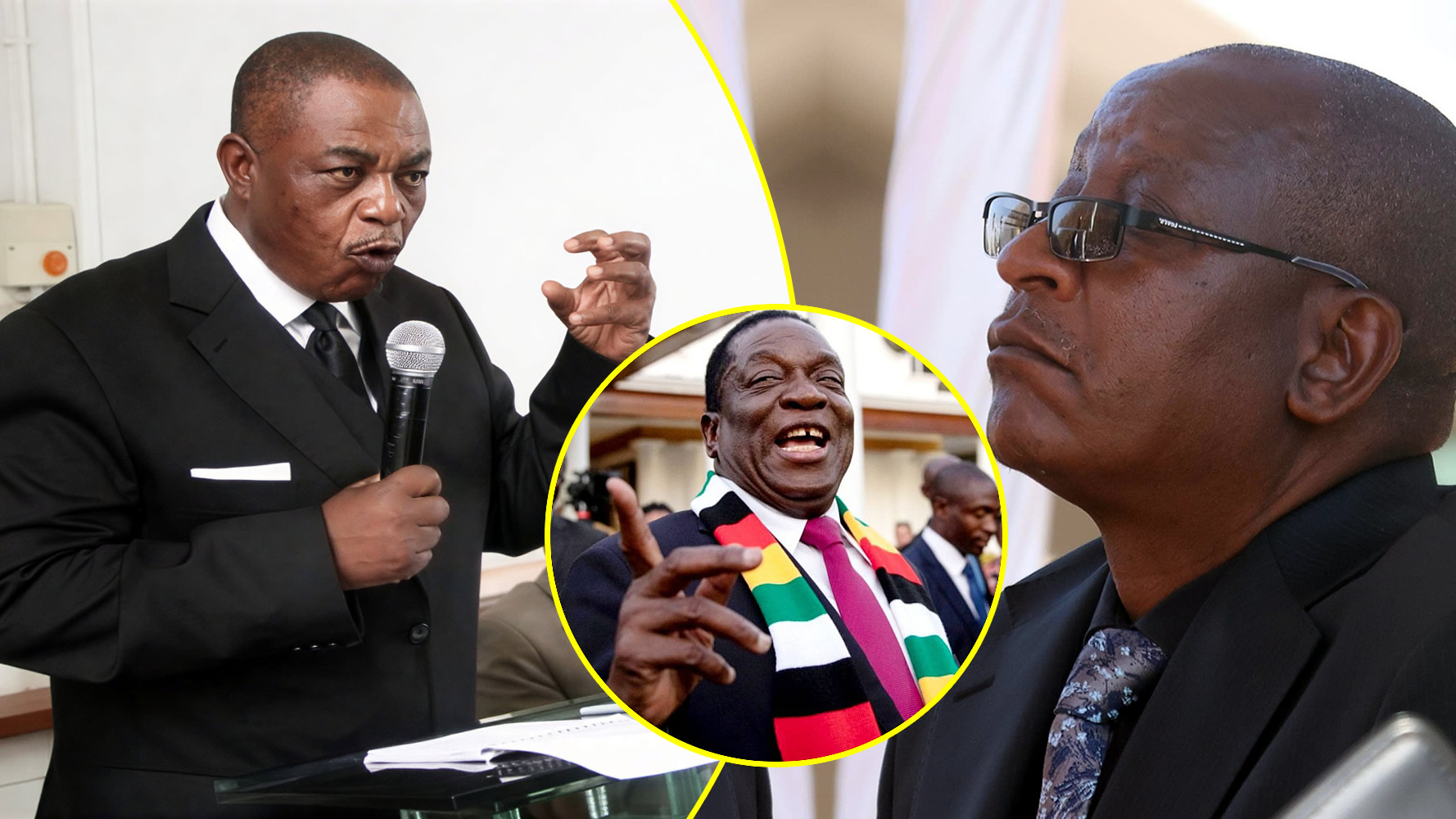
A Deepening Rift: The Power Struggle Between Mnangagwa and Chiwenga Over Zimbabwe’s Future
Harare – A palpable tension continues to simmer at the heart of Zimbabwe’s political establishment, as President Emmerson Mnangagwa and his deputy, Vice President Constantino Chiwenga, appear locked in a high-stakes power struggle. The latest flashpoint arrived in the form of a stern warning from Attorney General Virginia Mabiza, who unequivocally stated that Cabinet members must publicly support President Mnangagwa’s Constitutional Amendment Bill No. 3 (CAB3) or face resignation. This directive, issued over the weekend, was widely interpreted as a direct challenge to Vice President Chiwenga, whose opposition to the proposed constitutional changes has become increasingly evident.
Mabiza, a known ally of President Mnangagwa, underscored the principle of Cabinet solidarity, asserting that once a policy is adopted, every member must defend it, regardless of private disagreements. “If a minister can’t support a Cabinet decision, the obvious option is to resign,” Mabiza declared, adding that the President holds the power to “reprimand, reassign, demote, or dismiss an individual minister or even a Vice President without bringing down the whole Cabinet.” This forceful statement highlights the growing impatience within Mnangagwa’s camp regarding any perceived dissent from within his inner circle, particularly concerning a legislative agenda critical to his political future.
The Controversial Constitutional Amendment Bill No. 3
At the core of this escalating political drama is CAB3, a legislative proposal that seeks to introduce significant alterations to Zimbabwe’s constitution. Analysts and political observers suggest that the bill’s primary objective is to extend President Mnangagwa’s tenure beyond the constitutionally mandated two five-year terms, potentially allowing him to remain in office until 2030. Furthermore, the bill reportedly aims to scrap presidential elections, making the selection of the head of state a preserve of Parliament. Such amendments would fundamentally reshape the country’s political landscape, concentrating more power in the executive and potentially undermining democratic processes.
Vice President Chiwenga’s resistance to CAB3 is no longer a matter for speculation; it has become an open secret within political circles. His stance against Mnangagwa’s proposal to extend presidential and parliamentary terms has been consistent, marking a clear divergence from the official party line. This opposition is not merely a policy disagreement but reflects a deeper ideological and power-based schism between the two most powerful figures in Zimbabwean politics.
A Parable of Power: Chiwenga’s Hezekiah Sermon
The depth of Chiwenga’s dissent was starkly illustrated by a sermon he delivered at a Roman Catholic Church event in Murewa, Mashonaland East province, which has since been widely discussed and interpreted. The former army general, known for his measured public pronouncements, chose to preach about the biblical King Hezekiah. In his sermon, Chiwenga recounted how King Hezekiah, after being told by Prophet Isaiah to prepare for his death, requested and was granted 15 more years of life by God. However, the Vice President pointedly added that Hezekiah subsequently spent these extended years in jail after his people revolted against his reign.
This sermon, delivered with thinly veiled symbolism, was immediately understood by political analysts and players as a direct, albeit indirect, warning to President Mnangagwa. The parallels drawn between King Hezekiah’s desire for an extended reign and Mnangagwa’s alleged ambitions for a 2030 term extension were unmistakable. Chiwenga’s narrative served as a cautionary tale, suggesting that clinging to power beyond a natural or mandated period could lead to public discontent and ultimately, a downfall. This public display of dissent, cloaked in religious allegory, underscored the gravity of the internal divisions within the ruling ZANU-PF party.
The Explosive Politburo Showdown: A “Treasonous” Dossier
The tensions between Mnangagwa and Chiwenga are not new, with a history of clashes that have occasionally spilled into the public domain. One of the most significant confrontations occurred in the ZANU-PF Politburo in late 2025, an incident that laid bare the deep-seated mistrust and rivalry between the two leaders. The catalyst for this explosive exchange was a searing 17-page dossier tabled by Vice President Chiwenga on September 17, 2025. In this document, Chiwenga reportedly accused President Mnangagwa of “corruption, capture and betrayal” of the ideals that underpinned the 2017 military-backed coup, known as Operation Restore Legacy, which brought Mnangagwa to power.
Chiwenga’s dossier was a direct challenge to Mnangagwa’s leadership, questioning the very legitimacy and direction of his presidency. The Vice President, a key architect of the 2017 coup, asserted in his document, “Comrade President, we undertook Operation Restore Legacy with a sacred mandate: to reclaim our nation from the jaws of corruption and to restore the dignity, prosperity, and sovereignty of Zimbabwe.” This statement implied that Mnangagwa had deviated from this mandate, betraying the revolutionary spirit of the coup.
President Mnangagwa’s response, delivered through Justice Minister Ziyambi Ziyambi in the Politburo on October 14, 2025, was equally forceful. Ziyambi, acting on behalf of the President, branded Chiwenga’s document as “fundamentally flawed, treasonous, and lacking appreciation of party procedures and the national constitution.” The accusation of treason is a grave one in Zimbabwean politics, often used to silence dissent and consolidate power. Mnangagwa’s camp further alleged that Chiwenga was attempting to “monopolise credit for the coup,” downplaying the collective effort that led to Robert Mugabe’s ouster.
During this heated exchange, revelations also emerged regarding the financial backing of the 2017 coup. It was disclosed that businessman Kudakwashe Tagwirei, a prominent tycoon, had allegedly bankrolled the operation, providing “five million litres of fuel, food and US$1.6 million to the party” at the request of then Commander of the Zimbabwe Defence Forces, General Chiwenga. These details not only added another layer of complexity to the internal power dynamics but also raised questions about the influence of private interests in national political transitions.
The “Appointing Authority” and Mnangagwa’s Assertions of Power
The power struggle has also seen President Mnangagwa repeatedly assert his authority over his deputy, particularly in moments of heightened tension. The phrase “I am the appointing authority” has reportedly been used by Mnangagwa to remind Chiwenga of his subordinate position and the President’s prerogative to make key appointments and dismissals. This assertion of power has surfaced in various contexts, including clashes over military appointments and the loyalty of Cabinet members.
Such pronouncements serve as a clear message from Mnangagwa that while Chiwenga may have played a pivotal role in his ascent to power, ultimate authority rests with the President. This dynamic underscores the precarious nature of Chiwenga’s position, despite his significant influence within the military and certain factions of the ruling party. The constant reminders of who holds the ultimate power highlight the ongoing struggle for control and influence within the ZANU-PF hierarchy.
Chiwenga’s Unwavering Opposition to the 2030 Agenda
Despite the Attorney General’s warnings and Mnangagwa’s assertions of authority, Vice President Chiwenga has remained steadfast in his opposition to the 2030 term extension agenda. He has notably refrained from chanting the “2030” mantra at party rallies, a common practice among Mnangagwa’s loyalists to signal support for the President’s extended rule. This deliberate omission speaks volumes about his dissent and his refusal to endorse a move he seemingly views as detrimental to the country’s democratic principles.
Chiwenga has reportedly warned the Politburo that any attempt to amend the constitution to extend the presidential term constitutes a “red line,” suggesting that such a move could provoke significant internal resistance. His vision for “Vision 2030,” a national development agenda, is consistently framed around genuine economic empowerment for all Zimbabweans, rather than a focus on extending presidential terms. “Vision 2030,” Chiwenga has stated, “is about genuine economic empowerment, equipping all our people with the means to produce.” This emphasis on economic development over political manoeuvring further distinguishes his approach from that of Mnangagwa’s camp.
Broader Implications for Zimbabwe’s Political Future
The ongoing power struggle between President Mnangagwa and Vice President Chiwenga carries profound implications for Zimbabwe’s political stability and future. The public nature of these disagreements, from veiled sermons to explosive Politburo clashes, indicates a deep fracture within the ruling ZANU-PF party. This internal strife could weaken the party’s cohesion, potentially leading to further factionalism and instability.
The push for CAB3 and the 2030 agenda also raises concerns about democratic governance and the rule of law in Zimbabwe. Critics argue that extending presidential terms through constitutional amendments, particularly when met with significant internal opposition, could erode public trust in democratic institutions and fuel political unrest. The international community will undoubtedly be watching these developments closely, as they could impact Zimbabwe’s standing and its efforts to attract foreign investment.
Furthermore, the military, which played a crucial role in the 2017 coup, remains a significant, albeit often silent, player in Zimbabwean politics. Chiwenga’s strong ties to the military, as a former commander, add another layer of complexity to the power dynamics. Any significant shift in the balance of power between Mnangagwa and Chiwenga could have unforeseen consequences for the country’s security and political trajectory.
Conclusion
The political landscape of Zimbabwe is currently defined by a tense and evolving power struggle between its two most prominent figures. Attorney General Virginia Mabiza’s recent ultimatum to Cabinet members to support CAB3 or resign underscores the high stakes involved in President Mnangagwa’s alleged quest for a 2030 term extension. Vice President Chiwenga’s consistent, albeit sometimes subtle, opposition, exemplified by his King Hezekiah sermon and his role in the “treasonous dossier” incident, reveals a deep ideological and personal rift. As Mnangagwa continues to assert his authority, reminding Chiwenga of his position as the “appointing authority,” the future of Zimbabwe hangs in the balance, with the outcome of this internal struggle poised to shape the nation’s political direction for years to come.