


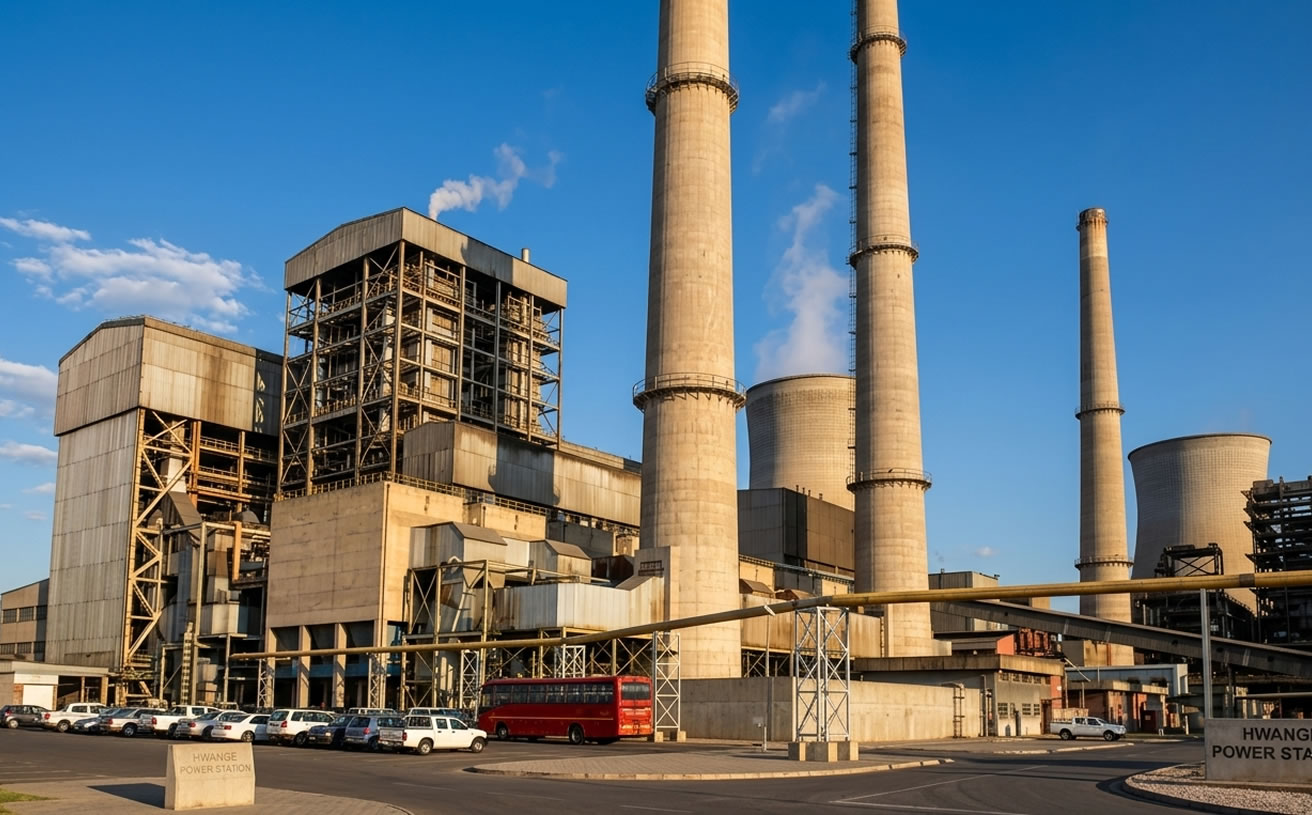
HWANGE – Despite the much-heralded commissioning of Hwange Units 7 and 8, Zimbabweans continue to grapple with the debilitating reality of “Stage 2” load shedding and prolonged blackouts. The official narrative often points to convenient culprits like “technical faults” or “low water levels at Kariba.” However, a deeper investigation reveals a more intricate and troubling truth, rooted in aging infrastructure, a crippling “debt trap” ensnaring the Zimbabwe Electricity Supply Authority (ZESA), and a pervasive culture of mismanagement.
The Promise and Peril of Hwange and Kariba: A Historical Perspective
Zimbabwe’s energy backbone has historically rested on two colossal projects: the Kariba Dam and the Hwange Thermal Power Station. The Kariba Dam, a marvel of engineering, was constructed between 1955 and 1959 across the Zambezi River. Its primary purpose was to harness the immense hydroelectric potential of the river to power the burgeoning industries and growing populations of the then-Federation of Rhodesia and Nyasaland (comprising present-day Zambia, Zimbabwe, and Malawi). While specific figures for the intended population served are elusive, the dam was designed to provide a robust and reliable energy source for decades. The construction was a monumental undertaking, with the contract for the wall and power station awarded to the Italian consortium Impresit on 16 July 1956. The dam stands 128 metres high and 579 metres long, creating Lake Kariba, the world’s largest man-made lakes by volume.
Decades later, the Hwange Thermal Power Station emerged as another cornerstone of Zimbabwe’s energy strategy. Although the Hwange Power Station project was planned and initiated by the Ian Smith regime, however, it was President Mugabe’s administration that completed the massive project. Commissioned in phases between 1983 and 1987, Hwange was designed to complement Kariba, providing thermal power primarily from the country’s abundant coal reserves. The initial units (4 x 120MW) were commissioned between 1983 and 1986, followed by two 220MW units in 1986 and 1987. The station was designed with an installed capacity of 920 MW. At the time of its commissioning, Zimbabwe’s population was approximately 7.6 million in 1983, growing to around 9.3 million by 1987. These two power stations were envisioned to serve the nation’s energy needs for many years, providing the essential power for industrial growth and domestic consumption.
The Unravelling: Why Kariba and Hwange are Failing
Today, both Kariba and Hwange are struggling to meet demand, leading to the current energy crisis. Kariba’s woes are primarily linked to low water levels in the Zambezi River, exacerbated by recurrent droughts and climate change. The dam’s operation is governed by the Zambezi River Authority (ZRA), which manages water allocation between power generation and other uses for both Zimbabwe and Zambia. Over-reliance on Kariba, coupled with insufficient rainfall, has led to a precarious situation where generation capacity is frequently curtailed. This is a worsening problem, as climate change models predict more frequent and severe droughts in Southern Africa, further jeopardising Kariba’s output.
Hwange, despite its significant installed capacity, is plagued by aging infrastructure and chronic operational inefficiencies. The plant’s older units are frequently offline due to breakdowns, a direct consequence of decades of underinvestment in maintenance and refurbishment. While the recent commissioning by President Mnangagwa’s administration of Units 7 and 8 (adding 600MW) was expected to alleviate the crisis, the national grid itself is so dilapidated that it cannot consistently handle the full load. This leads to frequent system collapses and necessitates load shedding, even when new generation capacity is available. The problem is akin to having a powerful new engine in a car with a rusted chassis and worn-out tyres – the potential is there, but the supporting systems are too weak to utilise it effectively.
The Hidden Crisis: Coal, Corruption, and the Debt Trap
Beyond the visible issues of aging infrastructure and water scarcity, a more insidious problem lies at the heart of Zimbabwe’s energy crisis: the hidden crisis of coal supply. Hwange, being a thermal power station, relies heavily on a consistent supply of quality coal. However, small-scale miners, often with strong links to political elites, are failing to deliver the necessary quantity and quality of coal to ZESA. A significant driver of this issue is the economic disparity between selling coal domestically for the local currency (ZiG) versus exporting high-grade coal for more lucrative US Dollars. This preference for foreign currency earnings starves ZESA of its essential fuel, further crippling Hwange’s ability to generate power.
ZESA itself is caught in a deep “debt trap,” making it difficult to invest in critical infrastructure upgrades or pay its suppliers on time. This financial predicament is compounded by “tender scandals” that have siphoned off millions of dollars meant for energy projects. A prominent example is the Gwanda Solar Project, which became a byword for corruption. Reports indicate that millions were paid for projects that exist only on paper, with little to no tangible progress on the ground. The case of Wicknell Chivayo and Intratrek Zimbabwe, the company awarded the Gwanda solar tender, has been widely publicised. Despite allegations of fraud and incomplete work, court rulings have sometimes upheld the validity of the contract, further complicating efforts to recover funds and advance legitimate projects. This mismanagement and alleged corruption leave the nation in the dark while a few “power brokers” allegedly enrich themselves.
Understanding Load Shedding: Stage 2 and Beyond
Load shedding, or planned power outages, is ZESA’s mechanism to balance electricity supply and demand, preventing a total collapse of the national grid. Stage 2 load shedding in Zimbabwe typically means that customers experience power cuts for extended periods, often ranging from 8 to 18 hours per day. This is a significant escalation from Stage 1, which might involve shorter outages. The frequency and duration of these outages have a devastating impact on households, businesses, and the overall economy, disrupting daily life, hindering productivity, and damaging appliances.
The Sunshine Solution: Solar Energy as Zimbabwe’s Way Forward
Zimbabwe, particularly Southern Africa, is blessed with abundant sunshine, making solar energy a highly viable and sustainable solution to its chronic power woes. The potential of solar power is not merely theoretical; it is being demonstrated by ordinary citizens and forward-thinking companies across the country.
Many households that have invested in 2000-watt solar systems and above have largely mitigated the impact of load shedding. This practical application serves as compelling proof that solar is not just an alternative but a potent primary energy source for the nation. The daily electricity consumption patterns in Zimbabwe further underscore solar’s suitability: much of the power is consumed during the day, especially in the early morning and towards evening for cooking. During the night, when direct sunshine is absent, power consumption is minimal. This makes solar power plants ideal for meeting peak daytime demand, with lithium batteries providing storage for evening use, and Hwange’s thermal output potentially supplementing during minimal night-time demand.
Companies in Zimbabwe have already taken the initiative to build their own mini solar power stations. A notable example is Proton Bakers in Marondera, which has made significant strides in embracing solar energy. Research indicates that Proton Bakers installed a substantial solar system comprising 1,788 high-efficiency solar panels, resulting in a total capacity of approximately 1 MVA (Megavolt Ampere) or 943 kWp (kilowatt-peak). This powerful solar system not only meets the bakery’s operational needs but also generates excess power, which Proton Bakers is now selling back to ZESA by feeding it into the national grid during the day. This demonstrates a successful model of decentralised power generation that could be replicated nationwide.
If ZESA and the government were to invest strategically in multiple large-scale solar power plants across the country, this would significantly ease, if not permanently solve, the load shedding crisis. Such an investment would leverage Zimbabwe’s natural advantage, reduce reliance on aging, unreliable infrastructure, and provide a cleaner, more sustainable energy future.
Conclusion
The energy crisis in Zimbabwe is a multifaceted challenge, stemming from a complex interplay of historical underinvestment, infrastructural decay, mismanagement, and the impacts of climate change. While the commissioning of new units at Hwange offers a glimmer of hope, the underlying issues persist. The “debt trap” and alleged corruption continue to undermine efforts to stabilise the power sector. However, the success stories of solar adoption, from individual households to industrial giants like Proton Bakers, illuminate a clear path forward. Embracing solar energy on a national scale, coupled with transparent governance and strategic investment, holds the key to unlocking Zimbabwe’s energy potential and finally bringing light to a nation too long left in the dark.