


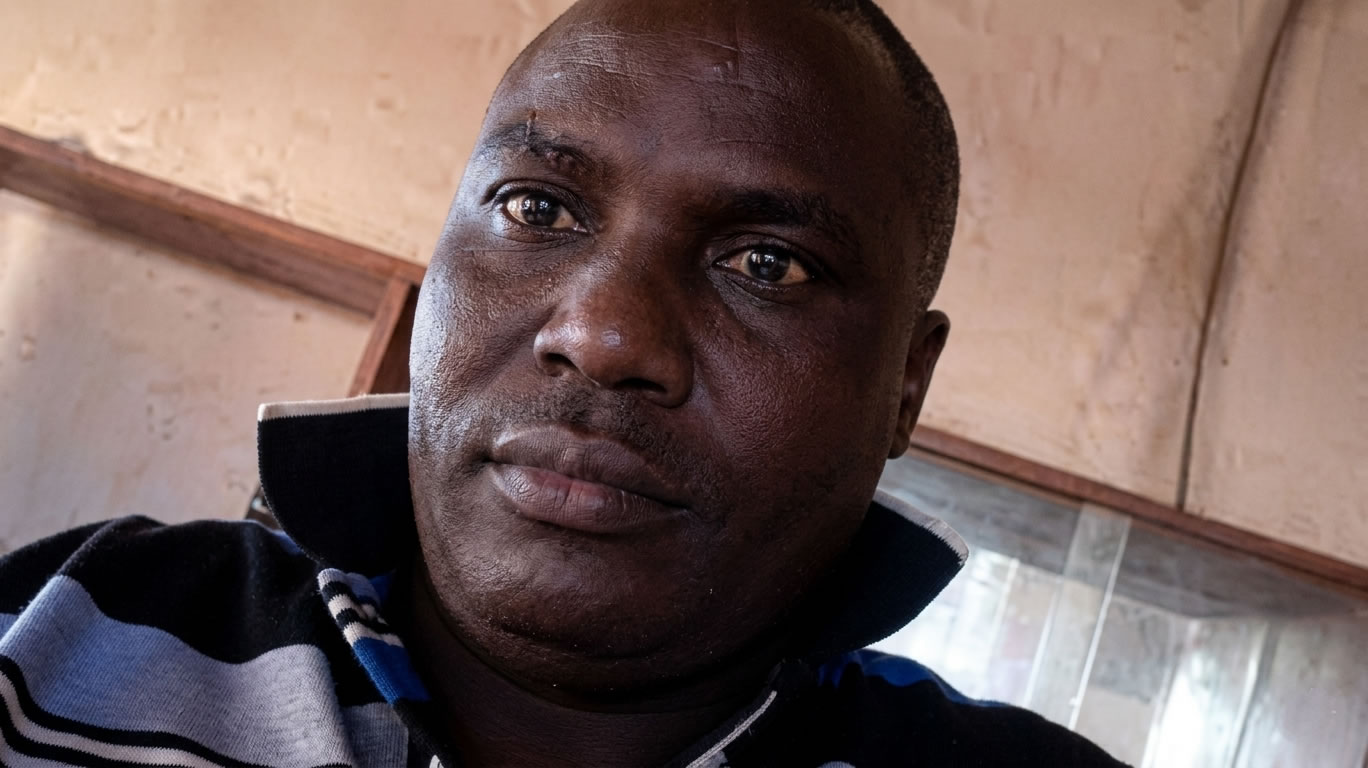
The political landscape of Zimbabwe is currently dominated by a single, haunting question that refuses to be silenced: Is Gift Konjana alive? The veteran politician, a man whose name has become synonymous with the dogged pursuit of electoral justice in Chegutu West, has reportedly “quit politics” and resigned his hard-won council seat. While official statements paint a picture of a man weary of the fray, those within his inner circle tell a significantly different and more chilling story. Our investigation into the timeline of his sudden “resignation” has uncovered glaring inconsistencies that suggest he may have been coerced or, in a more sinister turn of events, “disappeared” by the very state apparatus he once challenged.
Konjana’s sudden departure from the public eye does not occur in a vacuum. It coincides with a period where the Zimbabwean state is aggressively silencing any critics of the so-called “2030 agenda.” This agenda, which seeks to extend presidential and parliamentary terms through the controversial Constitutional Amendment No. 3 Bill, has become the focal point of political tension. Our report identifies a disturbing pattern of “voluntary” withdrawals by opposition figures, movements that often follow unannounced visits from “men in dark glasses”—the ubiquitous moniker for state security agents who operate in the shadows of the night.
|
Event Date
|
Incident Description
|
Political Context
|
|
July 2018
|
Gift Konjana wins Chegutu West seat; ZEC claims “clerical error”
|
Initial spark of Konjana’s legal battle against ZANU PF
|
|
October 2021
|
Constitutional Court dismisses Konjana’s appeal on technicalities
|
Final judicial blow to his 2018 parliamentary bid
|
|
February 21, 2026
|
Konjana wins Chegutu Ward 1 by-election for ZANU PF
|
His return to elected office after defecting from MDC Alliance
|
|
March 2026
|
Family reports Konjana missing to Pfupajena Police Station
|
The beginning of the “Vanishing Act”
|
|
March 26, 2026
|
Resignation letter surfaces on social media and via The NewsHawks
|
Claims he is safe but “quitting politics” entirely
|
The history of Gift Konjana is one of resilience and eventual, perhaps forced, capitulation. In the 2018 general election, he was the MDC Alliance candidate for Chegutu West. He initially secured a victory, only for the Zimbabwe Electoral Commission (ZEC) to later attribute the result to a “clerical error,” handing the seat to Dexter Nduna of the ruling ZANU PF. Konjana spent years in the corridors of justice, fighting a battle that many saw as a test of the independence of the Zimbabwean judiciary. When the Constitutional Court finally dismissed his case in 2021 on procedural grounds, it was viewed by many as a confirmation that the legal system was being used as a shield for the ruling elite.
His subsequent defection to ZANU PF and his recent victory in the Chegutu Ward 1 by-election on February 21, 2026, were seen by some as a survival tactic. However, even within the ruling party, Konjana appears to have remained a marked man. Shortly after his victory, he vanished. His family, distraught and fearing the worst, filed a missing person’s report at the Pfupajena Police Station when he failed to return home. For weeks, the silence was absolute, until a resignation letter suddenly surfaced on social media. In this statement, Konjana claimed he was making a “final escape” from a “toxic political environment.” Yet, the language used in the letter and the circumstances of its release have raised serious doubts about its authenticity.
“This is exactly the reason why they want to extend the term of office. Mnangagwa is the only wicked person to protect these perpetrators,” remarked one commentator on social media, reflecting the widespread belief that Konjana’s situation is directly linked to the broader strategy of the 2030 agenda.
The climate of fear currently gripping Matabeleland and Mashonaland West is palpable. In these regions, the “2030 agenda” is not merely a political slogan but a directive enforced through intimidation. The Constitutional Amendment No. 3 Bill proposes to extend presidential terms from five to seven years, effectively allowing President Emmerson Mnangagwa to remain in power until 2030, bypassing current constitutional hurdles. To achieve this, the state appears to be systematically “decapitating” the opposition—not necessarily through the ballot box, but through the forced disappearance and coerced resignation of influential figures.
By connecting the dots between Konjana’s disappearance and this broader strategy, a documentary-style picture emerges of the return of “forced disappearance” as a primary tool of political management in Zimbabwe. This is not just a story about one man; it is a reflection of a state that is increasingly afraid of its own citizens and the democratic processes it claims to uphold. The “voluntary” withdrawals of opposition figures are rarely voluntary in the true sense of the word. They are the results of a calculated campaign of terror designed to ensure that when the next constitutional hurdles arrive, there will be no one left to challenge the status quo.
|
Feature of the 2030 Agenda
|
Proposed Change
|
Political Implication
|
|
Presidential Terms
|
Increase from 5 years to 7 years
|
Allows President Mnangagwa to stay in power until 2030
|
|
Parliamentary Terms
|
Increase from 5 years to 7 years
|
Postpones general elections and consolidates ZANU PF control
|
|
Traditional Chiefs
|
Allowed to join political parties and participate in politics
|
Co-opts traditional leadership into the ruling party’s machinery
|
|
Judicial Autonomy
|
Centralised constitutional processes
|
Further reduces the independence of the courts in electoral disputes
|
The case of Gift Konjana is a stark reminder of the personal costs associated with political life in Zimbabwe. Whether he was a member of the MDC Alliance or ZANU PF, his pursuit of justice made him a target. The state’s fear of Konjana likely stems from his intimate knowledge of the electoral irregularities he once fought against. If a man like Konjana, who has seen the system from both the inside and the outside, can be silenced, it serves as a powerful deterrent to others who might consider speaking out.
As we look at the timeline of his “resignation,” the inconsistencies are too numerous to ignore. A man who has just won an election does not typically resign and quit politics within weeks unless there is extreme external pressure. The “men in dark glasses” have long been the harbingers of such pressure in Zimbabwe, and their presence in the narrative of Konjana’s disappearance is a recurring theme in the history of the country’s political repression. The 10th anniversary of the disappearance of journalist and activist Itai Dzamara in March 2025 serves as a grim backdrop to these recent events, proving that the tool of enforced disappearance has never truly left the state’s arsenal.
In conclusion, the story of Gift Konjana is a microcosm of the larger struggle for the soul of Zimbabwe. As the state moves to secure its 2030 agenda, the disappearance of individuals like Konjana highlights the lengths to which the ruling elite will go to maintain their grip on power. The international community and human rights organisations must take note: the “Vanishing Act” is back, and it is being used with devastating efficiency to silence the voices of those who dare to dream of a different future for Zimbabwe. The question remains: where is Gift Konjana, and why is the state so afraid of what he might say?
The resilience of the Zimbabwean people is being tested once again. While the state may succeed in silencing individuals, the collective memory of the pursuit of justice cannot be so easily erased. The legacy of Gift Konjana, whether he is eventually found or remains another name on the long list of the disappeared, will continue to haunt those who believe that power can be maintained through fear alone. The 2030 agenda may move forward in the halls of parliament, but on the streets of Chegutu and beyond, the demand for truth and accountability remains as loud as ever.