


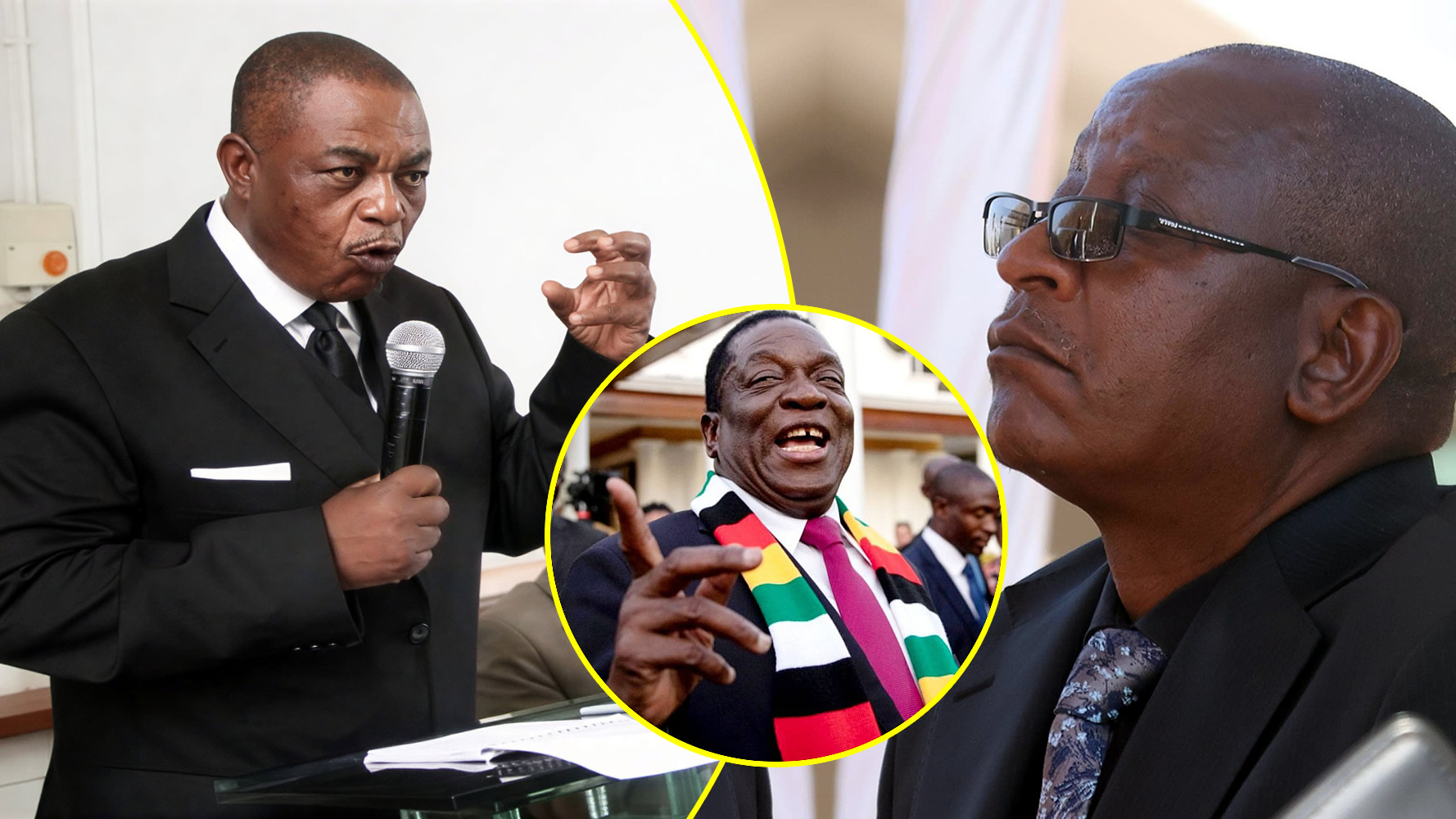
The General’s Standoff: Inside the High-Stakes Battle for Zimbabwe’s Constitution
HARARE – In the dimly lit corridors of Zanu PF’s headquarters, the air has grown thick with the scent of a brewing rebellion. Vice President Constantino Chiwenga, the former military commander who once orchestrated the fall of Robert Mugabe, has now drawn a line in the sand against his own comrade-in-arms, President Emmerson Mnangagwa. At the heart of this explosive confrontation is Constitutional Amendment Bill No. 3 — a piece of legislation that critics argue is designed to dismantle the last vestiges of democratic safeguards in Zimbabwe and pave the way for a life presidency.
The friction, which has been simmering for months, reached a boiling point during a recent Politburo meeting in Harare. According to high-level sources within the ruling party’s inner circle, the session descended into a “fierce confrontation” between Chiwenga and State Security Minister Lovemore Matuke. The Vice President, known for his stern military bearing, reportedly issued a stark warning: pushing through constitutional amendments that extend presidential terms without a national referendum is not just a legal gamble, but a “risky” political manoeuvre that could alienate the very base that brought the “New Dispensation” to power.
The clash was ignited when Chiwenga insisted that any revision to the presidential term limits must be subjected to the will of the people through a referendum. This position is a direct assault on the “2030 Agenda”—a coordinated push by Mnangagwa loyalists to extend the President’s rule beyond his constitutionally mandated two-term limit, which is currently set to expire in 2028.
Matuke, a staunch Mnangagwa ally, reportedly rounded on the Vice President, accusing unnamed individuals of “contradicting the party position.” The room, filled with the country’s most powerful figures, watched in silence as the two men locked horns. Chiwenga, refusing to back down, reminded his colleagues of his credentials as the man who led the 2017 military intervention. He told those present that he is a general who fought to liberate the country “while others sought refuge elsewhere to avoid participating in the liberation struggle”—a stinging rebuke aimed at those in the room who did not share his frontline combat history.
The standoff drew in other heavyweights, including Defence Minister Oppah Muchunguri and Zanu PF Commissar Munyaradzi Machacha, both of whom reportedly sided with Matuke. The exchange laid bare a widening fracture within the ruling party, suggesting that the unity displayed on public platforms is little more than a fragile veneer.
The 2030 Agenda: A Power Grab in Disguise?
Constitutional Amendment Bill No. 3 is more than just a minor adjustment to the law; it is a fundamental reshuffling of Zimbabwe’s governance framework. The bill proposes extending the presidential term from five to seven years and, perhaps most controversially, changing the method of electing the President. Under the proposed changes, Parliament—rather than the general electorate—would choose the President, a move that analysts say would effectively insulate the executive from the direct accountability of a popular vote.
Chiwenga’s opposition is rooted in what he describes as an “assault on the values of the liberation struggle.” Speaking recently at the funeral of the wife of the late liberation hero Kumbirai Kangai, the Vice President invoked the sacred principle of “one man, one vote.” His remarks were widely interpreted as a veiled rebuke of the amendment drive and a warning that future generations would “spit on our graves” if the current leadership allowed the country’s resources and constitutional integrity to be plundered.
The “2030 Agenda” has become the rallying cry for a faction of the party that believes Mnangagwa should remain in office to oversee the completion of his economic projects. However, Chiwenga has characterised this push as being driven by individuals bent on “looting the country’s resources” under the guise of political stability.
The President, for his part, has not remained silent. Using a Central Committee address the day after Chiwenga’s funeral remarks, Mnangagwa denounced what he called “malcontents” pursuing “self-serving agendas.” While he did not name Chiwenga, the target of his ire was unmistakable.
The Military Factor: Retired Generals Break Silence
Perhaps the most significant development in this constitutional drama is the emergence of a vocal opposition from within the military establishment. A group of retired army generals and senior civil servants, all former liberation war combatants, have formally challenged the amendment bill. In a dramatic petition to Parliament, led by figures such as Retired Air Marshal Henry Muchena and Retired Major General Gibson Mashingaidze, the veterans demanded that any changes to term limits must go to a referendum.
Their intervention carries immense weight. These are the men who formed the backbone of the 2017 coup and who still command significant respect within the ranks of the Zimbabwe Defence Forces (ZDF). By siding with Chiwenga, they have signalled that the military’s support for Mnangagwa is no longer a given.
“We fought for a constitution that respects the will of the people,” one retired officer, speaking on condition of anonymity, told investigative reporters. “To change the rules of the game mid-stream just to keep one man in power is a betrayal of everything we bled for in the bush.”
Bread and Bicycles: Manufacturing Consent
As parliament-led public hearings on the bill got underway this week, the government’s machinery has been working overtime to create the appearance of popular support. In rural strongholds like Mhondoro-Mubaira, presidential adviser Paul Tungwarara was observed handing out cash, bicycles, and food hampers at a rally backing the amendment.
The scenes have been replicated across the country. Reports have surfaced of villagers being bussed to hearing venues and coached on what to say. Civil society leaders have alleged selective policing, noting that authorities have routinely blocked meetings organised by anti-amendment groups while permitting pro-government gatherings to proceed unhindered.
“It is a manufactured consensus,” said a representative from a prominent human rights NGO. “They are using state resources to buy support from a population that is struggling with hyperinflation and a collapsing healthcare system. It is cynical and it is dangerous.”
A Nation at a Crossroads
The stakes could not be higher. For Chiwenga, the amendment bill is a direct threat to his own presidential ambitions. It is no secret in Harare that the Vice President expects to succeed Mnangagwa, following a tacit agreement reportedly reached during the 2017 transition. By extending Mnangagwa’s term or changing the election format, the loyalist faction is effectively attempting to neutralise Chiwenga’s path to the State House.
For the ordinary Zimbabwean, the constitutional battle is a distraction from the daily struggle for survival. The country’s economy continues to teeter on the brink, with the local currency losing value by the day and basic services like electricity and water becoming luxuries.
Opposition figures have warned that the situation could spill onto the streets if the government continues to ignore the growing chorus of dissent. “The people are tired,” said one opposition MP. “They see this for what it is—a power grab by an elite that has lost touch with reality. If they push this through without a referendum, they are inviting a level of instability that this country cannot afford.”
As the public hearings continue and the bill moves toward a vote in a Parliament dominated by Zanu PF, the eyes of the nation remain fixed on the two men at the top. The “fierce confrontation” in the Politburo was not just a clash of personalities; it was a battle for the soul of Zimbabwe. Whether the General’s warning will be heeded or whether the “2030 Agenda” will roll over all opposition remains to be seen. What is certain is that the cracks in the foundation of the ruling party have never been more visible, and the consequences of this constitutional showdown will be felt for generations to come.
The question that remains is whether the principles of the liberation struggle—the “one man, one vote” that Chiwenga so pointedly mentioned—will survive this latest assault, or whether they will be sacrificed on the altar of political expediency. As the sun sets over the capital, the silence from the State House is deafening, but the whispers of rebellion in the barracks and the boardrooms continue to grow louder.