


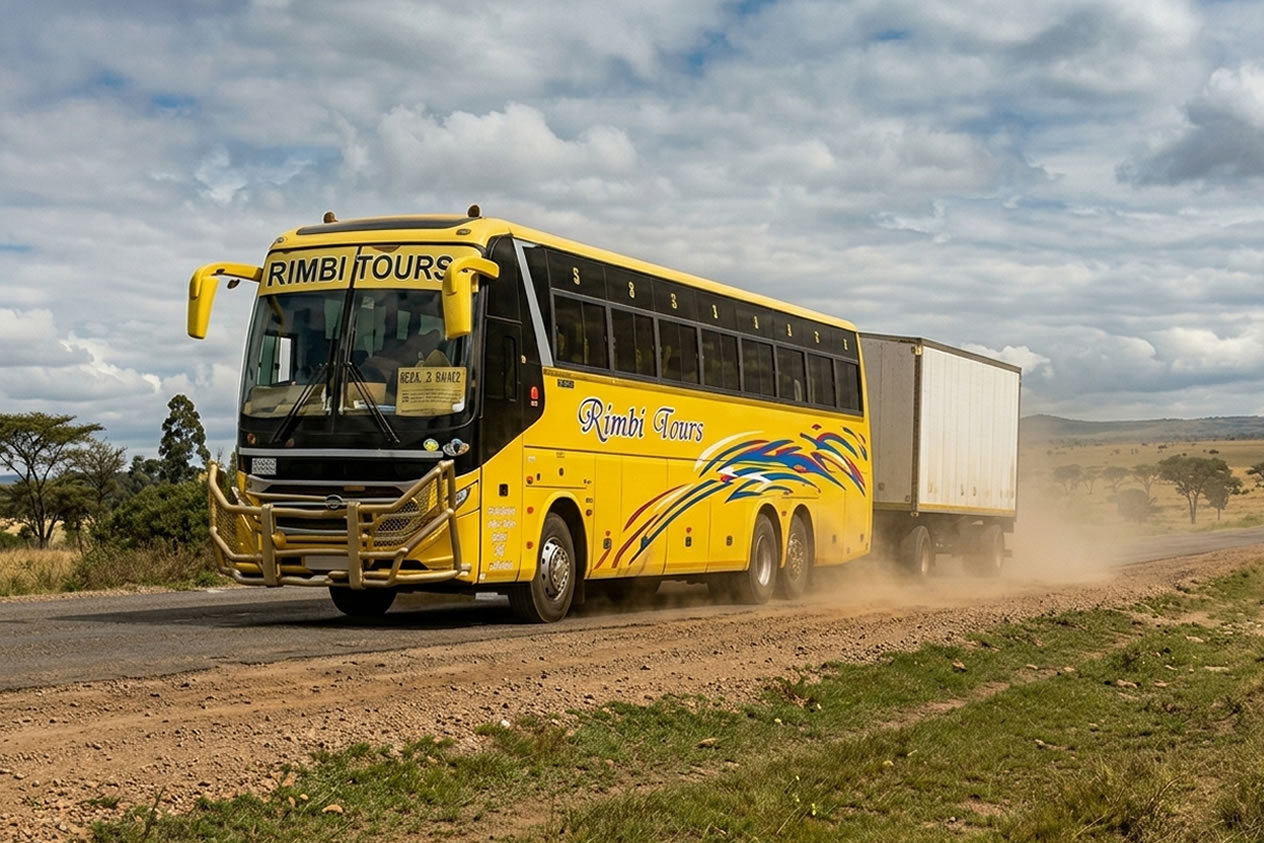
Border Control and the Shadow Passengers: The Curious Case of the Rimbi Bus
The N1 highway near Bloemfontein is often a quiet stretch of asphalt under the vast Free State sky, but on the night of Thursday, 3 April 2026, it became the stage for a discovery that has once again turned the spotlight on the porous nature of Southern Africa’s migration corridors. A Rimbi Travel and Tours bus, a familiar sight on the long-haul route from Zimbabwe to Cape Town, was pulled over by Free State traffic officials during a routine roadblock. What they found inside was not just a collection of weary travellers, but a group of 32 undocumented Zimbabwean nationals, including young children and infants, hidden amongst the legally cleared passengers.
The incident has sparked a complex debate between provincial law enforcement and the national Border Management Authority (BMA). While the Free State authorities were left to process a busload of individuals with no legal right to be in the country, the BMA has remained firm in its stance that the vehicle was “properly processed” at the Beitbridge Port of Entry. This discrepancy raises a troubling question for investigators: how did 32 people vanish from the official record at the border, only to reappear hundreds of kilometres inland?
According to the BMA’s official statement released on 5 April 2026, the Rimbi bus arrived at the Beitbridge Port of Entry and entered through the North Gate following standard port procedures. All 43 passengers on board at that time were required to disembark with their luggage to undergo mandatory screening. The BMA detailed the rigour of this process, stating:
“Passengers were subjected to BMA Port Health screening to identify any health-related risks, while their luggage was scanned for any smuggling of illicit goods and items such as bulk medication or contraband in line with established security protocols. Concurrently, the bus itself was searched to detect any undocumented individuals. The driver presented a passenger manifest, which included the names and passport numbers of all individuals on board. Each passenger proceeded to immigration counters where they presented their passports to BMA immigration officials.”
The Authority further confirmed that it is in possession of the full list of these 43 passengers, all of whom complied with entry requirements. They held valid passports and visas, and each had a sufficient number of days remaining out of their 90-day allowance to enter South Africa. Even the driver was found to be in full compliance, holding a valid passport and a legitimate cross-border permit. The vehicle itself was operated by Rimbi Tours, a registered cross-border transport operator that is a regular user of the Beitbridge crossing.
|
Bus Interception Details
|
Information
|
|
Date of Incident
|
Thursday, 3 April 2026
|
|
Location
|
N1 Highway, near Bloemfontein, Free State
|
|
Vehicle Operator
|
Rimbi Travel and Tours
|
|
Route
|
Zimbabwe to Cape Town
|
|
Total Undocumented Found
|
32 individuals (Adults, children, and infants)
|
|
Legally Cleared at Border
|
43 passengers
|
|
Driver Status
|
Valid licence, passport, and cross-border permit
|
If the BMA’s account is accurate, the security measures at Beitbridge remain “exceptionally stringent.” The port is currently operating under increased surveillance during the busy Easter period, with drones deployed and several Commissioners present to oversee operations. Yet, the reality on the ground in the Free State told a different story. Free State MEC for Community Safety, Jabu Mbalula, confirmed that when the bus was intercepted, it was significantly overloaded. This suggests a practice known among regular travellers and investigators as “inland boarding.”
The BMA has been quick to distance itself from the presence of the 32 undocumented individuals. In their statement, they noted:
“The Border Management Authority, therefore, cannot account for any additional passengers who may have boarded the bus inland after the bus had departed from the port of entry. Information received from the Free State authorities suggests that the bus may have been overloaded at the time of interception, indicating the possibility that undocumented individuals were transported after lawful processing had already taken place.”
This incident is not an isolated one. Investigative records show a recurring pattern of “shadow passengers” being picked up shortly after a bus clears the 10-kilometre radius of the BMA’s legislative mandate. Once a vehicle is beyond this zone, it falls under the jurisdiction of the South African Police Service (SAPS) and provincial traffic authorities, who do not always have the same specialized immigration resources as the BMA.
Recent history at the Beitbridge border reveals a persistent struggle against human smuggling, particularly involving vulnerable minors. In January 2026, just months before the Rimbi bus incident, South African authorities seized 33 undocumented Zimbabwean children at the same border post. Those children were placed in the care of the Department of Social Development while two adults were arrested. The Teddy Bear Clinic, a child protection organisation, noted at the time that separating undocumented children from accompanying adults is a necessary legal prescription to ensure the safety of the minors, who are often being moved without the consent of both parents or for illicit purposes.
The scale of the challenge is immense. During this Easter period alone, BMA Commissioner Dr. Michael Masiapato has overseen an operational plan that includes high-tech pilot deployments, such as armoured vehicles and wearable technology for officers. Drones and real-time monitoring systems have already led to the apprehension of 25 undocumented Zimbabweans attempting to enter the country through illegal crossing points along the Limpopo River. Across all 71 ports of entry nationwide, the BMA has detained over 6,000 individuals trying to cross South Africa’s borders illegally in the recent weeks leading up to Easter.
|
Recent Border Incidents (2026)
|
Description
|
|
January
|
33 undocumented children seized at Beitbridge; placed in Social Development care.
|
|
March
|
Over 1,000 undocumented migrants arrested at Beitbridge over a single weekend.
|
|
April
|
76 undocumented migrants found on a bus near Pontdrift; Zimbabwean driver arrested.
|
|
April
|
32 undocumented Zimbabweans found on Rimbi bus near Bloemfontein.
|
The case of the Rimbi bus highlights a specific vulnerability in the transport sector. Transport operators have been “strongly warned” by the BMA against transporting undocumented persons within the country, as such actions constitute a direct violation of immigration laws and “will attract serious consequences.” For the 32 individuals found on the N1, the journey to Cape Town ended in a police station in the Free State. For the infants and young children among them, the situation is even more dire, as they face the trauma of detention and the complexities of being processed through the South African legal system.
The “malayitsha” system—a network of informal transporters who move people and goods across the border—often works in tandem with legitimate bus drivers who are looking to supplement their income. Passengers who cannot cross the border legally are often dropped off on the Zimbabwean side, cross the Limpopo River on foot or via inflatable rafts, and are then picked up by the bus at a pre-arranged “safe point” several kilometres inside South African territory. This allows the bus to present a clean manifest at the border while still profiting from the illegal transport of individuals.
The BMA reiterates that it remains committed to “safeguarding South Africa’s borders and ensuring that all persons entering the country do so in full compliance with the law.” However, as the Rimbi bus incident proves, the battle for border integrity is not just fought at the gates of Beitbridge, but along every kilometre of the national highways that lead into the heart of South Africa.
As the investigation into the Rimbi bus continues, provincial authorities in the Free State are working closely with the BMA to determine exactly where and when the 32 undocumented passengers boarded. The driver, despite his valid credentials, faces intense questioning regarding his role in the smuggling operation. For now, the bus remains impounded, a silent witness to the desperate lengths people will go to in search of a better life, and the sophisticated networks that profit from their journey.
The broader implications for regional security are clear. Zimbabwe has emerged as a critical transit corridor in a vast and increasingly organized smuggling network. From the smuggling of illicit substances like Broncleer to the movement of undocumented labour and children, the border remains a site of constant tension. The BMA’s use of drones and increased surveillance is a step toward modernization, but as long as the demand for undocumented passage exists, the “shadow passengers” will likely continue to find their way onto the long-haul buses heading south.
The story of the 32 Zimbabweans on the N1 is a reminder that the official statistics of border crossings often hide a much larger, more complicated reality. While 43 people were legally cleared to enter South Africa that day, it was the 32 who were not on the manifest that have defined the narrative of this Easter season. The BMA may have processed the bus correctly at the border, but the journey was far from over when the wheels left the Beitbridge tarmac.
In the words of the BMA’s closing statement:
“We will continue to work closely with provincial authorities and law enforcement agencies during this busy Easter period. The BMA remains committed to safeguarding South Africa’s borders.”
Whether that commitment can truly stop the flow of undocumented migration in the face of such persistent and adaptive smuggling methods remains to be seen. For the families of those 32 individuals, the hope of a new beginning in Cape Town has been replaced by the cold reality of the law, far from the destination they had paid so dearly to reach.