


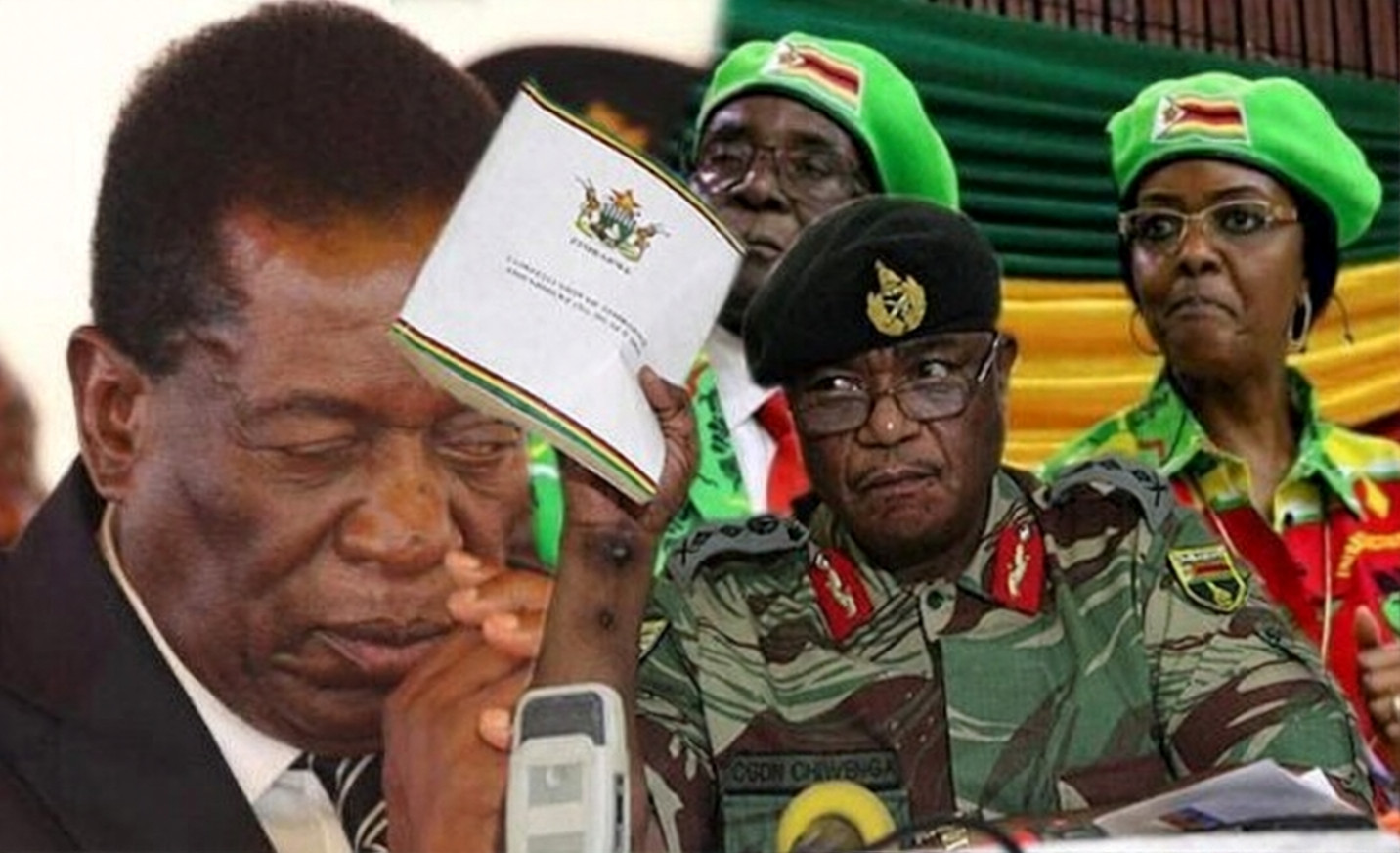
The political atmosphere in Zimbabwe has reached a boiling point as senior military figures have broken their silence, issuing an unprecedented public warning that has left the ruling ZANU PF party in a state of high anxiety. In a move that mirrors the tense days leading up to the November 2017 military intervention which toppled the late Robert Mugabe, a prominent retired general has declared that the Zimbabwe Defence Forces (ZDF) are “watching” the current political process and will not hesitate to act if the ruling party itself becomes a “security threat”.
Retired Air Marshal Henry Muchena, a veteran of the liberation struggle with over 50 years of membership in ZANU PF, has emerged as the face of a growing group of former generals who are openly challenging President Emmerson Mnangagwa’s controversial plan to extend his stay in power. The crux of the dispute lies in the proposed Constitutional Amendment Bill No. 3 (CAB3), a legislative manoeuvre designed to bypass the current two-term limit and grant Mnangagwa two additional years in office, effectively keeping him in power until 2030.
Muchena’s intervention is not merely a retired officer sharing an opinion; it carries the heavy weight of a military establishment that has historically seen itself as the ultimate arbiter of Zimbabwean politics. Speaking to Ignite Media, Muchena was unequivocal in his assessment of the situation. “When Zimbabweans agreed to the 2013 Constitution there are certain areas where they were very clear regards their amendments,” he stated, pointing out that ZANU PF’s own drafting team had gone “off course” by deciding that a referendum was not necessary for these changes.
The Retired Air Marshal’s most chilling statement, however, was directed at the current leadership’s attempt to manipulate the military’s constitutional role. “These opportunists have quickly moved to try and remove Section 212 of the Constitution which mandates the Zimbabwe Defence Forces (ZDF) to defend the Constitution and I think that is a way of trying to manipulate the constitutional process,” Muchena said. He then delivered the ultimate warning: “I do not want to believe that the ZDF are derelicting on their duties but they are watching the process and when ZANU PF itself becomes a security threat I want to believe they will advise accordingly.”
This reference to “advising accordingly” is a thinly veiled military euphemism that many in Zimbabwe interpret as a threat of intervention. In the 2017 coup, the military used similar language, claiming they were “targeting criminals around the President” to justify their move against Mugabe. Today, the “criminals” being identified by the military old guard are a “new crop of unelected leaders” who have allegedly seized control of ZANU PF through cash, vehicle donations, and co-option into the Central Committee.
Muchena’s critique of the party’s current state is scathing. “I have been a ZANU PF member for well over half a century and I have believed in the principles for what it was created but of late ZANU PF has a new crop of leaders that seem to believe that leadership can be bought using money,” he lamented. He described a party that has lost its way, where “the use of influence by unelected leaders within ZANU PF became overwhelming.” He argued that this influence could only be curtailed if the party “goes back to its basic principles and hands over power to the people.”
Within days, tanks were on the streets of Harare, and Mugabe was under house arrest. Today, Chiwenga is the First Vice President, and he is widely believed to be the leader of the faction within ZANU PF that is most vehemently opposed to the “ED2030” campaign.
Sources within the corridors of power suggest that the rift between Mnangagwa and Chiwenga has never been wider. While Mnangagwa’s loyalists are pushing “Resolution No. 1″—a party resolution that demands the immediate implementation of the term extension—Chiwenga’s camp is reportedly insisting on the sanctity of the 2013 Constitution. The Vice President is said to be against the CAB3 plot, viewing it as a betrayal of the transition agreement that brought Mnangagwa to power in the first place.
The “ED2030” campaign, with its slogan “2030 ndeya Emmerson” (2030 belongs to Emmerson), has become a lightning rod for discontent. Public hearings on CAB3 have been marred by violence and reports of abductions, as state agents and ZANU PF youths reportedly clash with citizens who are demanding their right to a referendum. Muchena’s insistence that “Chapter 4 of the Constitution is clear; a referendum is needed if there is any amendment to that Chapter” aligns him with the growing chorus of civil society and opposition voices who see the bill as a “constitutional coup.”
The military’s internal dynamics are also shifting. While some junior officers may be lured by the promises of the “new crop” of leaders, the senior command—many of whom are war veterans like Muchena—remain deeply suspicious of any move that undermines the traditional power structures of the party. The attempt to remove Section 212, as Muchena highlighted, is seen as a direct attack on the military’s institutional power. If the ZDF is no longer mandated to “defend the Constitution,” their ability to intervene in political crises would be legally curtailed—a prospect the generals are unlikely to accept.
What exactly constitutes a “security threat” in the eyes of the military? In 2017, it was the “instability” caused by the factional fights within ZANU PF and the perceived threat to the liberation legacy. Today, the “threat” could be defined as the potential for widespread civil unrest if the constitution is amended without public consent, or the total collapse of the party’s traditional principles under the weight of “bought” leadership.
The stakes could not be higher. Zimbabwe is already grappling with a fragile economy and the introduction of a new currency, the ZiG, which has yet to gain full public confidence. A political crisis of this magnitude could derail any hopes of economic recovery. The international community is also watching closely, with many fearing that another military intervention would further isolate Zimbabwe and undo the modest diplomatic gains made since 2017.
Behind closed doors, the game of political brinkmanship is reaching its climax. Mnangagwa appears determined to push through the amendments, relying on his control of the party machinery and the “unelected leaders” Muchena described. However, the military’s public warning suggests that the President may have overplayed his hand. The phrase “the army is watching” is a reminder that in Zimbabwe, power does not just flow from the ballot box—it also flows from the barracks.
As the nation holds its breath, the question remains: Is this merely a calculated warning shot to force Mnangagwa to the negotiating table, or are we witnessing the early stages of another military-led transition? Muchena’s call for the party to “hand over power to the people” through a referendum is a demand for legitimacy that the current administration is struggling to provide.
The historical context of military involvement in Zimbabwe is one of intervention at critical junctures. From the liberation struggle to the 2008 election crisis and the 2017 coup, the ZDF has always been the silent—and sometimes not so silent—partner in ZANU PF’s rule. By threatening to “advise accordingly” if the party becomes a security threat, the generals are reasserting their role as the ultimate guardians of the state, even if it means moving against their own civilian leaders.
The “opportunists” Muchena spoke of may have underestimated the depth of the military’s commitment to its constitutional mandate—or at least its interpretation of it. If ZANU PF continues on its current path, ignoring the warnings from its own veteran generals and the demands of the people for a referendum, it may find itself facing a repeat of history. The “ED2030” plot, intended to secure Mnangagwa’s future, might instead become the catalyst for his downfall.
In the streets of Harare and Bulawayo, the tension is palpable. People talk in hushed tones about the “generals’ letter” and Muchena’s interview. They remember the tanks, the soldiers’ selfies, and the hope that accompanied Mugabe’s exit. But they also remember the disappointment that followed. If another intervention is brewing, the people of Zimbabwe are left wondering if it will truly bring the “maturity” Muchena hoped for in 2017, or if it will simply be another chapter in the long history of military-backed rule.
For now, the military flexes its muscles through the words of its retired elite. But as Muchena himself said, they are not just talking; they are watching. And in the high-stakes world of Zimbabwean politics, when the army starts watching, the politicians should start worrying. The countdown to 2030 has begun, but whether it will be Emmerson Mnangagwa or a military-backed successor who reaches the finish line is a question that only the coming months—and perhaps the tanks—will answer.
The tragedy of Zimbabwe’s democracy is that it remains so fragile that the words of a retired general can overshadow the voices of millions of citizens. Yet, in the current climate, Muchena’s warning may be the only thing standing between the status quo and a total constitutional overhaul. Whether he is acting as a lone wolf or as a messenger for a broader military consensus remains to be seen, but his words have undeniably shifted the political landscape.
As ZANU PF prepares for its next move, it must weigh the benefits of two more years in power against the risk of losing everything. The military has made its position clear: the constitution is not a plaything for “opportunists,” and the “basic principles” of the party must be respected. If the ruling elite ignores this warning, they do so at their own peril. The nation remains on edge, waiting to see if the “advice” from the barracks will once again change the course of Zimbabwe’s history.