


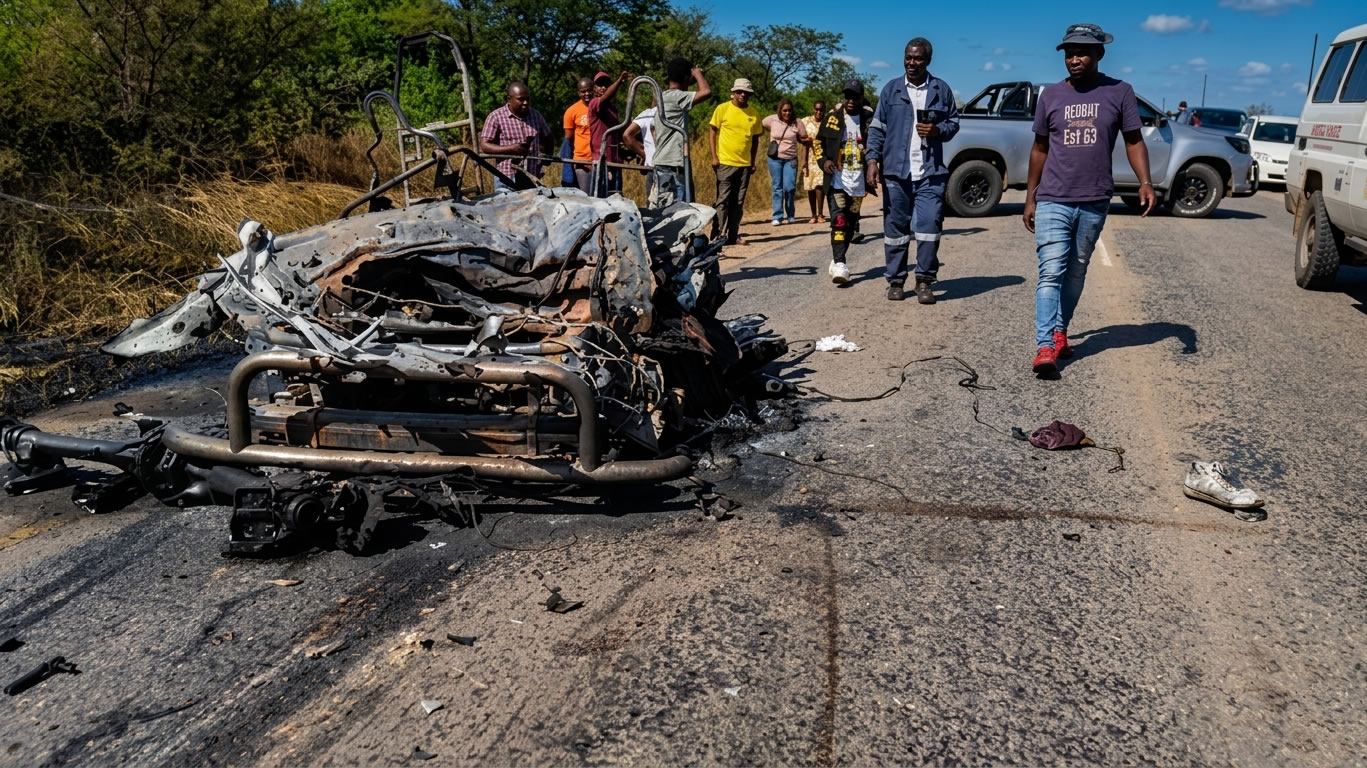
FIERY DEATH TRAP: The Hidden Mechanical Secret Behind the Latest Kombi Horror!
The recent tragedy involving a minibus kombi catching fire and claiming several lives has left the nation in mourning. But was it just a “freak accident,” or is there a darker, more systemic issue at play? Our investigative team went undercover to inspect the “backyard garages” where many of these commuter omnibuses are serviced. What we found is a terrifying culture of “shortcuts” and “make-do” repairs that turn these vehicles into rolling tinderboxes.
The Zimbabwe Republic Police confirmed the grim reality in a brief but devastating statement: “The ZRP reports the death of +/- 18 people when a kombi exploded into fire between Chipangali and Gwanda tollgate along Bulawayo-Beitbridge Road”. As families grapple with the loss of loved ones burnt beyond recognition, the pressing question remains: why are these vehicles turning into fiery death traps?
To understand the anatomy of these disasters, one must look beyond the charred remains of the vehicles and delve into the murky world of unregulated maintenance. Our undercover investigation into the “backyard garages” scattered across the region revealed a chilling reality. These makeshift workshops, often operating without oversight, are the primary service centres for many commuter omnibuses. Here, the priority is not passenger safety, but rather keeping the vehicles on the road at the lowest possible cost.
We simplify the complex mechanical failures that lead to these infernos. The most glaring issue is the use of substandard “grey market” spare parts. Industry experts have long warned about the dangers of these unauthorised imports. As one observer noted, “Vehicles imported through unauthorised channels may well lack crucial safety features such as airbags, ABS brakes and proper crash protection”.
When operators replace worn-out components with cheap, uncertified alternatives, they compromise the structural and mechanical integrity of the entire vehicle.
Furthermore, our investigation uncovered a terrifying culture of “shortcuts” and “make-do” repairs. Electrical systems, which are vital for the safe operation of modern vehicles, are frequently tampered with. Bypassed electrical fuses are a common sight. Instead of replacing a blown fuse—a critical safety mechanism designed to prevent electrical fires—mechanics often use pieces of wire to bridge the connection. This reckless practice allows electrical surges to overheat the wiring, turning the vehicle into a ticking time bomb.
Another significant factor contributing to these fires is the illegal siphoning and storage of fuel. In a desperate bid to cut costs or profit from the black market, some operators resort to carrying extra fuel in unapproved containers within the passenger cabin. This highly volatile cargo significantly increases the risk of a catastrophic fire in the event of a collision or even a minor spark. The combination of bypassed electrical systems and illicit fuel storage creates a perfect storm for disaster.
Why do these fires always seem to start under the driver’s seat? We reveal the hidden design flaws in popular imported models that are being ignored. In many minibus taxis, particularly the widely used Toyota Hiace and Quantum models, the engine is located directly beneath the front seats. This configuration, while space-efficient, places the fuel lines and critical engine components in close proximity to the passenger cabin. Over time, the intense heat and vibration from the engine can cause these fuel lines to degrade and leak.
When a fuel line leaks in this confined space, the highly flammable liquid can easily come into contact with hot engine parts or faulty electrical wiring. The result is an instantaneous and ferocious fire that quickly engulfs the front of the vehicle, trapping the driver and passengers. Safety advocates have repeatedly highlighted this vulnerability, advising operators: “Regularly replace your fuel lines etc as that is the biggest cause. Frequent maintenance is the key to preventing fires”. Yet, this crucial advice is routinely ignored in the pursuit of profit.
This article isn’t just about the fire; it’s about the conspiracy of silence between corrupt vehicle inspectors and desperate operators. How do these rolling tinderboxes continue to pass safety inspections and remain on the roads? The answer lies in a deeply entrenched system of bribery and corruption. Unscrupulous operators often pay off inspectors to turn a blind eye to glaring mechanical faults. This unholy alliance ensures that unroadworthy vehicles continue to operate, placing the lives of countless commuters at risk every single day.
The authorities have promised action, stating, “Investigations into the cause of the fire are underway, authorities said, adding that more details will be released in due course”. However, for the families who never saw their loved ones again, these promises ring hollow. What is needed is not just an investigation into a single incident, but a comprehensive overhaul of the entire public transport regulatory framework.
In the meantime, commuters must take their safety into their own hands. We provide a “survival guide” for passengers, teaching them how to spot a “death trap” before they board.
|
Warning Sign
|
What to Look For
|
Why It Matters
|
|
Smell of Fuel
|
A strong, persistent odour of petrol or diesel inside the cabin.
|
Indicates a potential fuel leak, often from degraded lines under the seats.
|
|
Exposed Wiring
|
Loose, taped, or hanging wires, especially near the dashboard or steering column.
|
Suggests bypassed fuses or amateur electrical repairs, a major fire risk.
|
|
Unusual Noises
|
Loud rattling, grinding, or hissing sounds coming from the engine compartment.
|
Points to severe mechanical neglect and potential imminent failure.
|
|
Illicit Cargo
|
Unmarked plastic containers or jerrycans stored inside the vehicle.
|
Often used for illegal fuel storage, turning the kombi into a mobile bomb.
|
|
Poor Overall Condition
|
Bald tyres, broken windows, and heavily rusted bodywork.
|
A general indicator that the operator neglects essential maintenance and safety standards.
|