


A Golden Handshake for Parliament? Chivayo’s $3.6 Million Pledge Raises Eyebrows Ahead of Crucial Vote
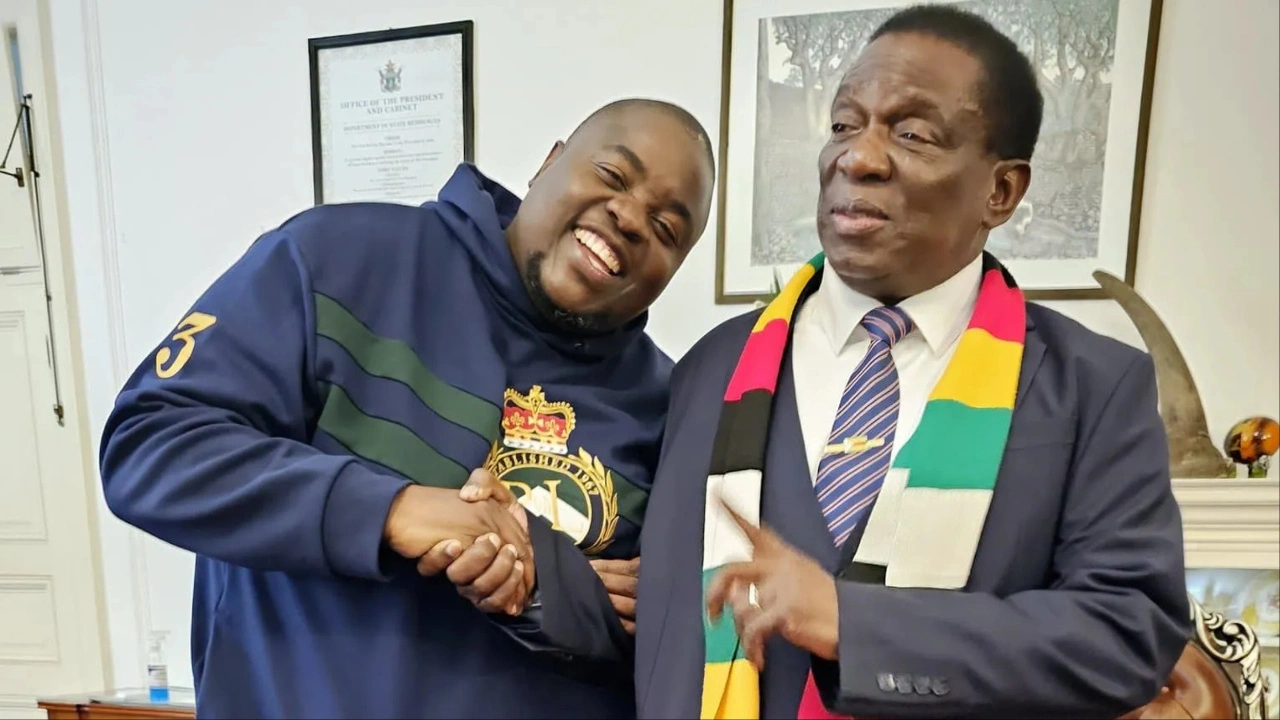
HARARE – In a move that has ignited a fierce debate across Zimbabwe, controversial businessman Wicknell Chivayo has publicly announced a staggering donation of US$3.6 million to all 360 members of parliament and senators. The flamboyant entrepreneur claims this generous gesture has received the personal imprimatur of President Emmerson Mnangagwa, a revelation that has only intensified scrutiny of the timing and intent behind the unprecedented offering.
The disclosure, made on Zimbabwe’s 46th Independence Day, April 18, 2026, comes at a particularly sensitive juncture for the nation’s political landscape. Legislators are poised to cast their votes on a contentious constitutional amendment bill, widely perceived as a mechanism to extend the President’s term in office. Critics argue that Chivayo’s donation, amounting to US$10,000 for each MP and senator, could be seen as a thinly veiled attempt to influence this pivotal vote, raising profound questions about democratic integrity and governance in Zimbabwe.
The Anatomy of a Controversial Donation
Chivayo, a figure whose wealth has largely been amassed through lucrative government contracts, detailed his plans in a lengthy social media statement. He affirmed that the funds would be handed over to the Speaker of Parliament, Jacob Mudenda, in the coming week. Each of the 360 members of the bicameral legislature – comprising both the National Assembly and the Senate – is earmarked to receive a sum of $10,000. The stated purpose of these funds is for “constituency development,” a broad categorisation that has done little to quell suspicions.
What makes this donation particularly remarkable, and indeed alarming to many observers, is a specific caveat attached to the offer. Chivayo explicitly stated that any Honourable MP unwilling to accept the funds is “at liberty to do so – that’s democracy.” However, he swiftly followed this with a pointed declaration that if an MP were to decline, he would identify “a competent and pro-development individual from your constituency, whether a former MP, a shadow MP, or aspiring leader, who can take up the responsibility of driving this development forward.” This statement has been widely interpreted as a direct threat, designed to exert immense political pressure on legislators, compelling them to accept the funds lest they risk empowering a political rival in their own constituency.
A Bill to Extend Power: Constitutional Amendment (No. 3)
The backdrop to Chivayo’s largesse is the ongoing deliberation on the Constitutional Amendment (No. 3) Bill. This legislative proposal has been met with fierce opposition from civil society groups and opposition figures alike, who argue vehemently that it is designed to entrench executive power and extend President Mnangagwa’s tenure beyond constitutionally prescribed limits. The bill proposes significant changes, including extending presidential and parliamentary terms from five to seven years, a move that would effectively prolong President Mnangagwa’s time in office until 2030 or potentially even further.
Organisations such as the Defend the Constitution Platform, the Constitutional Defenders Forum, and the National Constitutional Assembly have been at the forefront of criticising the bill. They contend that the process surrounding its passage has been driven by partisan interests rather than genuine public consultation. Indeed, critics formally withdrew from parliamentary hearings on the bill, citing concerns over the lack of authentic engagement and the predetermined nature of the legislative outcome. The Zimbabwe Human Rights Commission has also highlighted critical tensions between reform and executive consolidation within the bill.
Chivayo, notably, refrained from directly referencing the amendment bill in his public statement regarding the donation. However, the proximity of his announcement to the crucial parliamentary vote has led many to draw an undeniable link between the two events. The perception is that the donation serves as a strategic “sweetener,” intended to secure the necessary votes for the bill’s passage.
Wicknell Chivayo: A History of High-Stakes Deals and Close Ties
Wicknell Chivayo, often referred to as “Sir Wicknell” by his followers, is a figure synonymous with controversy and ostentatious displays of wealth. His rise to prominence has been inextricably linked to his close association with the ruling ZANU-PF party and, more specifically, with President Emmerson Mnangagwa. Chivayo has frequently been seen at State House and has publicly endorsed calls for Mnangagwa to extend his presidency. He often refers to the President as “the principal,” a term he used again in connection with this latest donation, implying the President’s implicit endorsement of the gesture.
Chivayo’s business empire has flourished primarily through government contracts, many of which have been plagued by allegations of corruption and mismanagement. One of the most enduring and high-profile scandals associated with him is the Gwanda Solar Project. This project, initiated in 2015, saw Intratrek Zimbabwe, a company led by Chivayo, awarded a lucrative contract. Despite over $5 million being paid out, the project remains largely incomplete more than a decade later, with minimal progress on the ground. The stalled project has been a source of national embarrassment and significant financial loss for the state, yet remarkably, the government has reportedly expressed a desire for Intratrek to resume work to avoid costly legal battles.
More recently, Chivayo has been embroiled in the Ren-Form/ZEC scandal, which surfaced around 2023-2024. This involved allegations of price gouging and fraud in the procurement of election materials for the 2023 general elections, implicating a South African printing firm, Ren-Form, and the Zimbabwe Electoral Commission (ZEC). The Zimbabwe Anti-Corruption Commission (ZACC) launched an inquiry into Chivayo in 2024 concerning these allegations. However, in a development that drew considerable criticism, ZACC effectively cleared Chivayo and ZEC in December 2025, stating there was insufficient evidence of wrongdoing in the election procurement probe. This outcome has led many to question the independence and effectiveness of the anti-corruption body.
Further complicating Chivayo’s public image are his strained relationships with former business partners, Mike Chimombe and Moses Mpofu. The trio were reportedly involved in aspects of the ZEC deal before a public fallout. Mpofu and Chimombe subsequently faced legal troubles, including arrests and jail time in early 2026, linked to a separate US$7 million goats tender scandal and other issues. Chivayo, however, has largely remained untouched by these legal entanglements.
Beyond business, Chivayo’s personal life has also made headlines. In March 2026, he agreed to a US$5 million divorce payout to his ex-wife, Sonja Madzikanda, following a high-profile and acrimonious separation. He also faced allegations in 2025-2026 regarding the possession of Kenyan travel documents, which he initially denied.
Implications for Zimbabwean Democracy
The confluence of Chivayo’s controversial past, his close ties to the President, and the timing of his substantial donation has cast a long shadow over Zimbabwe’s democratic processes. The offer of $10,000 to each legislator, coupled with the implicit threat of empowering rivals for those who refuse, creates an environment ripe for undue influence. It raises serious concerns about the autonomy of parliamentarians and their ability to vote according to their conscience and the will of their constituents, rather than succumbing to financial incentives or political intimidation.
Civil society organisations have consistently warned that the Constitutional Amendment (No. 3) Bill represents a significant step towards authoritarianism, consolidating power in the executive branch and eroding democratic checks and balances. The perceived link between Chivayo’s donation and the bill’s passage only exacerbates these fears, suggesting a transactional approach to governance where legislative outcomes can be bought rather than debated and decided through legitimate democratic means.
The President’s Office, as noted by ZimLive, had not responded to requests for comment regarding Chivayo’s announcement at the time of publication. This silence, in the face of such a high-profile and controversial declaration, is likely to be interpreted by many as tacit approval, further fuelling public cynicism.
In a nation grappling with economic hardship and persistent questions about corruption, Chivayo’s latest move serves as a stark reminder of the complex interplay between wealth, power, and politics. It underscores the challenges faced by those striving for transparency and accountability in Zimbabwe’s governance. As the parliamentary vote on the Constitutional Amendment (No. 3) Bill draws nearer, all eyes will be on the legislators, and the enduring legacy of this $3.6 million pledge.