


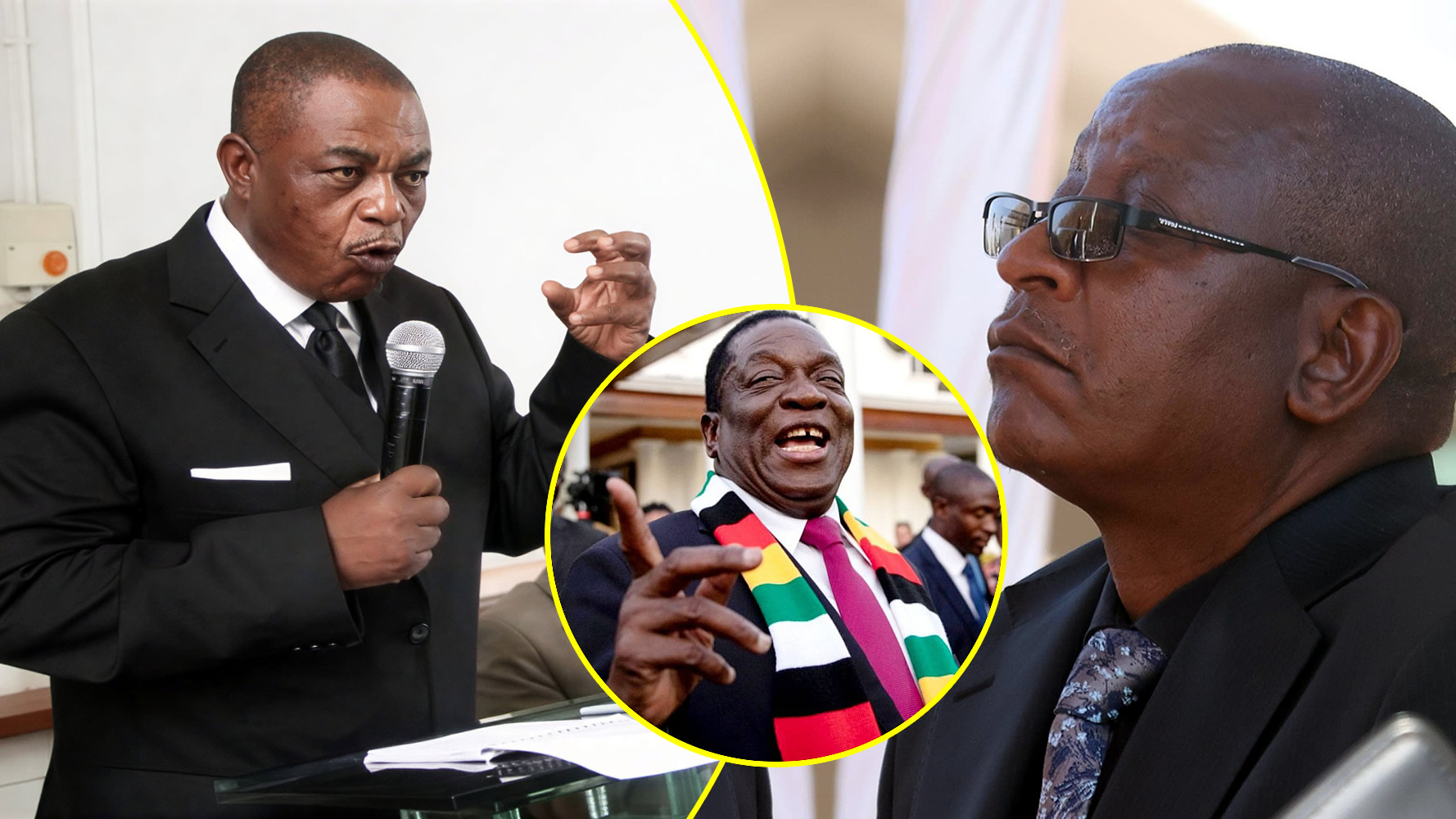
HARARE — A palpable tension hangs over the Zimbabwean capital, a heavy atmosphere charged with political intrigue. In the corridors of power and the secluded residences of the elite, murmurs of a “slow coup” have become a persistent echo. At the heart of this growing unease is the “2030 Agenda,” a controversial political strategy designed to keep President Emmerson Mnangagwa in power beyond his constitutional term. However, this time, the opposition is not merely from civil society or the fragmented political parties; it emanates from within the very core of the ruling establishment: the military, led by Vice President General (Retired) Constantino Chiwenga.
This internal struggle has split the ruling ZANU-PF party and its security forces into two distinct camps. On one side are the President’s loyalists, who argue that his “Vision 2030” economic plan requires his continued leadership to succeed. On the other side is a powerful group of military and intelligence figures who see the term extension as a direct threat to their own political ambitions and the country’s long-term stability. Reports suggest that key military figures, such as General Anselem Sanyatwe, Commander of the Zimbabwe National Army, and Christopher Mutsvangwa, the ZANU-PF spokesperson, are deeply involved in these factional disputes.
The resistance to the 2030 Agenda is also gaining traction among war veterans, a group traditionally loyal to ZANU-PF. Blessed Geza, a war veteran known as ” Cde Bombshell,” recently died in exile in South Africa. But before his sudden death, Geza had launched a strong verbal attack against the President. Geza and other veterans argued that pushing for the 2030 Agenda goes against the principles of the liberation struggle. Their dissent is a significant blow to Mnangagwa, indicating a loss of control over the party’s core ideology. Meanwhile, another war veteran,
The tension became openly hostile during recent public hearings on Constitutional Amendment Bill No. 3. At a sports complex in Harare, what was meant to be a democratic consultation quickly turned into outright chaos. Doug Coltart, a well-known human rights lawyer, found himself caught in the middle. As he tried to leave the complex, protesting against the clear intimidation of participants, he was surrounded, pushed, and slapped by individuals shouting slogans in favour of the presidential term extension. His mobile phone was taken, and his glasses were broken. This incident was not a random act; it was a clear demonstration of the high stakes involved in this political power play.
Constitutional Amendment Bill No. 3 is the legal tool through which Mnangagwa’s supporters, often called the “ED2030” group, aim to bypass the two-term limit. The proposed changes are far-reaching and, to many, deeply concerning. They include changing the presidential election from a popular vote to one decided by Parliament, and extending the terms of both the President and lawmakers from five to seven years. If these amendments are passed, the 83-year-old Mnangagwa could remain in office until 2030, effectively adding two years to his current term, which ends in 2028.
For General Chiwenga, this proposed extension represents a profound betrayal. To fully grasp the depth of this disagreement, one must recall the events of November 2017. It was Chiwenga, then the Commander of the Zimbabwe Defence Forces, who led the military intervention that removed the long-serving Robert Mugabe from power. The unspoken agreement at that time was clear: Mnangagwa would serve two terms, after which his military backer would take over. Now, as Mnangagwa’s allies push for an extension, that promise is falling apart, threatening to destabilise the nation once more.
Meanwhile, the President’s recent activities have been quite revealing. A planned visit to Chiredzi was mysteriously postponed several times in March 2026. While official explanations cited “logistical challenges,” the reality on the ground suggested a more troubling reason. The postponement coincided with a series of major corruption scandals involving senior ZANU-PF politicians and influential land barons in the area. The Zimbabwe Anti-Corruption Commission (ZACC) has since confirmed the arrests of several high-ranking officials in Chiredzi. This suggests the President’s visit was cancelled to avoid being publicly associated with local leaders entangled in corruption.
The ordinary Zimbabwean observes this unfolding drama with a mix of weariness and apprehension. The country’s economic future is closely tied to this power struggle. While the political elite battle for control, most of the population continues to struggle with very high inflation, decaying infrastructure, and a lack of essential services. The “2030 Agenda” is widely seen as a distraction from the urgent need for national recovery.
Tendai Biti, leader of the Constitutional Defenders Forum and a former Finance Minister, has been a strong opponent of the amendments. Recently released on bail after being detained for holding an unauthorised meeting to oppose the bill, Biti’s observations of the public hearings were damning. He noted that at several locations across the country, “critics of the amendments were drowned out by boos, heckling and intimidation, or denied the chance to speak.” This suppression of opposing views, he argues, clearly shows that the government fears the public’s true feelings.
The government, however, has denied accusations of suppressing dissent. Officials maintain that the reforms are being carried out within the legal framework and that the public hearings are a genuine effort to understand the nation’s mood. President Mnangagwa himself has taken a somewhat ambiguous public stance. While he has publicly stated that he will step down at the end of his second term in 2028, he has done nothing to stop the growing calls within his party for an extension. This “wait and see” approach is seen by many as a calculated move to assess the strength of the opposition before making a final decision.
The role of the intelligence services in this conflict cannot be ignored. There are ongoing reports of a division between the Central Intelligence Organisation (CIO) and the military intelligence wing. While the CIO is generally considered more loyal to the President, the military intelligence is believed to be firmly on Chiwenga’s side. This split within the security services adds a dangerous layer of complexity, raising the possibility of a direct confrontation between different state branches.
The history of ZANU-PF’s succession battles is marked by ruthlessness and betrayal. Robert Mugabe maintained power for nearly four decades by pitting different factions against each other, only to be eventually overthrown by the very forces he had helped create. Mnangagwa, who served as Mugabe’s chief enforcer for much of that period, is now using a similar tactic. However, the situation has changed. The military, having once experienced the power of intervention, is unlikely to remain passive while its interests are ignored.
As the public hearings conclude and the bill moves towards a vote in Parliament, the tension in Zimbabwe is intense. The “2030 Agenda” has become a crucial test for the country’s democracy and its ability to manage a peaceful transfer of power. For General Chiwenga and his allies, their resistance is not just about personal ambition; it is about protecting the legacy of the 2017 intervention and ensuring that the promises made then are not forgotten in the pursuit of absolute power.
The international community is also watching closely. Regional bodies like SADC and the African Union have been alerted by various civil society groups, who warn that any instability in Zimbabwe could have significant consequences for the entire region. The “2030 Agenda” is no longer just a domestic issue; it is a potential flashpoint that could reshape the political landscape of Southern Africa.
Ultimately, the battle for 2030 is a battle for the very soul of Zimbabwe. It is a contest between those who wish to establish a system of personal rule and those who believe that the country’s future depends on upholding constitutional principles and the rule of law. As this high-stakes political chess game continues, the only certainty is that the decisions made in the coming months will determine the nation’s destiny for years to come.
The “No to 2030” sentiment is growing, and with it, the rift between the President and his Vice President is becoming impossible to overlook. Whether this will lead to a peaceful resolution or a more dramatic confrontation remains to be seen. But for now, the echoes of that “slow coup” continue to reverberate, a haunting reminder that in the world of Zimbabwean politics, the past is never truly dead; it is not even past.
|
Key Figures in the 2030 Power Struggle
|
Role/Position
|
Stance on 2030 Agenda
|
|
Emmerson Mnangagwa
|
President of Zimbabwe
|
Publicly neutral, but allies are pushing for extension
|
|
Constantino Chiwenga
|
Vice President
|
Leading the internal resistance against extension
|
|
Doug Coltart
|
Human Rights Lawyer
|
Vocal critic, victim of hearing violence
|
|
Tendai Biti
|
Constitutional Defenders Forum
|
Leading civil society opposition
|
|
General Anselem Sanyatwe
|
Commander of the Army
|
Allegedly aligned with the Chiwenga faction
|
|
Blessed Geza (“Bombshell”)
|
War Veteran
|
Opposed, viewing it as a betrayal of struggle values
|
The path to 2030 is full of dangers, and as the nation stands at this critical juncture, the world waits to see which direction Zimbabwe will ultimately take. The “2030 Agenda” may be Emmerson Mnangagwa’s ultimate gamble, but it is a gamble that could cost him, and the country, everything.