


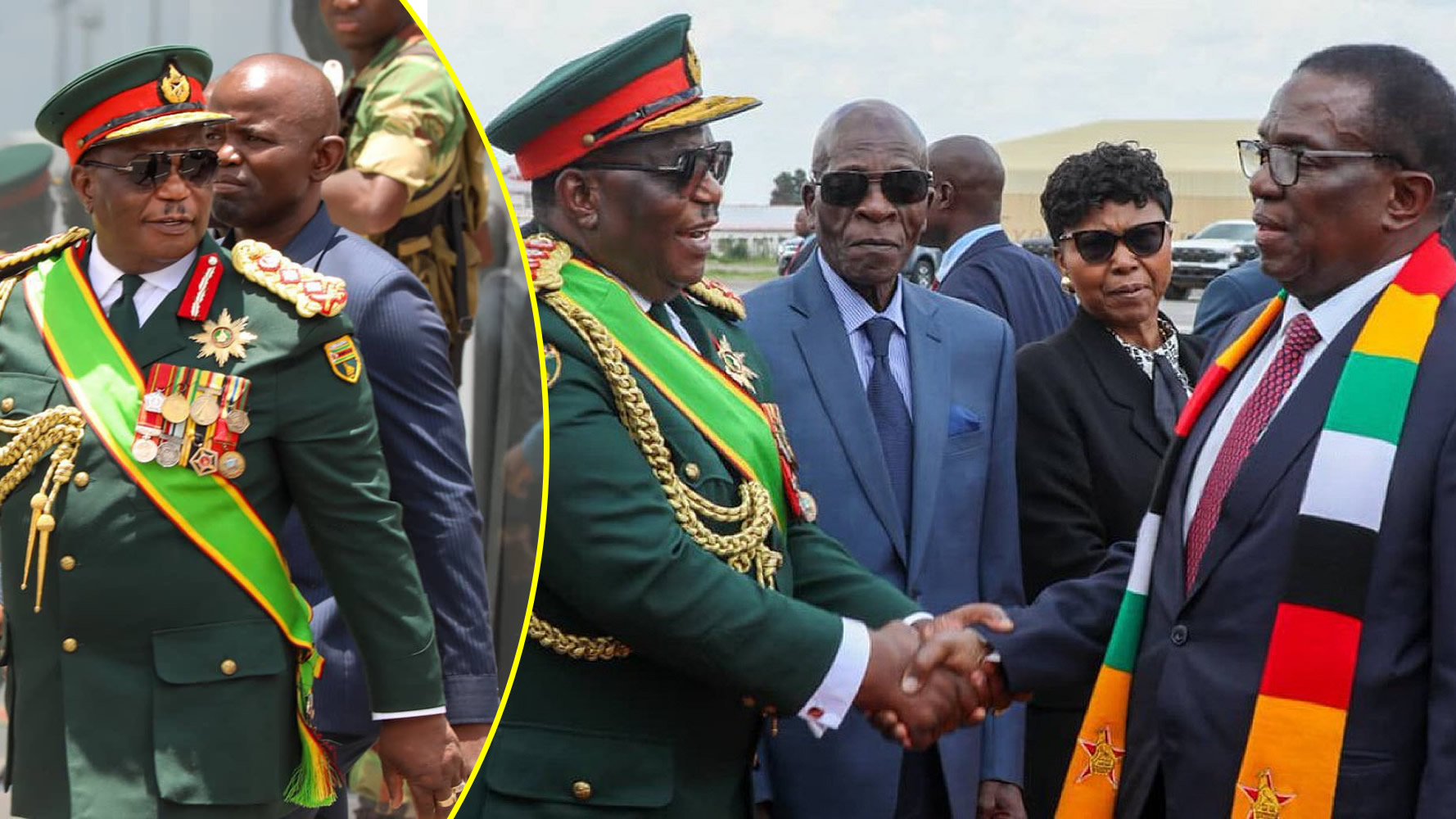
Rumours of a “3rd Chimurenga” and a “Move on Chiwenga” have begun to circulate in the dark corners of Zimbabwean politics. Is there any truth to the whispers of a “slow coup” within the ruling party? This investigative report analyses the body language, the shifting alliances, and the strategic appointments that suggest a massive power struggle is underway. We simplify the internal dynamics of ZANU-PF, explaining the “Lacoste” vs. “General” factions in a way that anyone can understand.
Why was there a move to “check” Vice President Chiwenga’s influence? And how does the recent “donation” to MPs fit into this power play? We look at the historical context of Zimbabwean coups and ask if history is about to repeat itself. This story isn’t just about politics; it’s about the very survival of the current administration. We go beyond the “unity” public appearances to show you the cracks that are beginning to widen. If you want to know who is really in charge in Harare, this is the story you cannot afford to miss.
The Battle for 2030: A Constitutional Conundrum
The political landscape of Zimbabwe is currently dominated by a fierce succession battle between President Emmerson Mnangagwa and his Vice President, General (Retired) Constantino Chiwenga. At the heart of this escalating conflict is Constitutional Amendment Bill No. 3 (CAB3), a legislative proposal that seeks to extend President Mnangagwa’s rule beyond his constitutionally mandated second term in 2028, pushing it to 2030. This move has ignited a profound debate within the ruling ZANU-PF party and across the nation, exposing deep fissures within the political elite.
Vice President Chiwenga has emerged as a vocal opponent of CAB3, framing his resistance around the core principles of the liberation struggle. He has embarked on a renewed narrative-framing campaign, asserting that the reason people fought for Zimbabwe’s independence was primarily for land and the sacred principle of “one-man, one-vote.” This stance directly challenges Mnangagwa’s proposed constitutional changes, which Chiwenga views as an affront to these foundational tenets. The Vice President insists that any amendments to presidential term limits must be subjected to a national referendum, a demand that has been hotly contested within ZANU-PF circles.
ZANU-PF, backed by President Mnangagwa, argues that a referendum is unnecessary because the proposed changes do not remove term limits but merely alter the electoral cycle. However, opposition parties and civil society organisations vehemently disagree, contending that elongating Mnangagwa’s tenure requires direct public endorsement through a referendum. This intense debate over CAB3 has triggered significant controversy, highlighting a fundamental disagreement on the interpretation of democratic principles and the legacy of the liberation struggle.
The ‘One Man One Vote’ Principle: A Point of Contention
The debate extends to whether electing a president through parliament, as proposed by Mnangagwa’s camp, violates the “one man one vote” principle. While there is no dispute that the Zimbabwean struggle was fought for land and unqualified franchise, opinions diverge sharply on the implications of an indirect presidential election system. Some argue that such a system reduces voters to mere spectators in the election of their president, thereby undermining the democratic essence of “one man one vote.” Others contend that it does not, as changing the electoral system would not abolish universal adult suffrage. They argue that it merely deepens voters’ right to elect Members of Parliament who, in turn, vote for the President, citing examples like Botswana and South Africa where similar systems are in place. This nuanced debate has deeply divided national opinion, further exacerbating the tensions between the two political heavyweights.
President Mnangagwa, with the backing of ZANU-PF and the government, is determined to extend his rule beyond 2028 to 2030 and implement a series of changes aimed at revamping the political, electoral, and governance systems. A key aspect of these proposed changes is the shift from a direct presidential election system to one where the president is chosen through parliament. Historically, Zimbabwe, following its independence from Britain in 1980, elected its prime minister for a five-year term through parliament under the Lancaster House constitution. A ceremonial president was also elected by parliament for a renewable six-year term, a role famously held by the late Canaan Banana from 1980 until 1987. The constitution was later amended in 1987 to abolish the separate roles of President and Prime Minister, establishing an executive presidency under Robert Mugabe. This historical context adds another layer of complexity to the current debate, with Chiwenga’s faction viewing the proposed changes as a regressive step that undermines the democratic gains of the past.
Politburo Clashes: The Battleground Within
The internal struggle within ZANU-PF has frequently spilled into the Politburo, the party’s highest decision-making body outside of Congress. Recent meetings have been marked by fierce confrontations, laying bare the widening fracture within the ruling party’s inner circle. A particularly notable incident occurred recently, described by sources as a “fierce confrontation” between Vice President Chiwenga and State Security Minister Lovemore Matuke. The clash was reportedly triggered by Chiwenga’s insistence that any revision to presidential term limits must be put to a national referendum. Matuke, a staunch Mnangagwa loyalist, reportedly rounded on the Vice President, accusing unnamed individuals of “contradicting the party position.” Defence Minister Oppah Muchinguri and ZANU-PF Commissar Munyaradzi Machacha reportedly sided with Matuke, further isolating Chiwenga within the Politburo.
Further evidence of Chiwenga’s dissent emerged at the funeral of the late Kumbirai Kangai’s wife, where he invoked the principle of “one man one vote.” This public statement was widely interpreted as a veiled rebuke of the amendment drive and Mnangagwa’s “2030 agenda.” Chiwenga has previously characterised the “2030 agenda” – the push to keep Mnangagwa in power past his term limit – as an “assault on the values of the liberation struggle,” driven by individuals bent on “looting the country’s resources.” These strong words highlight the ideological battle being waged, with Chiwenga positioning himself as the guardian of the liberation struggle’s ideals against what he perceives as a betrayal of those principles for personal gain.
Cabinet Confrontations: ‘South Africa No Example At All’
The disagreements have not been confined to the Politburo but have also manifested in cabinet meetings. During discussions regarding the shift to an indirect presidential election system, Vice President Chiwenga reportedly told the Attorney General, in a moment of intense frustration, that “South Africa is no example at all.” This sharp retort came amidst arguments that Zimbabwe should emulate countries like South Africa and Botswana, which employ indirect presidential election systems. Chiwenga’s dismissal of these examples underscores his deep-seated opposition to any move that he believes undermines the direct democratic participation of the Zimbabwean populace in electing their leader.
The Tagwirei Factor: A New Power Broker?
Adding another layer of complexity to this already intricate power struggle is the controversial figure of Kudakwashe Tagwirei, a billionaire businessman and prominent ZANU-PF funder. Tagwirei’s growing influence and his perceived proximity to President Mnangagwa have become a significant point of contention, particularly for Vice President Chiwenga’s faction. Reports suggest that Mnangagwa has been actively pushing for Tagwirei to be co-opted into a policy role or even the powerful Central Committee, a move widely interpreted as an attempt to “block” or “neutralise” Chiwenga’s influence within the party.
The co-option of Tagwirei into the Central Committee became a flashpoint in August and September 2025. ZANU-PF’s Harare Province had recommended his inclusion, but Chiwenga reportedly blocked the move initially, citing “procedural irregularities” and expressing concerns that individuals were attempting to “buy” their way into the party. This resistance from Chiwenga highlighted his apprehension about the growing influence of moneyed interests within ZANU-PF and their potential to corrupt the party’s ideological foundations. Despite Chiwenga’s strong objections, the Politburo eventually endorsed the co-options, including Tagwirei, in October 2025. This outcome was widely seen as a significant defeat for Chiwenga and a clear indication of Mnangagwa’s ability to consolidate power and advance his agenda, even in the face of internal opposition. During these contentious discussions, Chiwenga reportedly warned that “the party is not for sale” and that co-opting “businessmen with questionable motives” into policy roles would fundamentally undermine the revolutionary character of ZANU-PF. This statement encapsulates the ideological chasm between the two factions, with Chiwenga advocating for a party rooted in liberation ideals and Mnangagwa seemingly embracing a more pragmatic, business-oriented approach.
Speculation is rife that Tagwirei is being groomed as a potential successor to Mnangagwa or as a key power broker who would safeguard the President’s interests beyond 2028. This prospect is viewed with deep suspicion and alarm by Chiwenga’s camp, who see it as a direct threat to their own political ambitions and the future direction of the party. The intertwining of business interests with political power, particularly through figures like Tagwirei, has become a central theme in the ongoing factional fight, with accusations of corruption and state capture frequently surfacing.
‘Move on Chiwenga’ and the Specter of a ‘3rd Chimurenga’
The phrase “Move on Chiwenga” has become a shorthand for a coordinated strategy by Mnangagwa’s loyalists to systematically diminish the Vice President’s influence within both the military and the party. This strategy reportedly involves a series of political manoeuvres, legislative changes (such as CAB3), and strategic appointments designed to isolate Chiwenga and pave the way for Mnangagwa’s extended rule. The “2030 agenda” is not merely a constitutional amendment but a broader political project aimed at securing Mnangagwa’s legacy and consolidating his power base.
In response to these perceived threats, some factions within the military and Chiwenga’s staunch supporters have begun to invoke the term “3rd Chimurenga.” This evocative phrase, referencing Zimbabwe’s liberation wars, is used to describe a potential uprising or a “correction” aimed at saving the party from what they term “capture” by Mnangagwa’s business associates, particularly Tagwirei. The use of such loaded terminology underscores the gravity of the situation and the belief among some that the very soul of ZANU-PF is at stake. There are whispers that these strategic “moves” are often plotted at significant locations, with “The Precabe Farm” (Mnangagwa’s farm) frequently cited as a hub for such clandestine political machinations.
The Military’s Role: A Shifting Allegiance?
The military, traditionally a powerful arbiter in Zimbabwean politics, remains a critical factor in this power struggle. Vice President Chiwenga, a former military commander who masterminded the 2017 coup that brought Mnangagwa to power, retains significant influence within the armed forces. Recent developments, such as General Matatu taking over the Zimbabwe Defence Forces (ZDF) command and Chiwenga’s occasional appearances in military uniform, have sparked intense speculation about the military’s current allegiance. Reports of Chiwenga holding “secret meetings” with military figures are closely monitored by state security, indicating the deep concern within Mnangagwa’s camp about potential military intervention or shifts in loyalty. The delicate balance of power within the military could ultimately determine the outcome of this high-stakes political contest.
Historical Echoes: Is History Repeating Itself?
The current political climate in Zimbabwe bears striking resemblances to past periods of intense factionalism and succession battles within ZANU-PF. The parallels with the events leading up to the 2017 coup, which saw Robert Mugabe ousted from power, are particularly unsettling for many observers. The strategic appointments, the shifting alliances, and the thinly veiled public disagreements all point to a familiar pattern of internal strife. The question on many minds is whether history is about to repeat itself, albeit with different protagonists.
Constitutional amendments have historically played a pivotal role in shaping Zimbabwe’s political structure. The 1987 Amendment (No. 7), for instance, fundamentally transformed the country from a parliamentary system to an executive presidency, centralising immense power in the hands of the president and weakening checks and balances. The proposed CAB3, with its aim to extend presidential terms and potentially alter the electoral system, is seen by critics as a similar attempt to further entrench executive power and create an “imperial presidency.” This historical context provides a critical lens through which to understand the current anxieties and the fierce resistance mounted by Chiwenga’s faction.
Conclusion: A Nation on Edge
The factional fight between President Mnangagwa and Vice President Chiwenga has undoubtedly reached fever-pitch levels. The struggle is not merely about personal ambition but encompasses fundamental disagreements over the future direction of ZANU-PF, the interpretation of the liberation struggle’s legacy, and the very nature of Zimbabwe’s democratic institutions. From the heated exchanges in the Politburo over CAB3 and the “one man one vote” principle, to the contentious co-option of Kudakwashe Tagwirei into the Central Committee, every political manoeuvre and public statement is scrutinised for its implications in this high-stakes power game.
The whispers of a “3rd Chimurenga” and the strategic “Move on Chiwenga” narrative underscore the profound instability simmering beneath the surface of Zimbabwean politics. The nation watches with bated breath as these two political titans vie for supremacy, their actions shaping not only the future of ZANU-PF but also the destiny of Zimbabwe. The cracks in the facade of unity are widening, revealing a deeply fractured political landscape where the question of who is truly in charge in Harare remains a matter of intense speculation and concern. The outcome of this struggle will undoubtedly have far-reaching consequences for the country’s political stability, economic trajectory, and democratic future.