


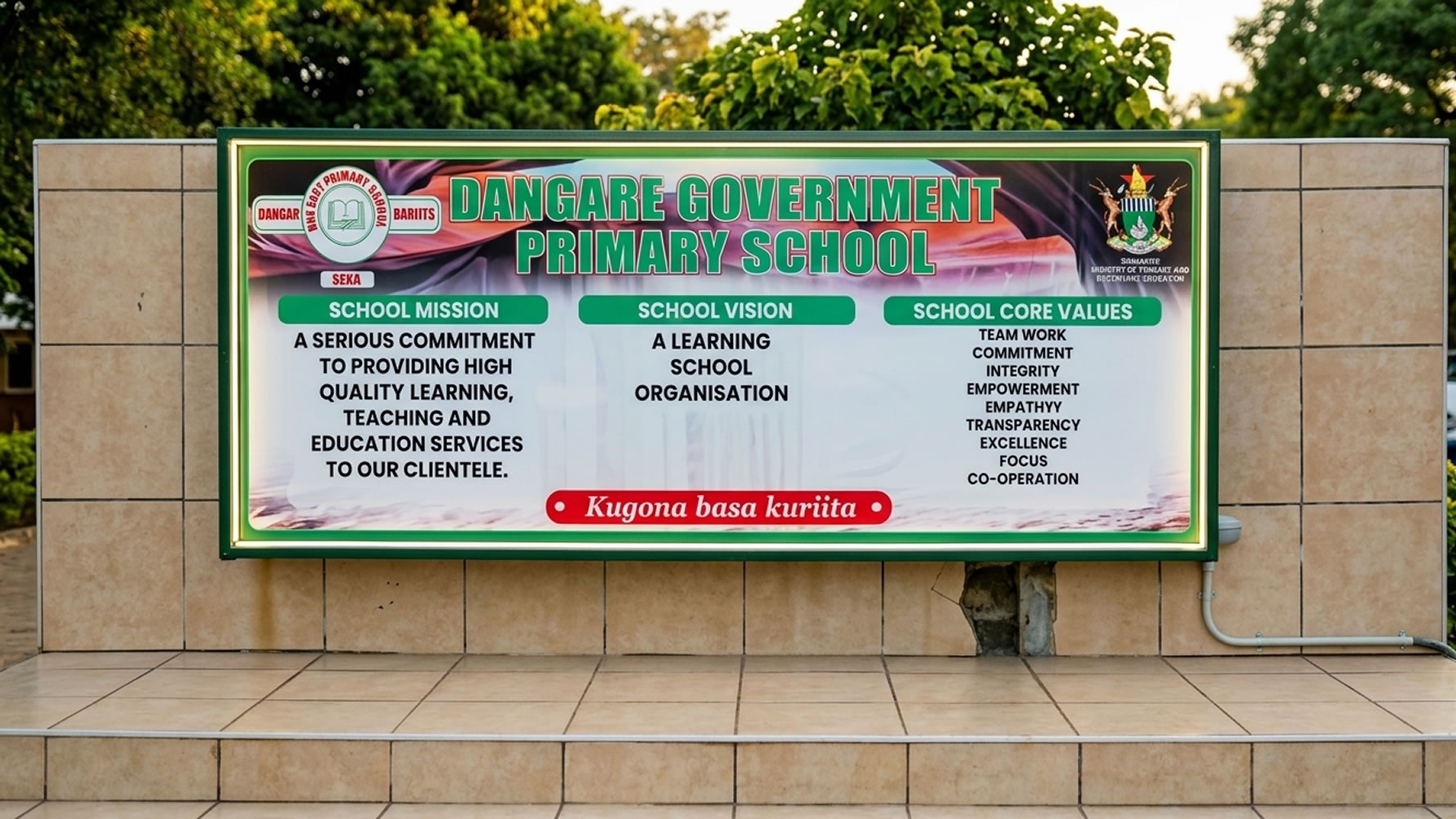
Mutare – The recent uproar at Dangare Primary School in Mutare is far more than a localised disagreement over a new vehicle; it is a stark illustration of a pervasive system of procurement corruption that has taken root within Zimbabwe’s education sector. While the school administration initially celebrated the acquisition of a new bus, parents swiftly began to question the exorbitant price tag, which appeared to defy all market logic. Allegations have surfaced suggesting the bus was purchased for a staggering US$220,000 – a figure that both investigators and industry experts contend is almost double the actual retail value for such a vehicle.
This unfolding narrative delves deep into the entrenched “middleman culture” prevalent in Zimbabwe, where well-connected individuals, often referred to as ‘tenderpreneurs’, are accused of inflating invoices to facilitate kickbacks to school heads and members of School Development Committees (SDCs). The scandal at Dangare Primary, much like similar controversies at Mafakela and Checheche Primary Schools, exposes a national crisis where the future of Zimbabwean children is seemingly being compromised for personal gain.
The Spark: A Mandatory Levy and Mounting Suspicion
The catalyst for the parents’ revolt at Dangare Primary was a mandatory US$25 “bus levy” imposed on each student. This seemingly small fee, when multiplied across the school’s enrolment, amounted to a significant sum, yet the transparency surrounding its utilisation was conspicuously absent. Parents, already grappling with economic hardships, grew increasingly suspicious of the school’s financial dealings, particularly concerning the bus purchase. Their collective discontent quickly escalated into demands for accountability and a thorough investigation into the procurement process.
This mirrors the situation at Mafakela Primary School, where parents similarly protested a compulsory US$25 bus levy. In that instance, the school had threatened to bar pupils from writing examinations if the levy remained unpaid, further inflaming tensions. The parents’ determination to uncover the truth at Mafakela led to the exposure of Vordim Trading, a Bulawayo-based company accused of manipulating tender systems, bribing school officials, and massively inflating bus prices.
Unravelling the Web: Vordim Trading and Inflated Prices
Investigations into these school bus scandals consistently point towards a pattern of inflated pricing and illicit financial transactions. At the heart of the alleged scheme, as revealed in the Mafakela case, is Vordim Trading. Sources alleged that Vordim Trading collaborates with SDCs to secure contracts, subsequently charging schools significantly inflated prices for buses. To finance these exorbitant purchases, schools are compelled to take out substantial bank loans, with the burden of high interest rates ultimately passed on to parents through additional levies.
One school official, speaking on condition of anonymity regarding a bus purchased from Vordim Trading, stated: “The landing price for the bus was between $205,000 and $210,000 including the comprehensive insurance. We pay between $30,000 and $35,000 per term to the bank, ours is a 2-year bank loan. Some schools took three-year bank loans.” This quote, reported by CITE, highlights the financial strain placed on schools and, by extension, on parents.
Reports filed with the Zimbabwe Anti-Corruption Commission (ZACC), which include emails seen by CITE, suggest that Vordim Trading acquires buses from China for approximately US$50,000 to US$60,000 and then resells them to schools for figures ranging from US$180,000 to US$200,000. This substantial mark-up, according to the ZACC report, is used to fund illegal facilitation fees and accumulate personal wealth. The report specifically mentions one of the company’s directors, Kenias Papiro, and his “lavish lifestyle,” which includes a “luxury residence in Hillside with a fleet of modern vehicles,” raising questions about the proportionality of his wealth to his declared income and public service background.
The Role of Procurement Agents and Shelf Companies
The narrative further examines the specific role of “procurement agents” who act as intermediaries between schools and suppliers. These individuals often operate through “shelf companies” – entities that exist primarily on paper – enabling them to circumvent traditional auditing processes and obscure the true beneficiaries of these inflated contracts. This lack of transparency creates an environment ripe for corruption, where accountability is easily evaded.
Such practices allow for the systematic siphoning of funds, leaving schools cash-strapped and parents burdened with levies that contribute to illicit enrichment rather than genuine educational development. The comparison of these cases to similar scandals at Checheche Primary School underscores a broader, deeply troubling pattern across the nation.
The Betrayal of Public Trust: Misinterpreted Laws and Silent Oversight
The complex procurement laws of Zimbabwe, intended to ensure fair and transparent processes, are allegedly being intentionally misinterpreted to allow these “bus cartels” to flourish. The Public Procurement and Disposal of Public Assets Act (Chapter 22:23) and guidelines from the Procurement Regulatory Authority of Zimbabwe (PRAZ) are meant to govern such transactions, yet their application appears to be selectively enforced or deliberately bypassed.
Whistle-blowers describe a pervasive “brown envelope” culture during SDC meetings, where illicit payments are exchanged to secure favourable decisions. The question that remains unanswered, and indeed, an uncomfortable one, is why the Ministry of Primary and Secondary Education has largely remained silent while school boards operate with such apparent impunity, seemingly as private cartels.
While the Ministry of Primary and Secondary Education acknowledged awareness of Vordim Trading as a bus supplier, its Director of Communications and Advocacy, Taungana Ndoro, stated that the ministry is not directly involved in procurement decisions. Ndoro clarified that procurement of such assets is typically managed by the SDC or the responsible school authority in accordance with PRAZ guidelines and the Public Procurement and Disposal of Public Assets Act. He added that schools operate under an SDC framework and have delegated authority for procurement, exercised within the bounds of national laws and Ministry policies.
Ndoro emphasised that schools are expected to follow PRAZ thresholds and procedures for high-value tenders, adhering to principles of transparency, competitiveness, and value for money. He also stated that schools should be able to produce auditable records of their procurement decisions upon request. However, when confronted with the fact that schools are taking out loans, with costs ultimately falling on parents, Ndoro’s response was: “Parents agree to take bank loans, no one forces them. Parents agree at their AGM.” He did, however, admit that allegations of inflated costs pointed to a possible “breakdown in governance” at the school level, which the ministry is “determined to address.”
The Human Cost: Parents’ Struggle and Children’s Future
This is not merely a story about a bus; it is about the profound betrayal of the Zimbabwean parent who struggles daily to pay school fees, only to see their hard-earned money siphoned off by the very individuals entrusted with its safekeeping. The diversion of funds meant for educational resources into private pockets undermines the quality of education and perpetuates a cycle of disadvantage for countless children.
The ongoing protests and investigations serve as a powerful reminder that vigilance and collective action are essential to safeguard public institutions from corruption. The parents of Dangare Primary, much like those at Mafakela and Checheche, are fighting not just for a fair bus price, but for the integrity of their children’s education and a more accountable future for Zimbabwe.
Call for Action: Transparency and Accountability
To combat this systemic issue, there is an urgent need for enhanced transparency in school procurement processes, stricter enforcement of existing laws, and robust oversight from the Ministry of Primary and Secondary Education. Independent audits, whistleblower protection, and severe penalties for those found guilty of corruption are crucial steps towards restoring public trust and ensuring that educational funds genuinely benefit the students they are intended to serve.
The saga of the $220,000 school bus at Dangare Primary is a microcosm of a larger battle against corruption that demands immediate and decisive action from all stakeholders. The future of Zimbabwe’s education system, and indeed its children, depends on it.
The Broader Impact: Eroding Educational Standards and Public Trust
The ripple effects of such procurement irregularities extend far beyond the immediate financial losses. When funds intended for essential educational resources are diverted, the quality of schooling inevitably suffers. This can manifest in various ways: dilapidated infrastructure, inadequate learning materials, underpaid teachers, and a general decline in the educational environment. Ultimately, it is the students, particularly those from disadvantaged backgrounds, who bear the brunt of this corruption, as their access to quality education is compromised.
Moreover, these scandals severely erode public trust in educational institutions and government oversight bodies. Parents, who are already making significant sacrifices to send their children to school, become disillusioned and cynical when they perceive that their contributions are being misused or stolen. This breakdown of trust can lead to reduced parental involvement, decreased community support for schools, and a broader sense of apathy towards public service. The long-term consequences include a less educated populace, hindered national development, and a perpetuation of socio-economic inequalities.
Deeper Dive into Procurement Mechanisms and Loopholes
The Public Procurement and Disposal of Public Assets Act (Chapter 22:23) was enacted to ensure transparency, fairness, and value for money in public procurement. However, the cases at Dangare, Mafakela, and Checheche Primary Schools highlight significant loopholes and deliberate misinterpretations of these regulations. The Act mandates competitive bidding processes, the establishment of procurement committees, and adherence to specific thresholds for different types of purchases. For high-value tenders, such as a school bus, the Procurement Regulatory Authority of Zimbabwe (PRAZ) guidelines require rigorous procedures, including public advertising, detailed evaluation criteria, and robust contract management.
Yet, the “shelf companies” and “procurement agents” described by whistle-blowers exploit weaknesses in the system. These entities often lack a genuine operational history or physical presence, making it difficult to verify their legitimacy or track their financial dealings. By operating through such opaque structures, they can bypass the competitive bidding process, submit inflated quotations, and secure contracts through illicit means. The lack of stringent due diligence and oversight at the school level, coupled with alleged collusion between SDC members and these agents, creates a fertile ground for corruption.
The Ministry of Primary and Secondary Education’s stance that procurement is managed by SDCs, while legally accurate in terms of delegated authority, appears to overlook the systemic vulnerabilities that allow corruption to thrive. While the Ministry provides policy guidance and oversight, the practical implementation and enforcement of procurement rules at the school level seem to be severely lacking. The admission by Director Taungana Ndoro of a possible “breakdown in governance” at the school level underscores the urgent need for more proactive intervention, stricter monitoring mechanisms, and punitive measures against those who flout the law.