


The N1 Double Tragedy: A Family Wiped Out and the Perilous Life of Zimbabweans in South Africa
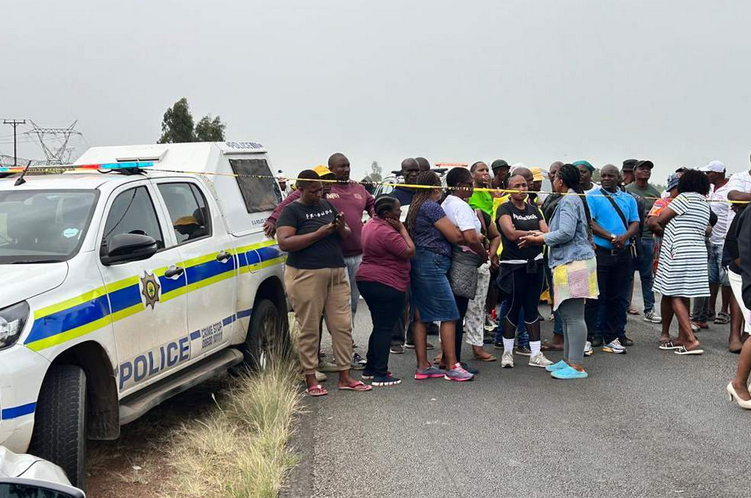
POLOKWANE – The stretch of the N1 highway near Bela-Bela in Limpopo is often a bustling artery for travellers, but on Saturday, 9 May 2026, it became a site of unimaginable grief and a stark symbol of the precarious existence of Zimbabwean migrants in South Africa. Within hours, a single family was almost entirely erased from existence in a sequence of events so tragic it defies simple explanation.
It began with a man, a Zimbabwean national whose name has not yet been officially released, who was struck and killed by a vehicle while on the N1. The driver of that vehicle was reportedly an off-duty police officer. When word reached his wife, she did what any partner would do: she rushed to his side. With her two children in tow, one of them an infant strapped to her back, she attempted to cross the same treacherous highway to reach the spot where her husband lay.
She never made it. In a cruel twist of fate, as she crossed the road, she and her children were struck by an official state vehicle. This was no ordinary car; it belonged to South Africa’s Minister of Health, Aaron Motsoaledi. The mother and her baby died at the scene.
Police spokesperson Brigadier Athlenda Mathe confirmed the details of the collision, stating that the minister’s state vehicle was being driven by a member of the Protection Security Services at the time. “Preliminary findings indicate that the woman was crossing the highway with her two children, one of whom was strapped to her back, when the fatal impact occurred,” Mathe said. “It is further alleged that while crossing the road, the woman and her children were involved in a collision with the Minister’s official vehicle. Tragically, the mother and baby succumbed to their injuries.”
The Minister, his close protector, and the driver remained at the scene until emergency services arrived. “The Minister’s close protector and the driver immediately stopped at the scene together with the Minister and remained there until police and emergency medical services arrived,” Mathe added. Now, two separate cases of culpable homicide are being investigated. Because members of the South African Police Service (SAPS) were involved in both the husband’s initial fatal accident and the subsequent crash that killed his wife and child, the Independent Police Investigative Directorate (IPID) has taken over the probe.
This incident is not an isolated case of misfortune. Instead, it serves as a harrowing chapter in a much longer, more violent story of how Zimbabwean lives are often cut short in South Africa, sometimes by the very systems meant to protect them. To understand the depth of this tragedy, one must look back at the cases that have come before it—incidents where the “accidental” or “incidental” nature of the deaths often masks a deeper failure of safety and justice.
Take the case of Christine Yolanda Gumira. In May 2023, the 30-year-old Zimbabwean mother-of-one thought she was doing the right thing. She was a state witness in a murder trial, having witnessed the brutal killing of her friend in 2018. On 25 May 2023, she walked out of the Wynberg Magistrate’s Court in Cape Town, likely feeling the weight of the testimony she had just provided or was about to give.
She never reached the taxi rank. CCTV footage, which later circulated widely online, captured the chilling moment of her execution. A man casually approached her from behind and fired a single shot into her head. She collapsed instantly in broad daylight, just metres away from the halls of justice.
Gumira had known the danger she was in. Her relatives later revealed that she had reported multiple threats against her life to the police. She told them that the people she was testifying against had promised to kill her if she spoke. Yet, she was offered no protection. Her niece, speaking on condition of anonymity, expressed a sentiment that many Zimbabweans in the diaspora share: “I strongly feel the South African state failed her. She told police that she was getting threats from the people that killed her friend; they told her that if she testified against them, they were going to kill her and they did.”
Police spokesperson Malcolm Pojie later confirmed the arrest of four suspects, aged between 24 and 33. “The victim was shot dead after leaving the court building en route to the taxi rank,” Pojie stated. While the arrests provided some semblance of a response, they could not undo the fact that a woman had been hunted down and killed while participating in the South African legal process.
The violence is not always as targeted as a witness execution. Sometimes, it is the result of a mob’s collective fury, fueled by xenophobic rhetoric and economic frustration. On 6 April 2022, Elvis Nyathi, a 43-year-old Zimbabwean living in Diepsloot, Johannesburg, became the face of this senseless hatred.
As a vigilante group moved through the community demanding to see identity documents and searching for “criminals,” Nyathi tried to hide. He was found, dragged from his home, beaten, and set on fire. His crime, in the eyes of his killers, was simply being a Zimbabwean in a space where they felt he did not belong. His wife, Nomsa, watched in horror as her husband was murdered. Her own life was only spared after she managed to show the mob her passport.
The death of Elvis Nyathi was a grim reminder of the volatility that Zimbabwean migrants face daily. It highlighted the rise of groups like Operation Dudula, which have led campaigns against undocumented foreigners, often blurring the lines between legal advocacy and violent vigilantism. Even as recently as May 2026, African nations have had to issue fresh warnings to their citizens in South Africa about the potential for new waves of xenophobic attacks.
Beyond the streets and the courtrooms, the peril extends into the very earth itself. In May 2025, a different kind of tragedy unfolded in the North West province during a police operation known as “Vala Umgodi.” The operation was designed to crack down on illegal mining, or “zama zamas,” by cutting off food and water supplies to those working in abandoned mine shafts.
The result was a slow, agonizing disaster. Among the 87 people who died in the Stilfontein mine shafts, 20 were confirmed to be Zimbabwean nationals. These were men who had fled the economic collapse of their home country, seeking a living in the dangerous, dark tunnels of South Africa’s defunct mines. When the authorities moved in to “close the hole” (the literal translation of Vala Umgodi), these men were trapped.
The Zimbabwe Republic Police (ZRP) eventually released the names of the 20 victims, appealing to relatives to come forward and claim the bodies for burial. The incident sparked a fierce debate about the ethics of the operation. While the South African government argued it was enforcing the law, critics pointed out that the tactic of starvation led to a mass casualty event that targeted the most desperate members of society.
Whether it is a standoff at a mine, a shooting outside a court, a mob in a township, or a high-speed collision on a highway, the common thread is a profound lack of safety for Zimbabweans living south of the Limpopo. The N1 tragedy involving Minister Motsoaledi’s car is particularly poignant because it brings the highest levels of the South African government into direct, fatal contact with the struggle of a migrant family.
In the Bela-Bela incident, the SAPS has been quick to offer condolences. “The SAPS extends its deepest condolences to the bereaved family during this difficult time,” a statement read. But for many, condolences ring hollow when the pattern of death remains unchanged. The fact that the mother was rushing to the scene of her husband’s death—only to be killed herself—paints a picture of a family caught in a relentless cycle of misfortune and systemic failure.
The investigation by IPID will be watched closely. There are questions that need answering: Was the Minister’s vehicle travelling at an appropriate speed for the conditions? Why was the off-duty officer involved in the first crash? And more broadly, why does the N1 continue to be a death trap for those attempting to navigate it on foot, often out of necessity?
For the Zimbabwean community, these are not just news stories; they are a reflection of a lived reality where every day is a gamble. The “accidents” that claim their lives are often the result of a combination of factors: poverty that forces people to walk along highways, a lack of legal protection that leaves witnesses vulnerable, and a political climate that sometimes treats their presence as a problem to be solved rather than a human reality to be managed.
As the bodies of the mother and her baby are prepared for their final journey, and as the investigation into the Minister’s vehicle continues, the story of the N1 tragedy stands as a sombre testament. It is a story of a family that came to South Africa seeking a better life, only to find their end on the cold asphalt of the country’s busiest road. It is a story that, sadly, many other Zimbabwean families know all too well.
The investigative process will eventually yield reports and perhaps even legal consequences. But for the survivors of these many tragedies—the children left without parents, the wives who watched their husbands burn, and the families waiting for bodies to be returned from mine shafts—justice is a distant concept. They are left only with the memories of those lost and the enduring question of when the road will finally become safe for them to travel.