


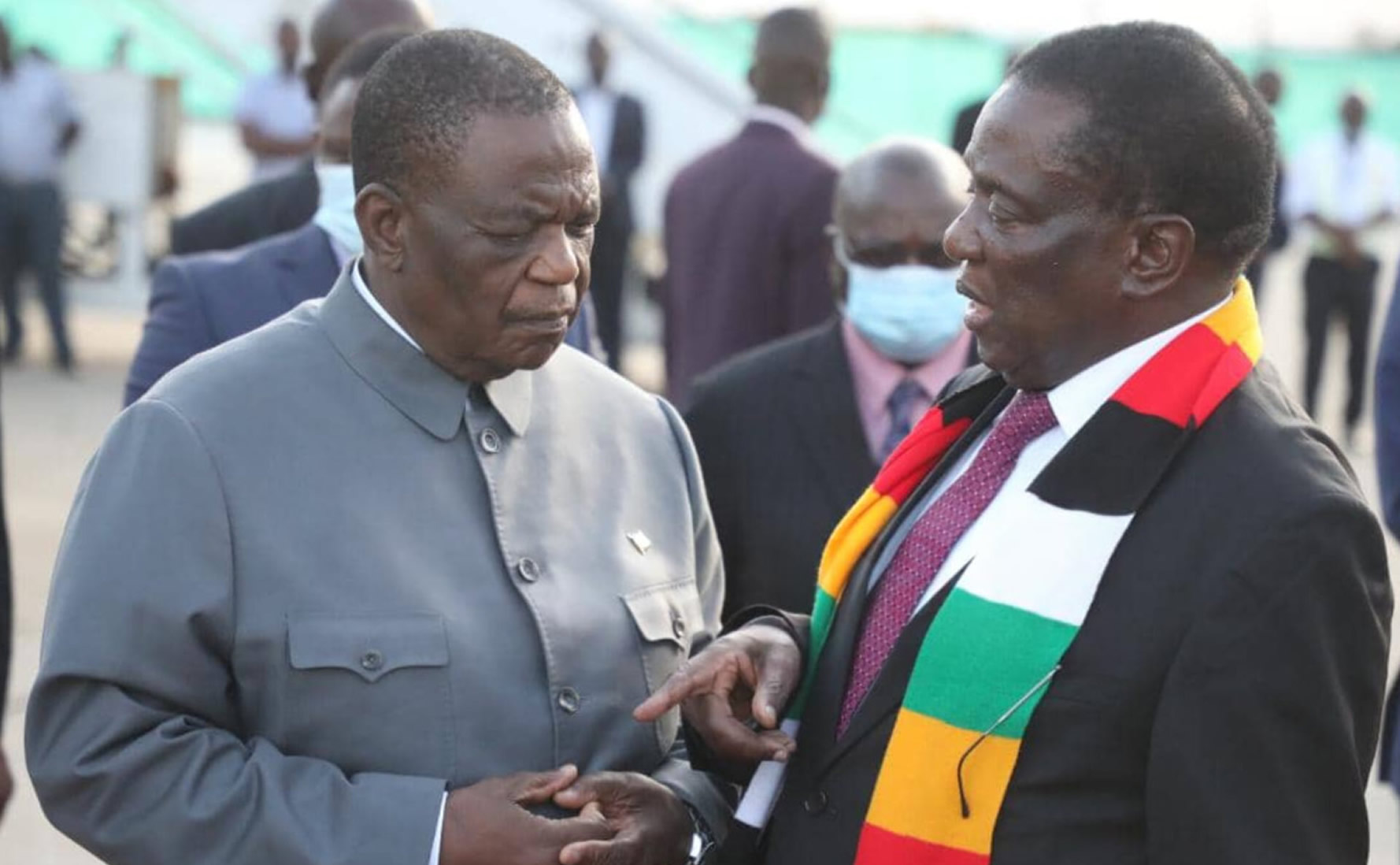
President Mnangagwa’s deadly chess move and a direct warning to General Chiwenga
In the intricate and often opaque world of Zimbabwean politics, every appointment, every reshuffle, carries a weight far beyond its surface appearance. The recent elevation of General (Retired) Philip Valerio Sibanda, the former Commander of the Zimbabwe Defence Forces (ZDF), to the ZANU PF Politburo is a prime example. While ostensibly a recognition of a loyal soldier, this move is being widely interpreted as a calculated and potent strategic manoeuvre by President Emmerson Mnangagwa, aimed squarely at curtailing the political ambitions of his Vice President, Constantino Chiwenga.
The announcement, made on 11th May 2026, by ZANU PF spokesperson Christopher Mutsvangwa, confirmed Sibanda’s immediate appointment to the party’s highest decision-making body. Mutsvangwa’s statement underscored the President’s constitutional prerogative, stating: “The Zanu PF First Secretary and President of the Republic of Zimbabwe, His Excellency Cde. Dr. Emmerson Dambudzo Mnangagwa, exercising his mandate under Article 9, Section 65 as read with Section 67 of the Zanu PF Constitution, has appointed General (Rtd) Philip Valerio Sibanda to the Zanu PF Politburo. This appointment is with immediate effect.” This formal declaration, however, only scratches the surface of a much deeper political narrative unfolding within the ruling party and the nation’s military establishment.
General Sibanda’s journey to this pivotal party position has not been without its constitutional complexities. It is noteworthy that President Mnangagwa had previously attempted to bring Sibanda into the Politburo in 2023, at a time when Sibanda was still the serving Commander of the Zimbabwe Defence Forces. That initial appointment, however, was swiftly withdrawn following significant criticism and concerns that it directly violated Section 208(2) of the Zimbabwean Constitution. This particular section explicitly prohibits members of the security services from engaging in partisan political activities or actively advancing the interests of any political party. The withdrawal highlighted the delicate balance between military and political spheres, and the legal constraints governing such interactions. Sibanda’s subsequent retirement from military service in November of last year (2025) has now paved the way for his re-entry into the political arena, seemingly bypassing the previous constitutional hurdle. This timing is crucial, suggesting a deliberate strategy rather than a mere coincidence.
The backdrop to this appointment is the intensifying internal succession battle within ZANU PF, particularly concerning the contentious “ED2030” agenda. This initiative, spearheaded by a faction within the ruling party, advocates for President Mnangagwa to extend his presidential term beyond the constitutionally mandated limit of two terms, effectively keeping him in office until 2030. This push is encapsulated in the proposed Constitution Amendment Bill No. 3 (CAB3), which, if passed, would grant the President an additional two years in power. This development has ignited a fierce debate and exposed deep fissures within ZANU PF, with Vice President Chiwenga emerging as a vocal, albeit subtle, opponent of the term extension plans.
Vice President Chiwenga, a figure of immense influence within both the party and the military, has reportedly broken ranks with Mnangagwa over the “ED2030” plan. His public criticism and alleged refusal to chant the “ED2030” campaign slogan are significant indicators of a growing rift at the highest echelons of power. Chiwenga’s historical role in the 2017 military-backed operation that led to the ousting of former President Robert Mugabe and Mnangagwa’s ascension to power cannot be overstated. It is widely believed that a power-sharing agreement was forged during that period, stipulating that Mnangagwa would serve two terms before handing over the reins to Chiwenga. The “ED2030” agenda, therefore, is perceived by many as a direct repudiation of this unwritten pact, effectively blocking Chiwenga’s path to the presidency.
Against this volatile political landscape, General Sibanda’s appointment to the Politburo takes on a profound strategic significance. Analysts are describing it as a “deadly chess move” by President Mnangagwa. By bringing the military’s most senior and respected figure directly into the party’s supreme decision-making body, Mnangagwa is effectively “civilianising” his most potent insurance policy. This move places Sibanda under the President’s direct party command, making it considerably more challenging for any military-led “correction” – similar to the events of 2017 – to be orchestrated against the incumbent. The underlying conspiracy, as some observers suggest, is straightforward: Mnangagwa is meticulously constructing a “General vs. General” stalemate, ensuring that neither of the two powerful military figures can independently move against him. Sibanda is being strategically positioned as a counter-weight to Chiwenga’s enduring influence within the barracks, creating a delicate balance of power that ultimately serves to consolidate Mnangagwa’s authority.
The implications of this manoeuvre extend beyond mere political jostling; they delve into the very fabric of military-civilian relations in Zimbabwe. The appointment can be seen as an attempt to reassert civilian control over the military, or at least to bring key military figures more directly under the party’s political umbrella. This move is particularly pertinent given Zimbabwe’s history of military involvement in political transitions. The 2017 operation, which saw the military play a decisive role in shaping the country’s leadership, highlighted the armed forces’ significant influence. Mnangagwa, having benefited from that intervention, is now seemingly taking steps to prevent a similar scenario from being used against him. The question of military loyalty, therefore, becomes paramount. While Chiwenga undoubtedly commands respect within the armed forces, the presence of another highly regarded former commander, General Sibanda, within the party’s top echelons could complicate any potential military alignment against the President.
The “ED2030” campaign, which underpins much of this political manoeuvring, has been met with mixed reactions. While proponents argue for continuity and stability, critics view it as an undemocratic attempt to subvert constitutional term limits and entrench power. The public dissent from a figure as prominent as Vice President Chiwenga lends significant weight to these concerns, suggesting that the debate is not merely academic but reflects a genuine power struggle with potentially far-reaching consequences for Zimbabwe’s political future. The tension between the “Green Bombers” (a reference to ZANU PF youth militia) in the party and the “Camo” (the military) in the barracks, as alluded to in the initial analysis, is now more pronounced than ever. This appointment, therefore, might indeed be the final nail in the coffin for any lingering hopes of a smooth, pre-agreed power transition stemming from the 2017 events.
In conclusion, General Sibanda’s appointment to the ZANU PF Politburo is far more than a routine promotion. It is a meticulously crafted political gambit by President Mnangagwa, designed to neutralise potential threats, consolidate his power, and pave the way for his extended stay in office. By strategically placing a respected military figure within the party’s highest decision-making body, Mnangagwa aims to create a complex web of allegiances and counter-balances, effectively securing his position against both internal party rivals and any potential military interventions. The coming months will undoubtedly reveal the full extent of this “deadly chess move” and its ultimate impact on the delicate balance of power in Zimbabwe’s turbulent political landscape. The nation watches closely as this high-stakes political drama continues to unfold, with the future of its leadership hanging in the balance.