


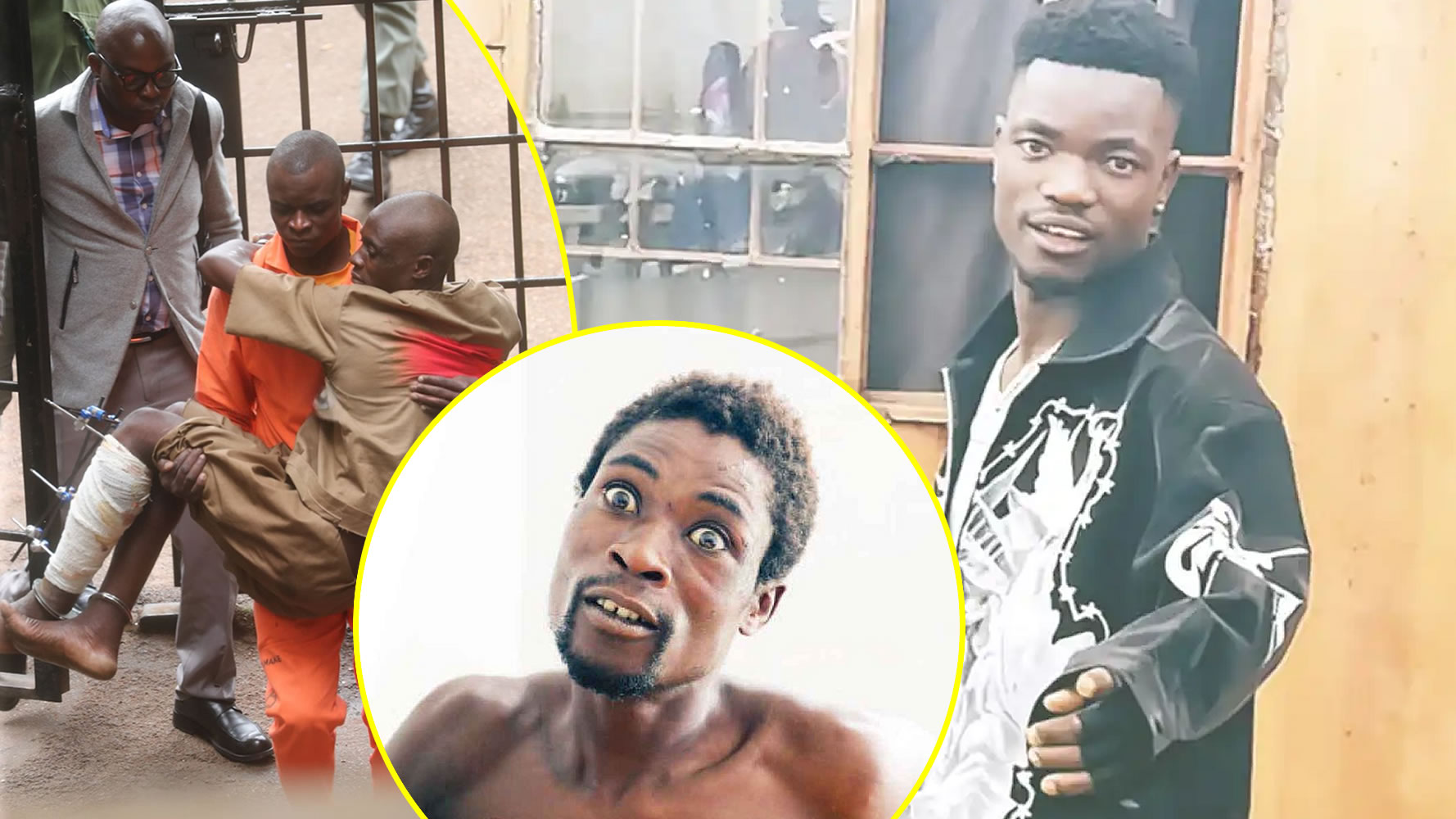
GURUVE – In a case that has sent shivers down the spine of Zimbabwe, Anymore Zvitsva, also known by the aliases Brighton Zvitsva and “Modho,” has confessed to a horrifying spree of rapes, attempted murders, and robberies. These chilling admissions, made both in the solemn setting of a courtroom and during a remarkable, face-to-face encounter with First Lady Dr Auxillia Mnangagwa, paint a disturbing portrait of a man who single-handedly unleashed a reign of terror across the rural landscapes of Guruve and Mvurwi. While murder charges, potentially numbering up to 25, are still to be formally heard at the High Court, the details that have emerged thus far are nothing short of macabre.
Zvitsva recently stood before Harare regional magistrate Francis Mapfumo, where he entered a guilty plea to 10 counts, a combination of four rapes, five attempted murders, and one robbery. The prosecution, led by Mr Lancelot Mutsokoti, meticulously outlined the brutal nature of his crimes. What struck many observers as particularly unsettling was Zvitsva’s apparent lack of remorse; he was reportedly smiling as the grim and graphic details of his heinous actions were laid bare for the court to hear. This unsettling demeanour only deepened the mystery surrounding the motives of a man capable of such profound cruelty.
A Trail of Unspeakable Violence and Profound Despair
The court proceedings brought to light a systematic pattern of violence, where Zvitsva targeted the most vulnerable members of society: women, children, and unsuspecting villagers. His arsenal included not only conventional weapons like knives and machetes but also the insidious use of snare wire, typically employed for trapping animals. His victims endured unimaginable horrors, often left for dead or with deep, psychological scars that may never heal.
One particularly harrowing account detailed the ordeal of a 27-year-old woman. She was forcibly dragged from the sanctuary of her hut at knifepoint and subjected to a brutal rape approximately 50 metres from her homestead. The sheer audacity and proximity of the attack to her home underscored the pervasive fear that gripped these communities.
Another victim, Renious Chatora, faced a terrifying encounter that nearly cost him his life. Zvitsva, with chilling precision, used snare wire to strangle Chatora, leaving him unconscious and at the mercy of fate. In a separate incident, Brain Ngoshi became a victim of Zvitsva’s predatory nature during a night-time robbery. Struck on the head with a machete, Ngoshi sustained severe injuries while Zvitsva made off with mere cigarettes and a soft drink, highlighting the disproportionate violence used for trivial gains.
The depths of Zvitsva’s depravity were further exposed through the testimony concerning a 35-year-old woman. After raping her, Zvitsva then turned his aggression towards her defenceless 10-year-old son, stabbing him multiple times in the stomach, chest, ribs, and neck in a horrific attempt to end his young life. This act of extreme cruelty, targeting an innocent child, revealed a chilling disregard for human life.
Fortune Mwazha, a 21-year-old, was another victim who narrowly escaped death. She was strangled with snare wire and left for dead, her groceries, including sugar, rice, and orange juice, stolen in the aftermath. Even the elderly were not spared; a 62-year-old woman was raped at a community borehole after being violently struck on the head when she bravely resisted her attacker. The vulnerability of these victims, often in isolated rural settings, made them easy targets for Zvitsva’s brutal assaults. The court also heard the distressing account of a 10-year-old girl who was tied with shoelaces and raped inside a kitchen hut in Chief Chipuriro’s area, an act that underscores the pervasive fear and violation that permeated these communities.
The First Lady’s Unprecedented Confrontation
In an extraordinary and widely publicised event in March 2026, First Lady Dr Auxillia Mnangagwa undertook a visit to Anymore Zvitsva at Chikurubi Maximum Security Prison in Harare. This unprecedented visit was prompted by the profound impact of the alleged murders of 25 people in Guruve, an atrocity that had left entire communities traumatised and, in some instances, led to the abandonment of homes as families struggled to cope with the aftermath. Dr Mnangagwa’s objective was clear: to gain insight into the mind of the man responsible for such widespread brutality.
During this remarkable encounter, Zvitsva, seated in a wheelchair, recounted his chilling narrative to the First Lady. When directly questioned about the reasons for his arrest, Zvitsva responded with a stark admission: “I committed crimes of killing people, rape and robberies in Guruve.” His confession was delivered with a disturbing candour that left a lasting impression.
He detailed the grim genesis of his violent spree, which he claimed began in 2024, ostensibly driven by hunger. He recounted breaking into a home with the intention of stealing food, managing to take 10 kilogrammes of mealie-meal. However, he returned later that evening, convinced the homeowner possessed cash. A confrontation ensued when the woman accused him of theft. Zvitsva described a violent struggle where he attacked her with the back of a Colombian knife. The woman, in a desperate attempt to escape, fled with his mobile phone, which Zvitsva feared would be used as incriminating evidence. His pursuit of her ultimately led to a fatal confrontation.
Zvitsva recounted the moment of the killing to the First Lady:
“When I came close to her, I pleaded for my phone, but she denied, saying it would be used as evidence to the police. I then told her I would kill her, but she never took any of it before grabbing a brick and hitting me in the stomach. I became furious then charged towards her before hitting her with the back of an axe.”
He further confessed to stabbing her in the back when she refused to surrender. It was this act, he claimed, that marked the true beginning of his murderous path: “That is when I realised I had stabbed someone. This was when my journey of killing people began in 2024.”
Zvitsva’s confessions escalated into truly macabre and disturbing details. He spoke of killing his own niece and her child. He alleged that his niece had accused him of attempting to steal, leading him to label her a “traitor” and decide upon her murder. He strangled her with a wire, and then, with chilling indifference, killed her child, aged between three and five years, using clothes from the washing line. He then buried the child in a shallow grave.
For the mother, Zvitsva made an even more gruesome admission: he claimed to have cut off her breasts, which he then gave to a man named Nathan Churweni for ritualistic purposes, allegedly connected to a gold mine. In a further act of cannibalism, he confessed to cutting the body into pieces, roasting some human flesh, and attempting to consume it, though he claimed his heart “refused” after a single bite. The remaining body parts were burned, and the ashes, in a bizarre twist, were mixed with lotion for fortune-telling, or used in the construction of a building, as he believed such acts would bring him wealth. He also confessed to selling blood from one victim to a self-styled prophet, Junioius Kasinauyo and Gidza Dhorobha, for a sum of US$200, though the prophet’s intended use for the blood remains unclear.
His twisted logic continued as he explained the killings of his aunt and her child. This occurred after he overheard a sibling warning him that his head and legs would be cut off if he visited a neighbouring village, as he was being accused of attempting to murder a 62-year-old with a hammer and an axe. This accusation, he stated, made him furious, leading to these further murders.
The Relentless Manhunt and Eventual Capture
The widespread fear and palpable concern generated by Zvitsva’s actions prompted an intensive and relentless manhunt. The Zimbabwe Republic Police (ZRP), in a joint operation with the Zimbabwe National Army (ZNA), tirelessly pursued the suspected serial killer. The geographical challenges of Guruve, characterised by its rugged terrain, interlocking valleys, hills, and mountains, made the search particularly arduous. However, the authorities remained resolute in their determination to bring him to justice and restore peace to the terrorised communities.
Anymore Zvitsva was finally apprehended in January 2026, after weeks of evading capture. He was discovered hiding in a garden in Guruve. His capture was not without incident; he sustained a gunshot wound to the left leg while attempting to evade arrest. Following his apprehension, he received medical attention at a local hospital, where he remained under constant guard. His arrest brought a profound sense of closure and immense relief to the terrorised communities of Guruve and Mvurwi, who had endured a prolonged period of fear, uncertainty, and unimaginable loss. The police confirmed that the use of force was necessary during the arrest operation due to his attempt to escape.
The Legal Proceedings and Lingering Questions
Zvitsva’s guilty plea to 10 counts of rape, attempted murder, and robbery marks a significant and crucial step in the protracted legal process. However, the more severe murder charges, which are reported to number as high as 25, are yet to be formally heard at the High Court. These forthcoming proceedings will undoubtedly delve deeper into the full extent of his alleged crimes, seeking to provide justice for the many lives he so cruelly impacted and the devastating ripple effect on their families and the wider community.
The case of Anymore Zvitsva raises profound and unsettling questions about the nature of evil, the vulnerabilities that exist within rural communities, and the complex psychological factors that can drive individuals to commit such horrific acts. His calm, almost detached, demeanour in court, coupled with his detailed and chilling confessions to the First Lady, offer a disturbing glimpse into a mind seemingly devoid of remorse or empathy. The communities he terrorised will forever bear the indelible scars of his actions, and the legal system faces the monumental task of delivering comprehensive justice for the multitude of lives he so cruelly impacted.