


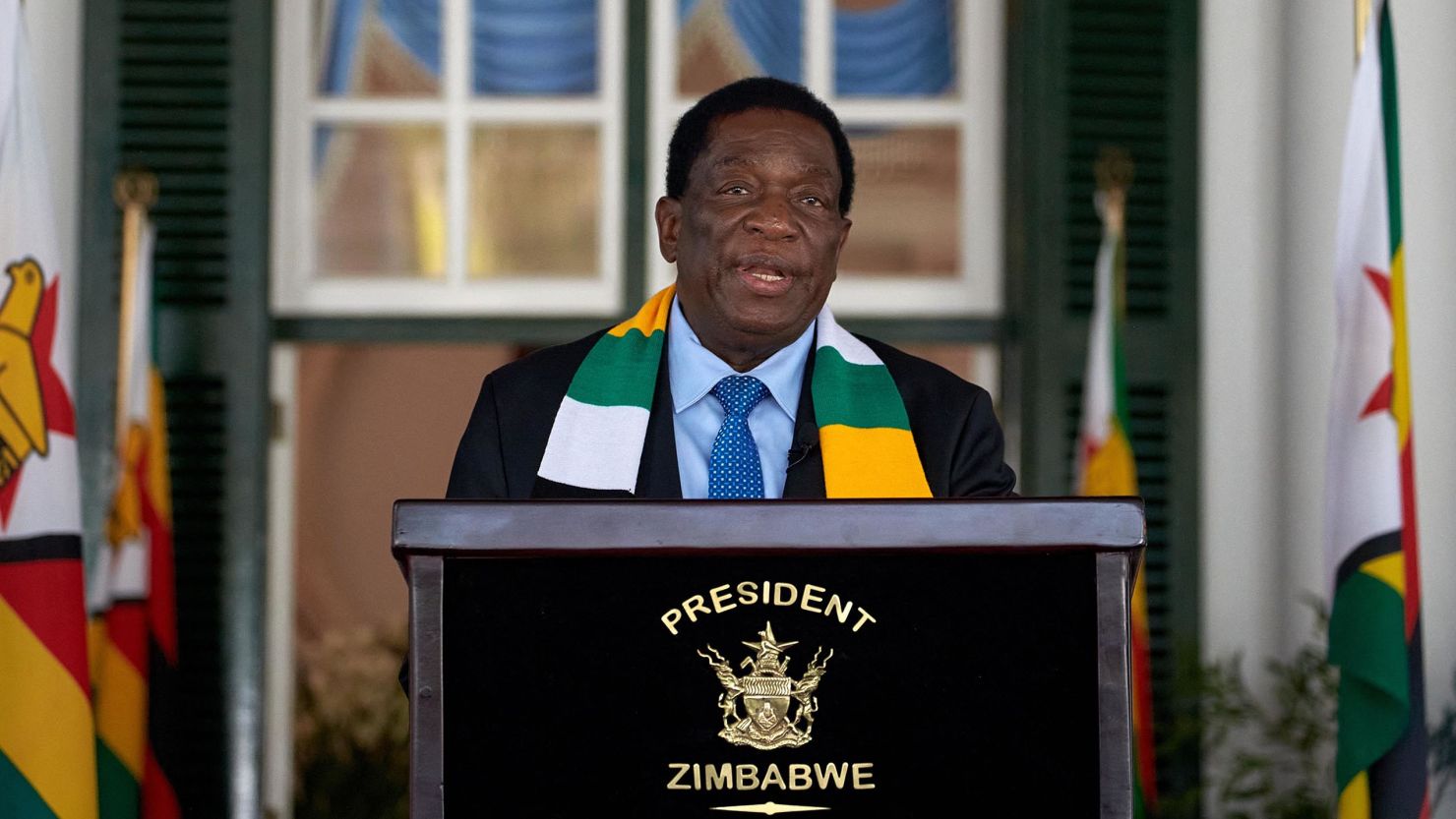
HARARE – In the dead of night, while most of Zimbabwe slept, a motorcade quietly slipped through the gates of State House, heading not towards a public event or a diplomatic gala, but towards the tarmac of Robert Gabriel Mugabe International Airport. There were no blaring sirens, no red carpets, and notably, no senior government officials lined up to offer the traditional handshakes and salutes. President Emmerson Mnangagwa, the 83-year-old leader of Zimbabwe, was embarking on a journey so secret that even his closest deputies, including Vice President Constantino Chiwenga, were reportedly left in the dark.
This “midnight dash” to Minsk, Belarus, has ignited a firestorm of speculation across the nation. For a President who often speaks of transparency and “the voice of the people,” the clandestine nature of this trip stands in stark contrast to his public persona. The trip was conducted with such stealth that it bypassed the traditional airport ceremonies, leaving the public to wonder what business could be so sensitive that it required the cover of darkness and the exclusion of the country’s second-in-command.
The significance of the President’s absence was laid bare on a Thursday evening in Harare. While Mnangagwa was thousands of miles away in Eastern Europe, a high-profile farewell dinner was being held in honour of the departing Chief Justice Luke Malaba. This was an event where the President’s presence was not just expected, but practically required by protocol. Instead, Vice President Kembo Mohadi was forced to step in as the guest of honour, acting “on behalf of President Mnangagwa,” according to government spokesman Ndavaningi Mangwana. Even Vice President Chiwenga was in attendance, yet he too seemed to be operating without the full picture of his superior’s whereabouts.
When the news finally broke, the response from the presidency was as startling as the trip itself. Addressing journalists at State House upon his return, a defiant Mnangagwa dismissed any notion that he owed the public an explanation. “When I go out I don’t go to the villages to say, ‘I’m now leaving.’ They get to be told that the President has travelled,” he stated with a dismissive shrug. He went further, likening himself to a monarch. “I should go around villages saying, I’m now travelling. Who does that? The king will embark on a trip if his time to travel says so.”
This “King” analogy has done little to calm the waters. Instead, it has fueled growing concerns about an increasingly autocratic leadership style and a blatant disregard for public accountability. In a modern democracy, the idea of a leader moving like a medieval sovereign, unaccountable to the “villages” (the citizens), is a bitter pill for many to swallow. It reinforces the image of a presidency that operates above the very laws and norms it is sworn to uphold, creating a dangerous disconnect between the leadership and the populace.
The official narrative, provided primarily by Belarusian state media, described the visit as a “short working trip.” The two leaders, Mnangagwa and Belarusian strongman Aleksandr Lukashenko, reportedly discussed a strategic cooperation roadmap for the period 2026 to 2030. This roadmap is said to cover bilateral relations and partnership implementation. However, the lack of any official notification from the Zimbabwean side, combined with the President’s choice to travel without his usual entourage, suggests a level of personal diplomacy that bypasses formal state channels.
This is not the first time such “secret diplomacy” has raised eyebrows. Sources within the government indicate a recurring pattern of late-night departures and early-morning returns involving Belarus. “He has in fact made this exact trip before, leaving late at night and returning early morning after a couple of days. It’s just that this time someone caught onto it,” a senior official reportedly told Zimeye. This pattern suggests a highly private and possibly sensitive line of communication between Harare and Minsk—one that remains shielded from both the public eye and the internal scrutiny of the Zimbabwean cabinet.
Belarus has become a key, albeit controversial, partner for the Mnangagwa administration. The relationship has been marked by multi-million dollar deals involving agricultural machinery and mining equipment. However, many of these deals have been shrouded in allegations of corruption and inflated pricing. One of the most notorious examples is the 2023 deal for fire tenders, which saw local authorities forced to purchase Belarusian equipment at prices significantly higher than market rates.
The timing of this latest secret trip is particularly sensitive. It comes as the Zimbabwean parliament braces to debate the Constitutional Amendment (No. 3) Bill, a piece of legislation that has been dubbed a “constitutional coup” by its detractors. The bill seeks to extend the presidential term from five to seven years and remove the direct election of the President, allowing instead for a vote by Members of Parliament. This move would potentially allow Mnangagwa to remain in power until 2030, bypassing the current constitutional limit that would see his tenure end in 2028.
The optics of a leader making secret trips to an authoritarian state like Belarus while simultaneously seeking to consolidate power at home are deeply concerning to pro-democracy advocates. The Catholic bishops of Zimbabwe have already warned that the proposed bill would “undermine foundational constitutional principles, weaken institutional independence, diminish direct democratic participation, and erode constitutional safeguards against the concentration and abuse of power.” For many, the secret trip to Minsk is a physical manifestation of this erosion of safeguards—a leader acting without oversight, consulting with a fellow strongman, while his own deputies are left to wonder about the nation’s direction.
The exclusion of Vice President Chiwenga from the loop is perhaps the most telling detail. It is an open secret in Zimbabwean politics that there are “ructions” within the ruling Zanu PF party. Chiwenga, the former army general who led the 2017 coup that brought Mnangagwa to power, is widely believed to be opposed to the term extension. By keeping his deputy in the dark about a trip to a key strategic partner, Mnangagwa is not just exercising “King-like” authority; he is signaling a deep mistrust within the very top echelons of his government.
This internal rift has profound implications for the stability of the country. When the two most powerful men in the nation are not on speaking terms regarding major foreign policy moves, the risk of miscalculation and political instability increases. The “secret diplomacy” with Belarus, therefore, serves as a catalyst for internal friction, potentially accelerating the power struggle that has been simmering beneath the surface of the New Dispensation.
Furthermore, the international community is watching these developments with growing unease. Belarus is currently under heavy sanctions from the European Union and the United States due to its role in regional conflicts and its own domestic human rights record. Zimbabwe’s deepening and increasingly opaque relationship with Minsk risks further isolating Harare at a time when it desperately needs international re-engagement and debt relief. The seizure of 17 Belarusian fire engines destined for Zimbabwe by Lithuanian authorities in 2024, due to sanctions, is a stark reminder of the risks involved in these “shady” partnerships.