


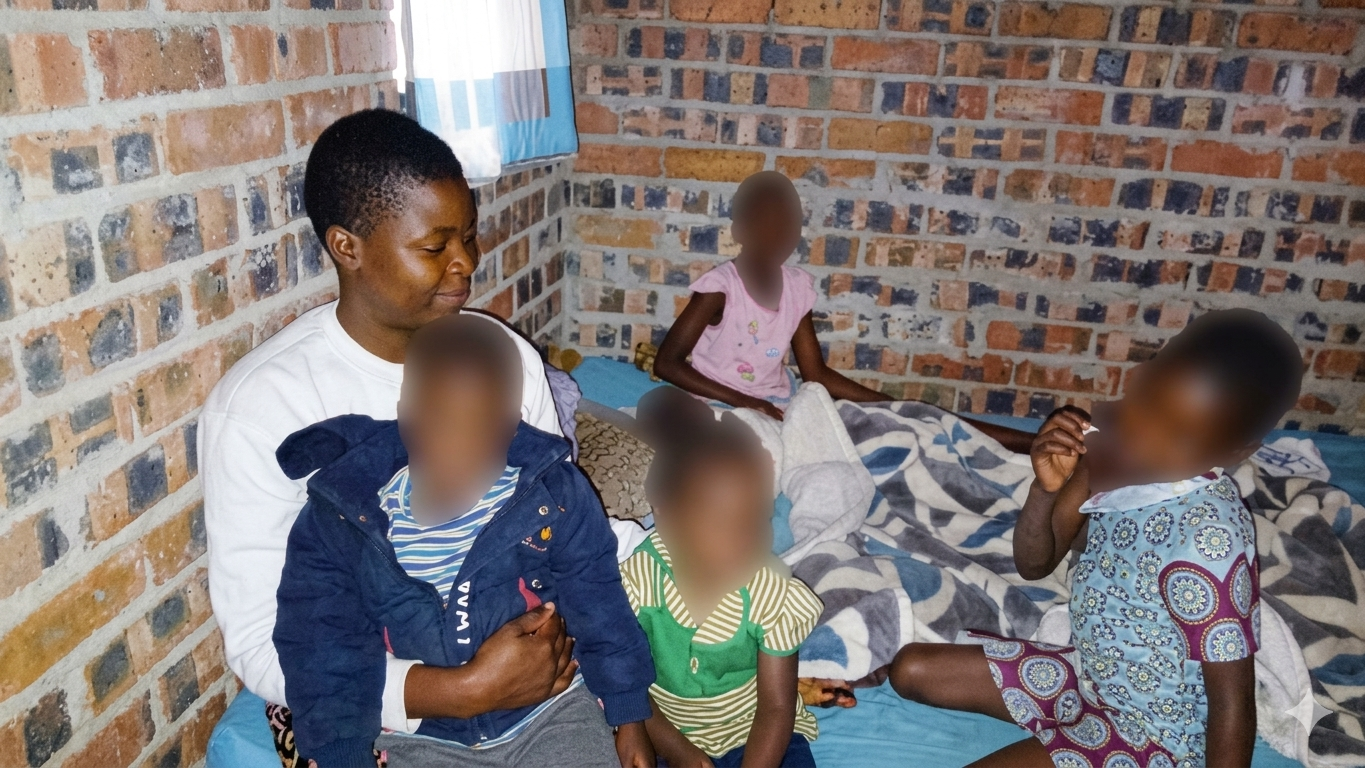
A Mother’s Unyielding Fight: Three Sets of Twins, Three Absent Fathers, and the Scars of Poverty in Zimbabwe
BULAWAYO – In the heart of Bulawayo, a city grappling with profound economic hardship, the story of Zobuhle Ndlovu, a 28-year-old mother of six, stands as a stark testament to the struggles faced by countless women in Zimbabwe. Her life, a relentless battle against destitution and abandonment, highlights a systemic crisis where maternal resilience often clashes with societal neglect and legal complexities. Zobuhle is not just a mother; she is a symbol of the silent suffering endured by those left to navigate the treacherous waters of poverty alone, burdened by the weight of paternal irresponsibility.
Zobuhle’s narrative is one of repeated heartbreak and unyielding determination. At just 19, while living in South Africa, she welcomed her first set of twins, two girls now aged 10. The father, a man with whom she had shared nearly two years, initially acknowledged his offspring. However, his presence was fleeting; he vanished a mere month after their birth. “He came after the babies were born but, after a month, he disappeared,” Zobuhle recounted, her voice tinged with a decade of pain. This initial abandonment set a grim precedent for the years that followed.
Years later, still in South Africa, Zobuhle found herself pregnant with her second set of twins, now four years old. This relationship, too, ended in a familiar pattern of desertion. The father, upon learning of the impending twin birth, allegedly changed his residence and severed all contact. “When I became pregnant, he disappeared and even changed where he stayed,” she explained. The emotional toll of this repeated abandonment was immense, culminating in Zobuhle’s hospitalisation for a stress-related heart condition, a physical manifestation of her profound emotional distress.
The cycle of abandonment continued with her third set of twins, now one year and six months old, born in Tsholotsho’s Sipepa area after yet another relationship dissolved. The father of these youngest children promised to travel for work but never returned. When informed of their birth, he denied responsibility, questioning the premature arrival of the twins. “When I told him I had given birth, he denied responsibility and questioned why they came earlier than expected,” Zobuhle stated. It was only after she sent photographs to his family that the striking resemblance between the children and their father was acknowledged, yet this did little to alter his absence.
With all three fathers conspicuously absent from their children’s lives, Zobuhle’s existence spiralled into extreme hardship. She sought refuge with her aunt at one point, but the pervasive food shortages meant her children often went hungry for days. “We could spend two weeks without food. My children cried and other children laughed at them at school,” she recalled, painting a vivid picture of the indignity and suffering her family endured. This desperation propelled her into a nomadic search for survival, a journey that eventually led her back to Bulawayo.
Her return to Bulawayo was fraught with further disappointment. A woman who had promised her employment and even sent money for her travel abruptly blocked her number upon Zobuhle’s arrival with her six children. “I realised I had been blocked. I did not know what to do,” she told B-Metro, highlighting the vulnerability of those seeking help in desperate circumstances. A brief stay with a friend in Emakhandeni was cut short when the landlord demanded her departure, leaving Zobuhle and her children to wander the streets of Bulawayo with nowhere to go. It was during this nadir that a compassionate pastor offered her US$5, a small sum that provided a momentary reprieve from hunger for her children. Soon after, a man, initially reluctant, offered her a half-finished room in an unfinished house after witnessing her plight. This rudimentary shelter, lacking doors and electricity, yet possessing a functional toilet, became their precarious home.
To sustain her family, Zobuhle now undertakes precarious piece jobs, washing clothes and cleaning homes for a meagre US$1 or US$2 per task. This income is barely sufficient to feed her six children, let alone address their other fundamental needs. “To survive, I take on piece jobs such as washing clothes and cleaning homes for as little as US$1 or US$2 per job, barely enough to feed my children,” she affirmed. Her situation, though dire, is not unique. Research indicates that single mothers in Zimbabwe, particularly in urban centres like Bulawayo, frequently rely on the informal economy, where income insecurity is a pervasive challenge. Many spend hours queuing for cash due to the country’s cash shortages, further impeding their ability to earn a living.
One of Zobuhle’s most profound fears is involving the social welfare authorities, a fear rooted in the belief that her children might be taken away and separated for adoption. “I love my children very much. I want to raise them myself,” she asserted, her maternal instinct overriding her desperate circumstances. This apprehension is not unfounded; poverty is often misconstrued as neglect within child welfare systems, leading to the removal of children from their families. The legal framework surrounding guardianship and custody in Zimbabwe, while evolving, still presents significant hurdles for single mothers. Historically, common law favoured fathers as dominant guardians, though the Guardianship of Minors Act and the Constitution’s Section 80(2) now affirm equal rights for women regarding custody and guardianship. However, enforcing paternal responsibility, particularly for maintenance, often requires legal action that many impoverished mothers cannot afford or navigate effectively.
The lack of birth certificates for her children represents another formidable barrier to their future. Birth registration is legally required within six weeks of birth in Zimbabwe. However, many single mothers face immense difficulties in this process, often due to uncooperative fathers who may be required to be present or provide identification, or simply due to a lack of funds for travel to registration offices. Without these vital documents, children are effectively invisible to the state, unable to enrol in school, access healthcare, or receive social services, trapping them in a cycle of poverty and marginalisation. Zobuhle’s older twins, for instance, urgently require school enrolment support, a dream that remains out of reach without their birth certificates.
Zobuhle’s plight came to public attention through the compassionate intervention of nurse Victor Dube, who observed her challenging circumstances during a clinic visit. Dube alerted philanthropist Ezra Sibanda, whose subsequent visit revealed the critical condition of one of the youngest twins, suffering from pneumonia – likely exacerbated by their exposure to the elements in their unfinished home. The child was promptly rushed to hospital and is now, thankfully, recovering. The public revelation of Zobuhle’s story has prompted a wave of generosity, with food donations and support trickling in from various organisations and well-wishers. This immediate assistance, while crucial, only scratches the surface of the family’s long-term needs.
As winter’s chill begins to bite in Bulawayo, Zobuhle Ndlovu’s unfinished house, devoid of a door, stands as a stark symbol of her family’s vulnerability. Her story is a poignant reminder of the urgent need for robust social safety nets, accessible legal aid for women seeking child support, and streamlined processes for birth registration that do not penalise children for the circumstances of their birth. Beyond the immediate relief, Zobuhle’s children need a future – one where they are not defined by the abandonment of their fathers or the crushing weight of poverty. Their struggle is a collective call to action, urging society to look beyond individual hardship and address the systemic issues that leave mothers like Zobuhle fighting an uphill battle for their children’s very existence.